
 By Siti Muinah
The rapid ascent of generative artificial intelligence has triggered a global wave of anxiety, with economists, labor unions, and policymakers scrambling to predict the extent of potential job displacement. Yet, beneath the panic over layoffs and wage stagnation lies a more profound, philosophical question that remains largely unaddressed: Why have we elevated the concept of "the job" to a sacred status, and is it time to decouple human value from traditional employment?
As AI systems demonstrate an increasing capacity to perform complex knowledge work, the debate is shifting from "Will AI take our jobs?" to "Why are we so desperate to keep them?"
The Paradox of the Modern Workplace
To understand the current anxiety, one must first confront the historical irony of the Western labor model. For decades, democratic nations have championed individual liberty and self-determination as the cornerstones of their societal structure. Yet, as linguist and philosopher Noam Chomsky has famously noted, the vast majority of the adult population spends the most productive hours of their lives inside strictly hierarchical, top-down organizations.
In these environments, individuals often trade their autonomy for a paycheck, executing tasks dictated by management rather than pursuing self-directed goals. This arrangement is inherently undemocratic. We spend our lives in institutions where the "will of the people" is rarely a factor in decision-making, yet we view the preservation of these very structures as a moral imperative.
This devotion to the institution of employment is not merely a survival mechanism; it has become a cultural identity. When we ask, "What do you do?", we are not asking about a person’s passions, their civic contributions, or their creative endeavors. We are asking for their job title—the specific mechanism by which they sell their labor to survive.
Chronology of a Disruption: From Automation to Cognition
The history of technological advancement has always been a cycle of displacement and creation, but the AI revolution marks a distinct departure from previous industrial shifts.
- The Early Automation Era (1960s–1990s): Industrial robotics and mechanical automation primarily targeted manual, repetitive, and hazardous tasks in manufacturing and logistics. The social consensus was that this was "good" progress, as it removed humans from dangerous environments.
- The Digital Integration (2000s–2015): The rise of the internet and basic software automation began to streamline white-collar processes, such as bookkeeping and data entry. However, these tools remained "assistive," requiring significant human oversight and expertise.
- The LLM Inflection Point (2022–Present): With the arrival of Large Language Models (LLMs) and generative AI, the focus shifted from manual labor to cognitive labor. For the first time, software could write code, draft legal briefs, analyze complex datasets, and produce creative content.
While some researchers argue that we are far from achieving Artificial General Intelligence (AGI)—a system capable of mimicking human reasoning in its entirety—the current iteration of AI has already proven capable of automating the "repetitive grunt work" that constitutes the bulk of modern salaried employment.
The Myth of the "Uniquely Human" Job
Critics of AI alarmism often point to "human qualities"—empathy, intuition, and creative synthesis—as the ultimate shield against automation. The argument holds that AI is merely a sophisticated pattern-matching machine, incapable of true sentience or understanding.
While this may be true, it misses a critical reality of the contemporary labor market: Most jobs do not require these uniquely human traits.
In the current corporate landscape, human workers are often forced to act like machines—performing redundant tasks, formatting reports, responding to standardized emails, and following rigid workflows. In many professional settings, the "human" aspect is not only unnecessary; it is often discouraged for the sake of efficiency and consistency. When an AI can perform these tasks faster and more accurately, the argument for human labor in those roles collapses.
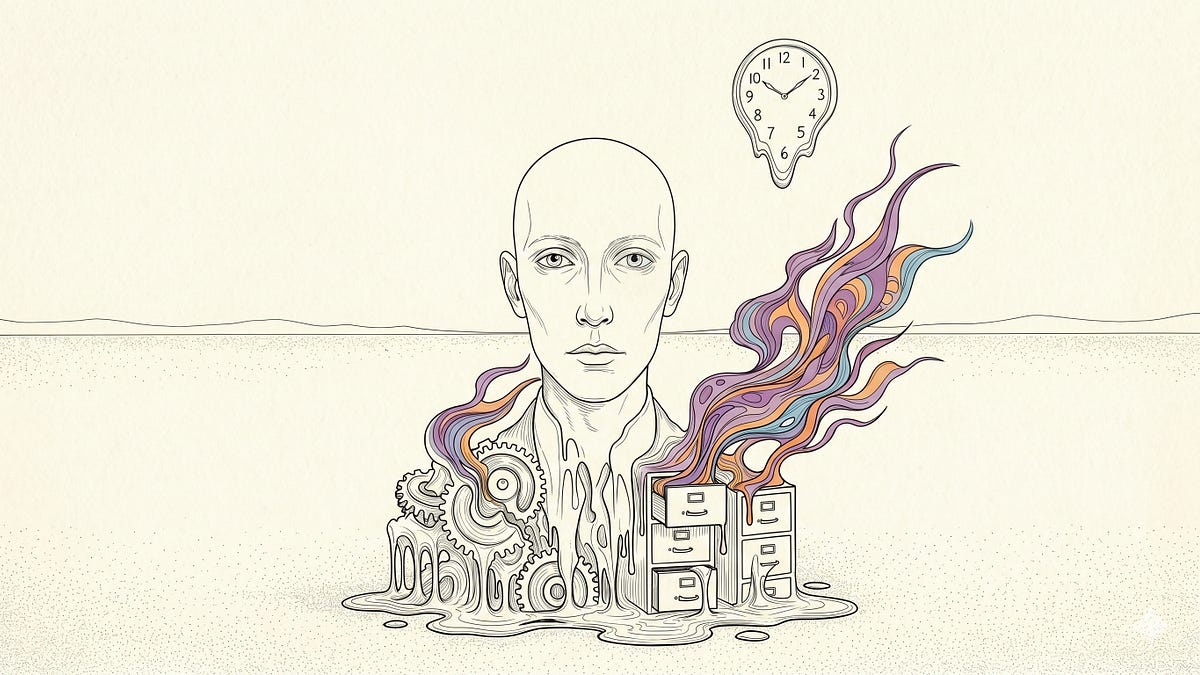
The tragic irony is that we are fighting to preserve a system that asks us to suppress our humanity for forty hours a week, only to fear the technology that could potentially liberate us from that suppression.
Supporting Data: The Efficiency Gap
Recent studies from institutions like Goldman Sachs and the McKinsey Global Institute suggest that up to 300 million full-time jobs could be impacted by generative AI. However, these numbers often frame "impact" as "catastrophe."
Consider the following data points:
- Productivity Gains: In coding and customer service, early adopters of generative AI have reported productivity increases ranging from 20% to 50%.
- The "Grunt Work" Ratio: Surveys of office workers indicate that approximately 40% to 60% of their daily tasks involve repetitive data processing or synthesis that requires little to no creative input.
- Economic Disparity: While corporate profits are expected to rise due to AI-driven efficiency, wage growth for non-technical roles remains stagnant, highlighting that the current economic structure rewards capital owners rather than laborers.
If the goal of technology is to improve the human condition, then a reduction in the need for human labor—the very thing that consumes the vast majority of our waking hours—should be viewed as a success, not a threat.
Official Responses and the Policy Vacuum
Governments and industry leaders have responded to the AI surge with a mix of cautious regulation and "reskilling" rhetoric.
- The Regulatory Approach: The EU AI Act and various executive orders in the United States focus primarily on safety, bias, and security. While these are necessary, they fail to address the underlying economic shift.
- The Reskilling Narrative: Politicians frequently call for a "great reskilling," suggesting that workers should simply learn to work alongside AI. This assumes that there will always be enough "new" jobs to accommodate those displaced by technology.
- The Universal Basic Income (UBI) Debate: Economists like Rutger Bregman have increasingly argued that if AI destroys the link between labor and survival, we must implement new systems—such as UBI—to decouple the two. This would represent the most significant shift in the social contract since the Industrial Revolution.
Implications: A Future Beyond Employment
The fear surrounding AI is, at its core, a fear of the unknown. We have been conditioned to believe that if we are not "working," we are not contributing. We view the potential for a world with less "work" as a crisis of purpose.
However, the implications of AI-driven labor reduction are not necessarily dystopian. If we can move away from the obsession with job protection and toward a society that values human potential over output, we could see:
- A Renaissance of Creative and Civic Life: Freed from the necessity of 9-to-5 survival, individuals could redirect their energy toward community building, arts, caregiving, and intellectual pursuits that current markets do not incentivize.
- Redefining Value: We would be forced to develop a new metric for human success—one that isn’t tethered to a salary.
- The End of "Soul-Crushing" Labor: If AI takes over the repetitive, unfulfilling, and robotic tasks of the modern office, it could theoretically return the human element to work, leaving only the roles that truly require human connection and ingenuity.
As we stand at this precipice, we must be careful not to confuse the institution of employment with the value of human life. We should not be fighting to preserve the struggle to survive. Instead, we should be advocating for a transition that allows technology to serve us, rather than forcing us to compete with it for the right to exist.
The AI revolution is not an end; it is a mirror. It is reflecting the hollowness of our current labor structures back at us, and asking us if we are brave enough to build something better.
 Nana Muazin