
 By Laily UPN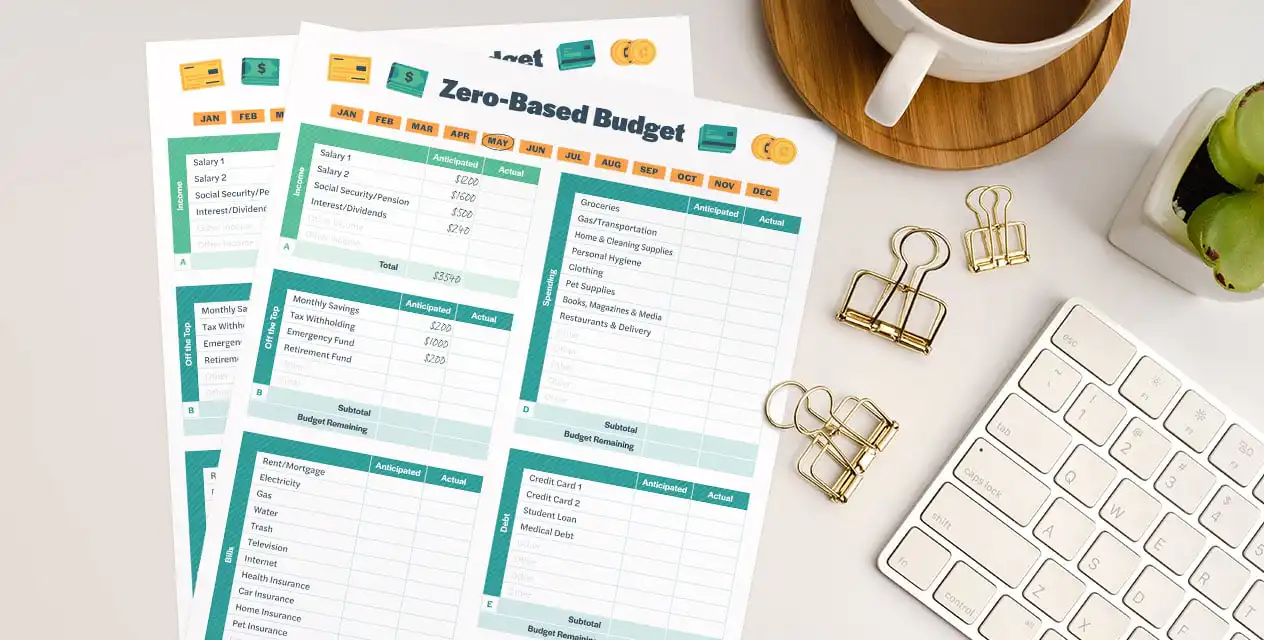
In the modern landscape of personal finance, most individuals approach their monthly earnings with a "leftover" mentality. They pay their rent, settle their utility bills, and perhaps put a modest, fixed amount into a savings account. Whatever remains in the checking account is viewed as a nebulous pool of discretionary funds—a financial "no-man’s-land" where impulse buys, late-night takeout orders, and forgotten subscriptions thrive.
This common practice is precisely where personal financial stability goes to die. Financial experts and behavioral economists alike have identified a powerful antidote to this fiscal drift: Zero-Based Budgeting (ZBB). By ensuring that every single dollar earned is assigned a specific task before the month begins, ZBB eliminates the "loose pool" of cash that leads to overspending. In a zero-based system, your income minus your expenses must equal zero. When every dollar has a job, there is no room for accidental waste.
The Core Philosophy: Shifting the Order of Operations
The fundamental shift required for zero-based budgeting is not mathematical; it is psychological. Traditional budgeting often follows the order of Spend -> Save. Under this model, the consumer spends on necessities and lifestyle choices, then attempts to save whatever "survives" the month. As history and personal bank statements prove, there is almost never anything left.
Zero-based budgeting flips this paradigm to Assign -> Spend. By prioritizing savings, debt repayment, and essential living costs at the very start of the month, you prevent these critical goals from competing with impulse purchases. When you decide how every dollar is spent before the month begins, you are no longer reacting to your bank balance; you are proactively directing your financial future.
Chronology of a Zero-Based Month
To successfully implement this system, timing and methodology are paramount. The following chronological approach ensures maximum efficacy:
Phase 1: Pre-Month Planning
Before the first day of the new month, gather your projected take-home pay. This is your total "budgetable" income. Do not rely on estimates; use your actual net income after taxes. List every essential category: housing, utilities, groceries, transportation, insurance, debt service, investments, and a realistic "fun" budget. If you are paid bi-weekly, treat each paycheck as a discrete event, assigning those specific dollars to the most immediate upcoming needs until the next check arrives.
Phase 2: The Assignment Process
Allocate every dollar until your remaining balance is zero. It is crucial to include a "Miscellaneous" or "Buffer" category. Life is unpredictable; car repairs, medical copays, and social obligations occur. By planning for the unexpected, you prevent a surprise expense from sabotaging your entire month. If you reach the end of your list and still have unassigned money, do not let it sit in checking. Assign it to a savings goal, an extra debt payment, or an investment vehicle.
Phase 3: The Mid-Month Audit
Budgeting is a living process, not a static document. As the month unfolds, track your spending. If you overspend on groceries, you must pull funds from another category—perhaps dining out or entertainment—to keep your bottom line at zero. This is not a sign of failure; it is the system working exactly as intended. It forces you to acknowledge the trade-offs inherent in every spending decision.
Supporting Data: Why Behavioral Finance Supports ZBB
Behavioral economists have long studied the "pain of paying." Research suggests that when individuals are forced to make conscious decisions about individual dollars, they are significantly more likely to reduce consumption of non-essential goods.
A study conducted by the Journal of Consumer Research highlighted that when consumers categorize their spending into specific "buckets," they become more aware of the opportunity cost of their purchases. For example, if a consumer has to move money from a "Vacation Fund" to pay for an expensive, unplanned restaurant meal, the psychological cost of that meal increases. This "friction" is the greatest asset of the zero-based budget. It turns mindless swiping into a deliberate, value-aligned exercise.
Furthermore, statistics from various personal finance platforms indicate that users who adopt ZBB see an average increase in their savings rate of 15% to 20% within the first six months. This is largely attributed to the "unassigned dollar effect," where money that previously disappeared into "miscellaneous" expenses is suddenly captured and redirected toward long-term wealth building.
Expert Perspectives and Professional Commentary
Financial planners often point to the "Zero-Based" method as the gold standard for those attempting to escape the "living paycheck-to-paycheck" cycle.
"The beauty of zero-based budgeting is that it removes the ambiguity," says Sarah Jenkins, a certified financial planner. "Most people don’t overspend because they are reckless; they overspend because they don’t know what they can afford. When you give every dollar a job, you stop asking ‘Can I afford this?’ and start asking ‘Is this the best use of this specific dollar?’ It’s a total shift in agency."
Critics of the system often point to the time commitment, arguing that tracking every dollar is tedious. However, proponents argue that the time spent budgeting—usually 20 to 30 minutes a month—is a fraction of the time spent working to earn the money that is currently being squandered. In this light, ZBB is one of the highest-yield time investments a person can make.
Implications for Your Financial Future
Adopting a zero-based budget has profound implications for long-term financial health.
1. Eliminating "Financial Drift"
Financial drift is the slow erosion of net worth caused by small, unmonitored purchases. By forcing yourself to acknowledge every dollar, you plug the leaks in your financial bucket. Over a decade, those small "leaks" amount to thousands of dollars that could have been earning compound interest.
2. Reduced Financial Anxiety
Anxiety often stems from uncertainty. If you do not know if you have enough money to cover your bills, you are living in a state of constant, low-level stress. With a zero-based budget, you know exactly where you stand. You know you can afford your bills because you assigned the money to them weeks ago.
3. Accelerated Debt Repayment
When you treat debt payments as a non-negotiable line item in your budget, you prioritize them over lifestyle inflation. This acceleration can shave years off mortgage or student loan terms, saving thousands in interest payments.
4. Cultivating Financial Intentionality
The most significant implication of ZBB is the cultural change it forces within the household. It moves the focus from "what can I buy" to "what am I building." Whether it is a home, a retirement fund, or a debt-free lifestyle, ZBB ensures that your money is a tool for your goals rather than a source of confusion.
Conclusion: Take Control of the Narrative
A dollar without a job is a danger to your financial security. If you leave it unassigned, it will eventually find its own job—and it will almost certainly choose a task that does not align with your long-term goals.
By starting before the month begins and maintaining a disciplined approach to reassignment, you transition from a passive participant in your financial life to an active architect. Whether you choose to use a simple notebook, a robust spreadsheet, or a dedicated budgeting application, the methodology remains the same.
The goal is not to punish yourself or eliminate joy from your life. The goal is to ensure that your spending is a reflection of your values. By giving every dollar a job, you ensure that your money is always working for you, rather than the other way around. Start this month, track your progress, and watch as the "loose pool" of money transforms into a clear, directed engine for your financial independence.
 Muslim
  Asro
Asro