
 By Reynand Wu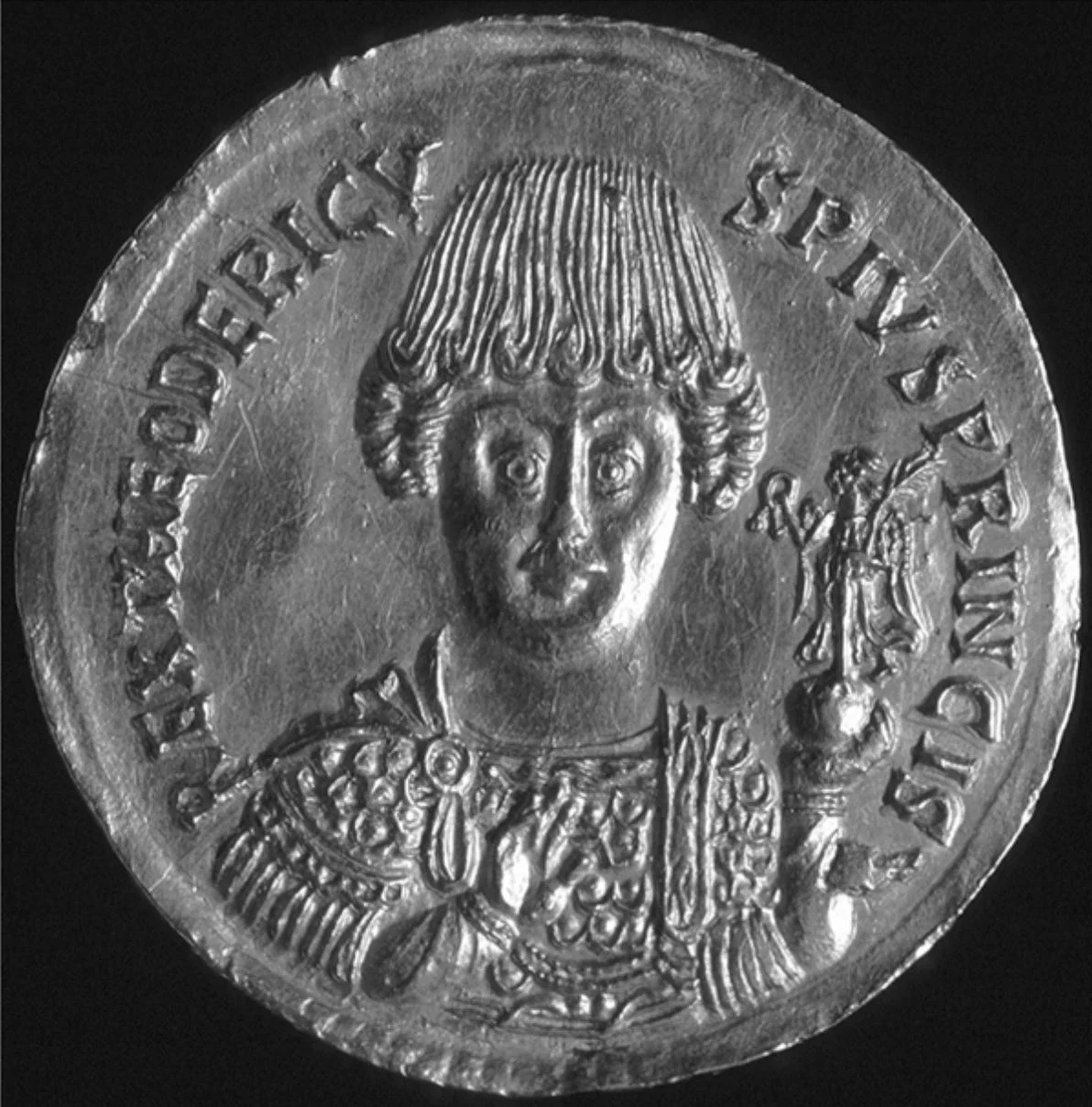
For generations, students of history have been taught that the Roman Empire ended in a definitive, cataclysmic crash in 476 AD. This narrative, centered on the deposition of Romulus Augustulus by the Germanic chieftain Odoacer, serves as a convenient historical bookmark. Yet, for those who look beyond the textbooks, the date 476 begins to feel less like an ending and more like a bureaucratic transition.
When one investigates the landscape of Italy in the decades following the traditional "fall," the expected chaos is conspicuously absent. Instead, we find a society that remained remarkably continuous, governed by the same institutions, laws, and social structures that had defined the Roman world for centuries. Far from disappearing, the Roman state underwent a transformation that was as much an evolution of administrative convenience as it was a political realignment.
The Myth of the Sudden Collapse
The traditional view of the "Fall of Rome" posits that the empire was a monolith that shattered under the pressure of barbarian invasions. However, historical evidence suggests that the events of 476 were largely symbolic. When Odoacer sent the imperial regalia to Constantinople, he was not dismantling Rome; he was signaling a political realignment. He opted to rule Italy not as a Roman Emperor, but as a King, while meticulously maintaining the Roman civil service and the legal framework that kept the peninsula functioning.
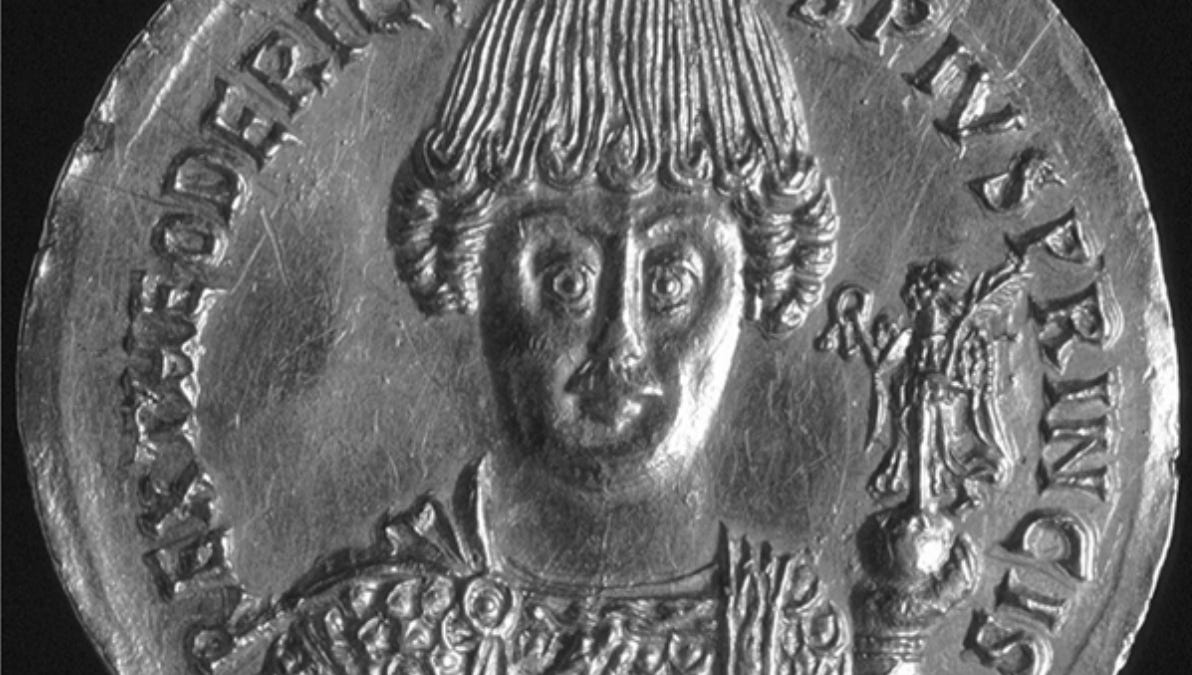
The true testament to this continuity was the reign of Theoderic the Great (493–526). An Arian Goth who spent his youth as a hostage in Constantinople, Theoderic possessed a unique understanding of how the Roman machine operated from the inside. When he took power, he did not seek to destroy the state; he sought to steward it. Under his rule, the machinery of the Western Roman Empire remained intact for 33 years—a period of stability that lasted longer than the combined reigns of the previous nine Western emperors.
Chronology: The Twilight Years of the West
- 476 AD: Odoacer deposes Romulus Augustulus, sending the imperial regalia to Constantinople. He begins his rule as King, utilizing the existing Roman administrative apparatus.
- 489–493 AD: Theoderic the Great invades Italy at the behest of the Eastern Roman Emperor to displace Odoacer, eventually securing control of the peninsula.
- 500 AD: Theoderic visits Rome, addresses the Senate, and sponsors public games, cementing his image as a protector of Roman tradition.
- 519 AD: Theoderic’s son-in-law, Eutharic, holds the consulship alongside the Eastern Emperor Justin, symbolizing the continued integration of the Gothic leadership into the Roman political order.
- 523 AD: Religious tensions rise as Constantinople begins persecuting Arian Christians, leading to friction between Theoderic and the Roman elite.
- 524 AD: The execution of the philosopher Boethius marks a significant turning point, signaling the breakdown of trust between the Gothic rulers and the Roman aristocracy.
- 530s–550s AD: The Gothic state collapses following the death of Theoderic, exacerbated by the brutal reconquest campaigns of the Eastern Roman Emperor Justinian.
Supporting Data: The Mechanics of Continuity
The persistence of Roman life after 476 was not accidental; it was the result of the separation of civilian and military authority, a reform initiated by Diocletian and finalized by Constantine. By decoupling the military command (the magister militum) from the provincial civilian administration, the Empire had created a structure that allowed the "hardware" of the state to survive even when the "software" of the military was replaced.
When the Gothic army entered Italy, they were not a revolutionary force sweeping away the old order. They were, in effect, "plugged in" to the existing administrative slots left vacant by the defunct Roman army. This transition was so seamless that the civilian government, led by figures like the bureaucrat Liberius, continued to manage the redistribution of land and the collection of taxes with the same bureaucratic precision used by their predecessors.
Historian Walter Goffart has famously argued that the redistribution of land to the Gothic military was likely a fiscal transaction—a reallocation of tax revenues—rather than a chaotic land grab. The lack of detailed records regarding these land transfers suggests that, to the Roman bureaucracy, this was simply business as usual.
Institutional Resilience
- The Senate: Continued to meet and wield influence throughout Theoderic’s reign, maintaining the continuity of local power structures.
- Legal & Administrative Style: Chancery documents continued to be written in the highly sophisticated, intricate style of the Roman imperial court, accessible only to the well-educated Roman elite.
- Consular Appointments: The appointment of Consuls remained a joint effort between the Gothic King and the Eastern Emperor, providing a thin but vital layer of legal legitimacy.
Official Responses and Political Friction
The stability of the post-Roman period was largely predicated on the uneasy alliance between the Gothic leadership and the Roman Catholic aristocracy. This arrangement was fragile by design. As long as the Eastern Roman Empire remained a neutral or supportive neighbor, the Italian peninsula prospered.
However, the "long dusk" began to transition into a true dark age when the East shifted its policy. When Constantinople began persecuting Arian Christians in 523, the religious divide between the Gothic rulers and the Roman population became a political liability. Theoderic’s resulting paranoia led to the trial and execution of figures like Boethius, the last great classical philosopher of antiquity. This was the moment the "Roman" system began to turn on itself.
Implications: The True End of Rome
The collapse of the Roman West was not the result of the initial "barbarian" takeover in 476. Rather, it was a slow, agonizing dissolution brought about by the subsequent wars of the 6th century. The Eastern Roman Empire’s attempt to "reconquer" Italy under Justinian was, ironically, the catalyst for the destruction of the very institutions that had survived the Goths.
The violence of these wars was so profound that it fundamentally altered the map of human settlement. The founding of Venice, for instance, was a direct response to the absolute collapse of security on the Italian mainland; it was safer to live on the water than in the ruins of a civilization that had been ripped apart by its own imperial cousins.
The archaeological record confirms this shift. While the early post-476 period shows a degree of continuity that suggests a functioning society, the mid-6th century shows a sharp, undeniable decline in material culture. The lights of Italy did not go out in 476; they flickered for another half-century, sustained by the remnants of a system that believed it was still the center of the world.
The lesson for modern historians is clear: political labels are often less important than administrative reality. The "Fall of Rome" was a transition of power that, for a time, successfully preserved the essence of the state. It was only when the internal trust between the ruling class and the governed—and between the Western and Eastern halves of the Empire—finally fractured that the ancient world truly gave way to the medieval. We see now that the end of an empire is rarely a single date on a calendar; it is a long, twilight descent into a new, uncertain reality.
 Asep Darmawan
  Layla Zulfa
  Nana Wu