
 By Nana Wu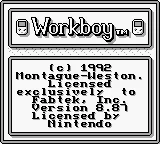
In the history of consumer electronics, few stories are as evocative as that of the "lost" peripheral. It is a tale of ambition, hardware limitations, and the sheer serendipity of digital archaeology. For decades, Workboy—a planned productivity suite for the original Nintendo Game Boy—existed only as a ghostly presence in the pages of trade magazines and the collective memory of 1990s gaming enthusiasts. It was a device that promised to turn a simple 8-bit handheld console into a professional-grade micro-workstation.
For nearly thirty years, Workboy was considered vaporware, a project abandoned to the dustbin of history. However, thanks to a massive industry data leak in 2020, this digital relic was recovered, offering a fascinating glimpse into a moment when Nintendo nearly pivoted toward the mobile enterprise market.
Main Facts: What Was Workboy?
Workboy was not merely a game; it was an ambitious hardware and software ecosystem designed to transform the Game Boy into a portable personal digital assistant (PDA). Developed by Source and licensed to Fabtek, Inc., the system was intended to provide users with a functional workstation, allowing them to manage complex tasks far beyond the capabilities of contemporary portable electronics.
The hardware package included a specialized QWERTY keyboard that physically docked with the Game Boy, providing a tactile interface for data entry. The software was remarkably robust for its era, boasting a suite of professional tools:
- Organizational Suite: An address book, appointment calendar, and note-taking module.
- Utility Tools: A currency converter, temperature unit converter, and a multi-language dictionary supporting five languages.
- Financial Tracking: A rudimentary, yet revolutionary, bank account balance manager.
In an era where the most sophisticated mobile tech was a digital watch or a basic calculator, the Workboy represented a "futuristic" vision of the portable office. The project was intended to bridge the gap between leisure gaming and professional utility, positioning the Game Boy as a versatile tool for students and business travelers alike.
Chronology: From Magazine Hype to Digital Resurrection
The chronology of Workboy is defined by a sharp rise in publicity followed by a long, silent descent into obscurity.
The 1992 Tease
In May 1992, the project reached its zenith in the public consciousness. Nintendo Power, the industry-leading magazine of the era, featured advertisements and promotional materials for Workboy. These features promised that the device would soon be hitting shelves, with an expected retail price that made it seem accessible to the average consumer. For many, this was the first time they realized that the Game Boy could be more than just a home for Tetris or Super Mario Land.
The Disappearance
Following the initial press push, Workboy simply vanished. No press release announced its cancellation; no final production run was ever sent to retailers. It became a piece of "vaporware"—a product hyped by marketing departments but never brought to market. For the next 28 years, the only evidence of its existence was the occasional mention in retrospective articles about "lost" hardware. The specialized keyboard was presumed destroyed or lost in a landfill, and the software was thought to have been wiped from Nintendo’s internal archives.

The 2020 Data Leak
In September 2020, the gaming world was rocked by a massive, unauthorized release of Nintendo’s internal data, now widely known as the "Gigaleak." Among the terabytes of source code, development prototypes, and internal documents was the ROM file for Workboy. This discovery transformed the device from a footnote in history into an active research project for digital preservationists.
The Recovery of the Hardware
The story reached its conclusion in December 2020. Gaming historian and journalist Liam Robertson, working through the DidYouKnowGaming? YouTube channel, successfully tracked down a physical prototype of the Workboy keyboard. By pairing the recovered physical hardware with the leaked ROM, Robertson was able to prove that the device was not only real but functional, providing the public with the first-ever video evidence of the system operating as intended.
Supporting Data: Technical Discrepancies and Versioning
The technical forensic analysis of the Workboy ROM has revealed a number of curiosities regarding its development cycle. Perhaps most notable is the discrepancy between the versioning displayed on the screen and the internal code strings.
The Title Screen Mystery
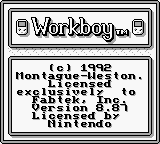
When the Workboy software boots, the title screen explicitly states "Version 8.87." However, a deep dive into the underlying source code reveals that the internal versioning strings are labeled "5.74."

Researchers discovered that this is not a coincidence but a deliberate "patching" process performed by the hardware. Before the title screen renders, the software copies its text strings into RAM. It then performs an automated check of the ROM at offsets 0x00FEA-0x00FED, identifying the "5.74" string and overwriting it with "8.87" in real-time. This suggests that the developers were iterating on the code frequently enough that they needed an automated way to update the display version without manually editing every single language file in the software.
Localization and Global Ambition
The software was clearly designed for an international market. The ROM includes full text support for English, Spanish, Italian, German, and French. The following table illustrates the complexity of the localization, with specific offsets provided for the copyright and licensing information:
| Language | ROM Offset Range | Key Licensing Text |
|---|---|---|
| English | 0x08072-0x080D6 | Licensed exclusively to Fabtek, Inc. |
| Spanish | 0x08E9A-0x08F09 | Con licencia exclusivamente a Fabtek, Inc. |
| Italian | 0x10075-0x100E2 | In Licenza esclusivamente a Fabtek, Inc. |
| German | 0x14078-0x140E1 | Lizenziert exklusiv fuer Fabtek, Inc. |
| French | 0x1C077-0x1C0DC | Sous licence exclusive a Fabtek, Inc. |
This multi-language support indicates that Nintendo and the developers at Source were preparing for a wide-scale, global distribution, further highlighting how close the project came to actual retail availability.
Official Responses and Industry Context
Nintendo has never provided a formal post-mortem on why Workboy was canceled. However, industry analysts have long suspected that the device fell victim to the "early mover" trap.

In the early 90s, the market for handheld electronics was volatile. The costs associated with manufacturing a proprietary, high-quality QWERTY keyboard for a niche productivity add-on were likely prohibitively expensive. Moreover, the Game Boy’s screen—while iconic—was a monochrome, low-resolution LCD that was not ideally suited for document management or complex address books.
The device also faced stiff competition from dedicated digital organizers, such as those produced by Casio or Sharp, which were rapidly shrinking in size and cost. Ultimately, Nintendo likely determined that the margin for Workboy was too thin and the market potential too small to justify a full-scale manufacturing rollout. The project was quietly shelved to focus on more successful, gaming-centric peripherals, such as the Game Boy Camera and Printer, which eventually launched in 1998.
Implications for Digital Preservation
The recovery of Workboy serves as a landmark case for the importance of digital preservation. Had the 2020 leak not occurred, the details of the software would have remained locked in proprietary code, and the hardware would likely have been lost to history.
The Value of the Leak
The Workboy case highlights that "leaks" are often the only way to save a portion of corporate history. When companies choose not to archive or publicly release their scrapped projects, the information is effectively erased. The fact that the Workboy ROM and the physical prototype were reunited nearly three decades later is an anomaly, not the rule.

Lessons for Modern Hardware Development
For modern developers, Workboy is a cautionary tale about the perils of "feature creep." The device tried to do too much with too little. It attempted to turn a handheld gaming console into a desktop PC replacement, a task for which the 8-bit architecture was fundamentally unsuited. Today, this kind of cross-functional device integration is standard (as seen in the modern smartphone), but in 1992, the technology simply could not keep pace with the developers’ ambition.
In conclusion, Workboy remains a fascinating "what if" of the early 1990s. It represents a brief moment where Nintendo experimented with the boundaries of their hardware, looking toward a future where the Game Boy could be more than just a toy. While it failed to make it to the store shelves, its recent recovery provides us with a profound look at the ingenuity of the developers of the era, and the enduring legacy of one of gaming’s most mysterious lost projects.
 Asep Darmawan
  Reynand Wu
  Layla Zulfa