
 By Nana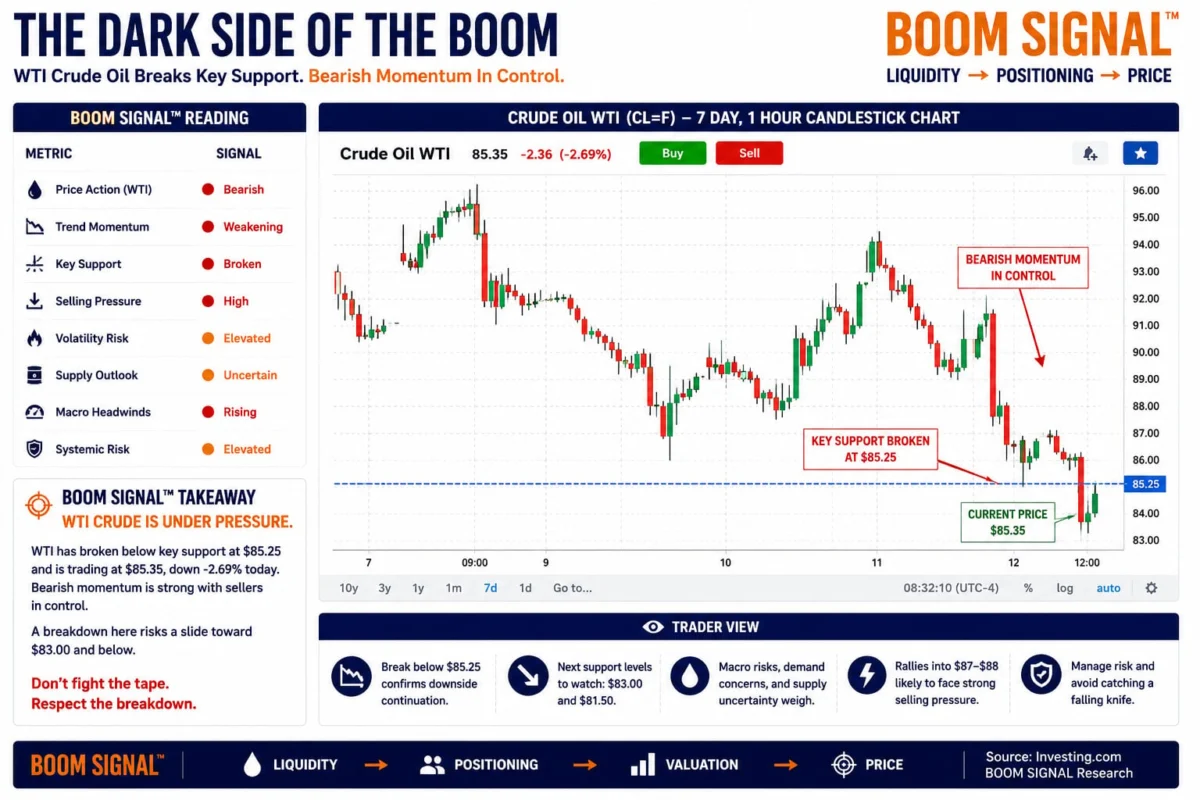
The global energy landscape is currently undergoing a fundamental transformation, shifting from a period of acute, panic-driven volatility to a complex era of "structural caution." As diplomatic efforts to secure a peace deal in the Middle East intensify, market observers are increasingly viewing these headlines not merely as political milestones, but as critical "inventory circuit breakers."
The recent signals from the Trump administration regarding a potential pause in escalation against Iran have triggered a notable cooling effect on crude oil prices. However, seasoned analysts argue that the market is not simply returning to a pre-crisis equilibrium. Instead, it is recalibrating to a new reality where the "geopolitical margin call" of the last several months has left behind deep structural scars in global inventory levels and energy logistics.
Main Facts: The De-escalation Dividend
The primary driver of the recent price retracement—with WTI sliding toward $87 and Brent stabilizing around $84—is the emerging narrative of diplomatic progress. For months, the energy sector has functioned less like a traditional commodity market and more like a volatile security apparatus, with prices tethered to the "live fuse" of the Strait of Hormuz, Kharg Island, and the integrity of global shipping lanes.
The market had been pricing in a worst-case scenario: a total blockade of Middle Eastern energy exports. Now, as the probability of an immediate, catastrophic disruption fades, the market is shedding its most extreme "war premium." However, the consensus among major financial institutions, including Goldman Sachs, is that the floor under oil prices remains firmly elevated. The system is no longer screaming "apocalypse," but it remains deeply guarded.

Chronological Evolution of the Crisis
To understand the current market behavior, one must look at the timeline of the disruption:
- Phase 1: The Initial Shock. The onset of hostilities created a violent disconnect between supply and demand, as traders scrambled to account for a potential 14 to 15 million barrel-per-day (bpd) hit to Middle East energy flows.
- Phase 2: The Buffer Period. Contrary to expectations of a total price collapse or infinite surge, the market proved resilient. This was not due to the irrelevance of the conflict, but rather the presence of "hidden buffers"—approximately 5 million bpd of demand destruction and 4 million bpd of existing oversupply—that absorbed the initial impact.
- Phase 3: The Inventory Scramble. As the conflict dragged on, global strategic reserves and commercial inventories were aggressively drawn down. The Energy Information Administration (EIA) issued multiple warning flares, highlighting that the closure of the Strait of Hormuz was forcing a systematic depletion of global stockpiles.
- Phase 4: The Diplomatic Pivot. We are currently in the transition toward what policymakers hope will be an orderly normalization. Goldman Sachs now assumes that Gulf producer exports will normalize by late August—a delay that, while manageable, precludes any immediate return to pre-war surplus conditions.
Supporting Data: The Goldman Sachs Framework
Daan Struyven, a key voice at Goldman Sachs, provides a rigorous framework for assessing the path forward. While he maintains a $90 per barrel forecast for Brent in the fourth quarter of 2026, he has revised his 2027 average forecast downward by $5 to $80 per barrel.
The Split in the Barrel
The current market is defined by a "split" between the front end and the back end:
- The Front End: Still burdened by a security premium, shipping risks, and the logistical nightmare of depleted inventories.
- The Back End: Beginning to absorb the impact of structural shifts. Supply from non-OPEC producers—notably the US, Brazil, Guyana, and the UAE—is outperforming expectations.
Furthermore, the "demand hose" is leaking in ways previously unseen. China’s aggressive pivot toward electric vehicles (EVs) is no longer a peripheral story; it is a structural factor. Goldman estimates that roughly 10% of recent demand weakness is permanent, effectively capping the ceiling for oil prices even if global growth resumes.

Official Responses and Strategic Calculations
The urgency of the Trump administration’s push for a peace deal is not purely altruistic; it is a calculated "energy cliff avoidance" exercise.
The Inflationary Monster
Policymakers are acutely aware that oil prices act as a multiplier for inflation. If the drawdown of strategic reserves had continued unabated, Brent could have punched through triple-digit thresholds, turning the global economy into a "hostage of the barrel." By pushing for a resolution—or at least a ceasefire—the administration is attempting to prevent the oil market from becoming the "match that relights the inflation bonfire."
Strategic Reserve Repair
The upcoming phase of "reserve repair" is equally critical. Even if peace headlines persist, the market will not see a glut of supply. The rebuilding of the Strategic Petroleum Reserves (SPR) will likely soak up excess barrels, keeping prices anchored to a higher "security floor" than historical models would suggest.
Implications: The New Macro Rulebook
The most profound takeaway from the current market cycle is the evolution of the macro rulebook. Geopolitical events can initiate a price spike, but the sustainability of that spike is determined by four pillars: demand destruction, supply response, strategic reserve management, and rerouting logistics.

The Scenario Map
Goldman Sachs outlines three potential paths for the market:
- The Benign Case: Brent averages $70 (Q4 2026) and $60 (2027), assuming rapid export normalization by July and sticky demand destruction.
- The Adverse Case: Brent averages $110 (Q4 2026), assuming normalization is delayed until October.
- The Severely Adverse Case: Brent reaches $140 (2027), assuming Hormuz remains a flashpoint and exports only rise incrementally through late 2027.
The Verdict for Traders
For the investment community, the takeaway is clear: the era of "one-way bullish panic" is over, but the era of "clean bearish comfort" has not yet arrived. The market is transitioning from an emergency state to a long-term repair cycle.
Oil is no longer the sole driver of the "casino," but it remains a volatile variable. Traders must distinguish between "peace rumors" and "physical reality." While the front end of the curve may sell off on headlines, the underlying supply-demand mechanics—specifically the depletion of OECD inventories and the permanent shift in demand patterns—suggest that the market will continue to wear its "flak jacket."
In summary, we are witnessing a permanent shift in how energy security is valued. The barrel can still bite, but the market has successfully installed a series of circuit breakers that prevent it from becoming a systemic "macro wrecking ball." Investors should prepare for a market that is fundamentally wounded but strategically protected, trading in a range that is higher than the historical mean, but lower than the fever dreams of the recent conflict peak.
 Raul Delapena Setiawan
  Nana Muazin
  Evan Lee Salim