
 By Reynand Wu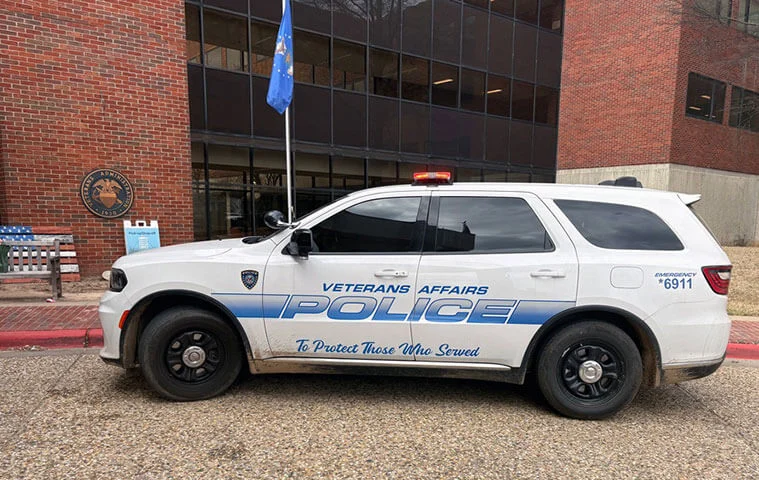
The Department of Veterans Affairs (VA) is currently grappling with a severe and persistent crisis in its law enforcement ranks. A scathing report from the VA’s Office of Inspector General (OIG) has revealed that the department’s efforts to modernize how it determines police staffing levels have been fundamentally flawed, leaving medical facilities vulnerable and leadership without a reliable mechanism to assess safety needs.
For years, staffing shortages among VA police have been identified as a critical vulnerability, hindering the department’s ability to ensure the safety of veterans, staff, and visitors. The OIG’s latest findings indicate that a tool specifically designed to resolve these staffing discrepancies was never properly validated or distributed, rendering it ineffective and essentially non-existent for the facility commanders who needed it most.
The Failed Tool: A Chronology of Management Oversight
The saga of the VA’s flawed police staffing model highlights a recurring theme of bureaucratic disconnect between the department’s central leadership and its frontline operations.
In 2023, the VA issued a directive mandating the use of a newly developed tool intended to quantify the specific staffing requirements for police officers across its national network of medical facilities. The goal was to replace guesswork with data-driven decision-making. However, the OIG’s audit painted a starkly different reality.
When investigators interviewed 25 facility police chiefs, the results were alarming: 24 of the 25 chiefs reported that they had not received a final version of the staffing tool. The single chief who believed he possessed the "final" version was, in fact, operating with an outdated, preliminary draft.
The audit identified three primary failures in the management of this initiative:
- Lack of Validation: The VA could not produce evidence that the tool had undergone the necessary rigorous testing to ensure its accuracy before deployment.
- Distribution Failures: There was no centralized effort to ensure that the software or mathematical model reached the facility level.
- Internal Procedural Neglect: The department’s manpower management staff failed to follow their own established protocols for finalizing, testing, and verifying the tool’s output.
Technical Flaws and Vulnerabilities in the Data
Beyond the failure of distribution, the tool itself suffered from significant design flaws that raised questions about the integrity of the data it produced. According to the OIG, the staffing model was susceptible to manipulation and technical errors.
One of the most glaring issues was how the tool handled organizational complexity. The software "inaccurately rolled up staffing data" by aggregating subsidiary facilities under a single parent location. This approach masked the unique, localized security needs of smaller clinics or specialized centers, potentially leading to understaffing in critical areas.
Furthermore, the audit discovered that the results generated by the tool could be easily skewed. Because the model relied on inputs such as patrol hours, it was discovered that a user could manipulate these variables to influence the final staffing recommendation. Without a standardized, secure, and validated model, VA leadership has been operating in the dark, lacking a consistent mechanism to determine if a facility requires ten officers or fifty to maintain a safe environment.
Supporting Data: A History of Chronic Shortages
The recent OIG findings are not an isolated incident; they are the latest chapter in a long-running struggle to maintain adequate security at VA medical centers.
Data from previous years indicates that the shortage is pervasive. In a report published last year, nearly 60% of all VA facilities reported that their police forces were significantly understaffed. The impact of these shortages is not merely administrative; it has real-world consequences for the security of those within the VA ecosystem.
The Government Accountability Office (GAO) provided further context to this crisis in a report released this past May. At the time of that audit, approximately 20% of all authorized VA police positions were vacant. The GAO conducted covert testing at several facilities to gauge the effectiveness of the current security posture. The results were concerning:
- Security Breaches: Undercover investigators were able to smuggle prohibited items, such as knives, into secure areas of medical facilities.
- Lack of Oversight: Investigators observed instances of prohibited behavior, including the consumption of alcohol on facility grounds, without being confronted or intercepted by security personnel.
These findings underscore that the "staffing gap" is not just a human resources statistic—it is a functional failure that compromises the sanctity of the medical environment intended for veterans.
Official Responses and Strategic Shifts
In response to the OIG report, the Department of Veterans Affairs has formally agreed with the findings and the subsequent recommendations. The department acknowledged that the failures in the staffing tool project were unacceptable and has committed to a more robust oversight process.
As the audit was still underway last fall, the VA initiated a major structural reorganization. The department consolidated its police forces into a single command structure under a newly formed "Office of Operations, Security, and Preparedness." This centralization is intended to provide better oversight and ensure that security policies are applied uniformly across the country.
Additionally, the VA has assigned a dedicated project team to develop an entirely updated police manpower model. The department has promised that this time, it will adhere to strict validation protocols, ensure that the tool is rigorously tested, and verify that the final product is effectively disseminated to all field offices.
To address the recruitment and retention side of the crisis, the VA also informed the media that it has begun the process of reclassifying VA police positions to make them eligible for higher pay scales. The hope is that by making these roles more competitive, the department can begin to close the 20% vacancy gap that has hampered operations for years.
Implications for the Future of VA Security
The implications of these management failures are profound. For the thousands of veterans who rely on the VA for healthcare, the presence of trained, fully staffed, and professional police is a baseline expectation for a safe recovery environment.
The Path Toward Reform
The VA’s attempt to centralize security operations suggests that the department recognizes the dangers of a fragmented, facility-by-facility approach. However, centralization alone will not solve the issue if the underlying data models remain flawed.
The success of the new "Office of Operations, Security, and Preparedness" will likely depend on three factors:
- Data Integrity: The new manpower model must be immune to the "manipulation" seen in the previous iteration. This requires independent oversight and, potentially, external auditing of the staffing metrics.
- Competitive Compensation: As the GAO and OIG reports highlight, the staffing shortage is also a market-based issue. If VA police salaries remain stagnant relative to local and municipal law enforcement, the department will continue to struggle with recruitment, regardless of how well their staffing tool is designed.
- Culture of Compliance: The OIG’s report revealed a breakdown in internal procedures. Even the best-designed tool is useless if facility commanders do not receive it, understand it, or follow the directive to implement it. The VA must foster a culture where administrative compliance—particularly regarding safety-critical tools—is treated with the same urgency as clinical care.
The Human Element
Beyond the metrics and the organizational charts, the VA faces a significant challenge in morale. Police officers tasked with guarding some of the most sensitive locations in the country have been working in an environment characterized by chronic understaffing and failing support systems. Ensuring that these officers feel equipped, supported, and fairly compensated is essential for maintaining the security of the nation’s veteran population.
As the VA moves forward with its updated staffing model, stakeholders, including Congress and veterans’ advocacy groups, will be watching closely to see if these promises of reform translate into a tangible, measurable increase in the safety of medical facilities. The era of "guesswork" in VA police staffing must end if the department is to fulfill its core mission of providing secure, world-class care to those who have served.
 Muslim
  Suro Senen