
 By rifanmuazin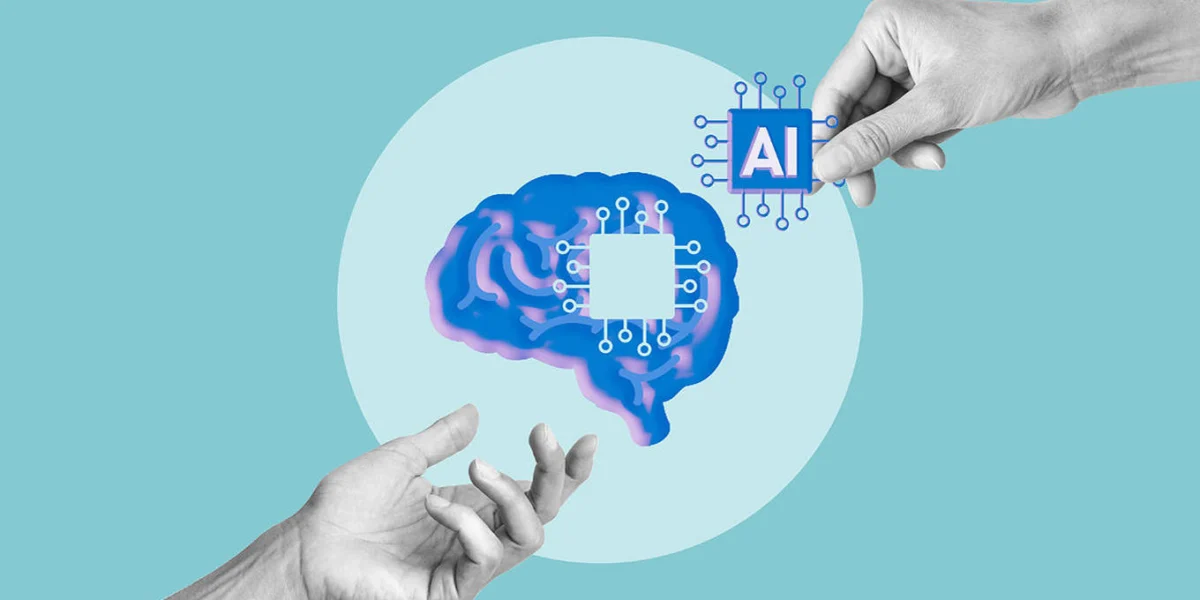
By Sami Mahroum
June 12, 2026
Artificial Intelligence (AI) has transcended its role as a mere tool for automation; it is fundamentally altering the architecture of human thought. We are witnessing a historical shift where tacit human knowledge—the intuitive, experience-based expertise that once defined a master craftsman or a seasoned diplomat—is being codified, extracted, priced, and distributed at a global scale.
While this transformation promises to democratize cognitive labor, providing every individual with a "super-powered" assistant, it presents a profound paradox: the same technology that lowers the barrier to complex tasks may simultaneously atrophy the very human capacities required to maintain and evolve the complex societies we inhabit.
The Hard Limit of Cognition: Revisiting Miller’s Constraint
To understand the magnitude of this shift, we must look back to the foundations of cognitive psychology. In his seminal 1956 paper, The Magical Number Seven, Plus or Minus Two, the American psychologist George Miller identified a definitive bottleneck in human consciousness. Miller argued that our working memory possesses a finite capacity; we can effectively juggle only five to nine pieces of information at any given moment.
This constraint is not merely a quirk of psychology; it is the fundamental "operating system" limit that has dictated human education, decision-making, and organizational hierarchies for centuries. We have built entire civilizations around the reality that human attention is a scarce, finite resource.
However, AI has shattered this ceiling. By externalizing cognitive processing, Large Language Models (LLMs) and neural networks are effectively granting humanity an "extended working memory." We no longer need to hold seven variables in our heads when an algorithm can manage seven thousand. But as we offload the heavy lifting of synthesis and retrieval to machines, we are entering uncharted territory: what happens to the human mind when the necessity for cognitive struggle is removed?
Chronology of a Cognitive Shift
The path to our current state of "algorithmic dependency" was paved by decades of incremental technological progress:
- 1956: George Miller publishes his findings on short-term memory limits, establishing the "Miller’s Law" paradigm.
- 1997: IBM’s Deep Blue defeats Garry Kasparov, proving that machines could outperform humans in high-complexity, rule-based domains.
- 2010s: The advent of "Deep Learning" allows machines to identify patterns in vast datasets that were previously invisible to human analysts.
- 2022: The public release of Generative AI (LLMs) shifts the frontier from analytical superiority to creative and linguistic synthesis.
- 2026: We now reside in an era where AI agents are integrated into the workflow of nearly every professional sector, from medicine and law to software engineering and creative arts.
Supporting Data: The Efficiency vs. Resilience Trade-off
The empirical data surrounding AI adoption presents a dual narrative. On one hand, productivity gains are undeniable. Studies conducted throughout 2025 indicate that mid-level professionals utilizing AI-integrated workflows saw a 40% increase in output speed for routine cognitive tasks, such as summarizing legal filings or writing boilerplate code.
However, the "resilience data" tells a different story. In controlled environments where AI support was removed, professionals showed a measurable decline in their ability to perform the same tasks manually. This suggests a phenomenon known as "cognitive offloading," where the brain effectively "deletes" the neural pathways associated with tasks that are frequently delegated to software.
Furthermore, economic data suggests that the value of raw human labor is shifting. As AI democratizes access to expert-level outputs, the market value of "average" cognitive work is plummeting. Conversely, the premium on human-centric skills—empathy, ethical judgment, and high-stakes crisis management—is rising. Yet, there is a dangerous gap: if we fail to train junior employees because AI does the "entry-level" work for them, we will eventually run out of senior experts who have the depth of experience required to supervise these systems.
Official Responses and Institutional Concerns
The global academic and policy community is increasingly wary of the long-term implications of AI-driven cognitive atrophy.
In early 2026, the International Association for Educational Development (IAED) issued a statement expressing concern over the "hollowing out" of critical thinking skills in higher education. The report warned that "if students rely on generative AI to synthesize complex arguments before they have mastered the discipline of argumentation themselves, we risk creating a generation that knows how to generate answers without understanding the questions."
Corporate leaders, meanwhile, are taking a bifurcated approach. Tech firms argue that we are simply "leveling up" human capabilities. "We are not replacing the human mind; we are giving it a scaffolding," says Dr. Aris Thorne, a leading AI ethicist. "Just as the calculator did not make us worse at math, but rather allowed us to focus on higher-order physics, AI is allowing us to move past the drudgery of information processing."
However, government regulators in the EU and North America have begun discussing "Cognitive Sovereignty" mandates—policies that would require essential infrastructure and decision-making sectors (such as healthcare and defense) to maintain "human-in-the-loop" capabilities that do not rely on AI synthesis.
Implications: The Future of the Human Mind
As we navigate the next decade, the implications of this technological leap are profound.
1. The Death of the "Journeyman"
Historically, the "journeyman" phase of a career was a period of intense cognitive struggle where an apprentice internalized the tacit knowledge of their field. If AI eliminates this period by providing the "final product" without the "process," we may lose the transmission of tacit knowledge that cannot be digitized.
2. The Rise of the "Architect-Operator"
The future workforce will likely be divided between those who understand how to orchestrate AI systems and those who are merely passive recipients of their output. The risk is a new form of digital inequality, where a small elite retains the cognitive rigor to direct AI, while the broader population becomes intellectually dependent on the algorithms they use.
3. The Need for "Cognitive Fitness"
Just as the physical sedentary lifestyle of the 20th century led to the rise of the fitness industry, the cognitive sedentary lifestyle of the 21st century may necessitate a "cognitive fitness" movement. Education systems may need to pivot away from rote learning—which AI now handles—toward "cognitive resistance training," focusing on activities that force the human mind to grapple with complexity, ambiguity, and high-stakes decision-making without digital assistance.
Conclusion: Balancing the Scales
AI is the most powerful tool humanity has ever invented. It offers the potential to transcend Miller’s "Magical Number Seven" and solve problems that were once deemed computationally impossible. However, we must treat our cognitive faculties like any other finite resource: if we do not use them, we will surely lose them.
The goal for the coming years should not be total integration, but rather a "strategic partnership" with AI. We must ensure that we use the machine to augment our capabilities, not replace our foundational thinking. We must continue to teach the skills that require human intuition, moral courage, and deep, unassisted reflection.
In the final analysis, AI can tell us what to do based on the sum of human knowledge, but only humans can decide why we should do it. That "why"—the capacity for purpose, ethics, and long-term vision—is the only thing that cannot be extracted, priced, or distributed by an algorithm. As we outsource our working memory to the cloud, we must be careful not to outsource our soul to the server.
 Dwi Wanna
  Azzam Bilal Chamdy
  Evan Lee Salim