
 By Nana Muazin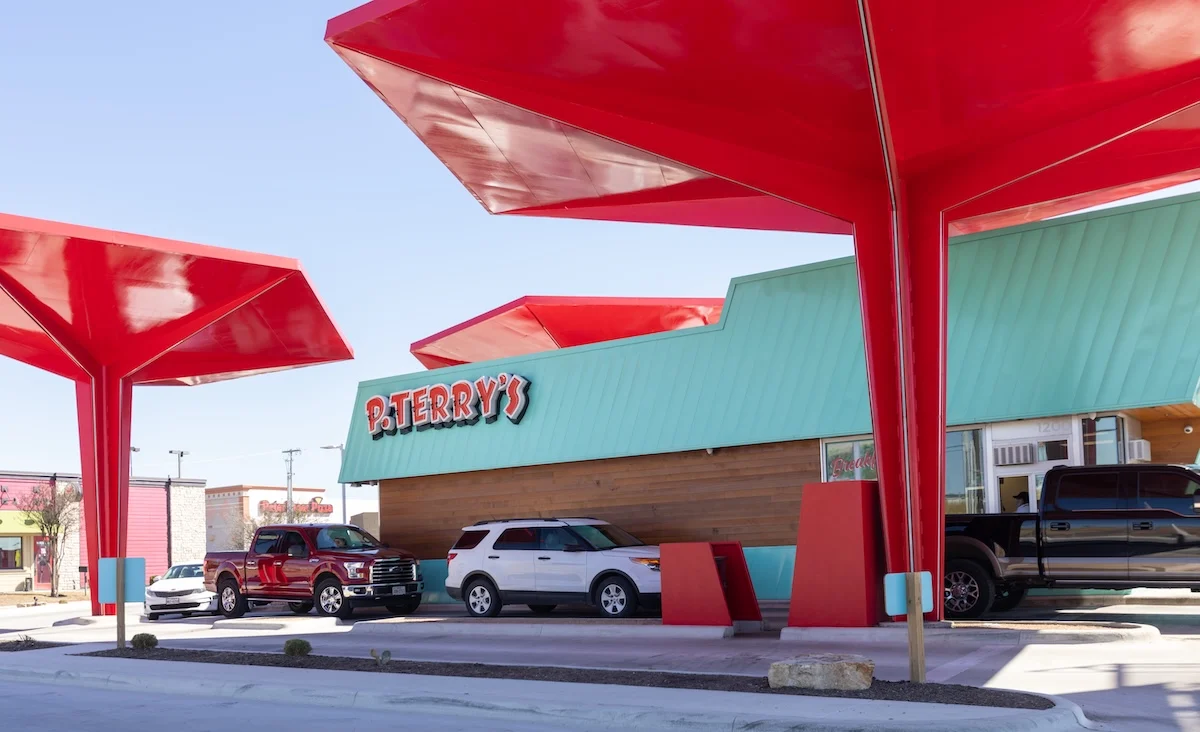
June 11, 2026 — As the landscape of global finance continues to shift toward sustainability and social equity, the "Agents of Impact" community finds itself at a critical juncture. From the operational mechanics of stationary energy storage to the democratizing force of employee ownership, the following report explores the latest developments in capital deployment, reporting standards, and professional mobility within the impact investing sector.
1. Building a Career in Impact Investing: A Roadmap for the Next Generation
The surge in interest toward impact investing has created a unique bottleneck: a high volume of motivated talent seeking entry into a specialized, often opaque market. To bridge this gap, ImpactAlpha is convening a high-level digital summit on Monday, June 15, at 10am PT / 1pm ET / 6pm London.
The session, titled "Launching and Building Your Career in Impact Investing," will feature a panel of industry veterans, including:
- Alyssa Greenspan, Community Capital Management
- Kimberlee Cornett, Robert Wood Johnson Foundation
- Aifuwa Ehigiator, The California Endowment
- Cynthia Wong, City of San Francisco
- Sherry Wang, Vistria Group
The panel is designed to provide actionable intelligence for students, recent graduates, and seasoned career-switchers. The conversation will focus on identifying entry points, networking within mission-aligned circles, and developing the technical competencies required to thrive in a sector that demands both financial rigor and ethical intentionality.
2. Deploying Capital: The Pivot from EVs to Grid Storage
Europe’s ambition to build a self-sustaining electric vehicle (EV) battery supply chain has hit a significant reality check. Following the bankruptcy filings of Norwegian cell producer Morrow Batteries and Sweden’s Northvolt, it has become clear that the "homegrown industry" thesis for EVs faces stiff headwinds from low-cost Chinese and Korean competition and cooling consumer demand.
A Chronology of the European Battery Crisis
- Early 2025: Initial signs of supply chain distress emerge as manufacturing costs remain stubbornly high.
- May 2026: Morrow Batteries officially files for bankruptcy, joining a list of 17 major European projects that have been either canceled or indefinitely delayed.
- Present: Capital allocators are aggressively pivoting away from the volatile EV manufacturing space toward a more stable, high-growth opportunity: stationary grid storage.
The Economic Case for Stationary Storage
The logic driving this pivot is rooted in pure economics. As Wiebe Visser of the Dutch impact investing platform Carbon Equity notes, the integration of battery systems alongside renewable energy sources—such as wind in the Nordics or solar in Spain—is no longer just an environmental imperative; it is a vital economic strategy.
"If you have cheap generation, putting a battery next to it creates a great economic case," Visser explains. "It is not only about energy independence; it is about efficiency and cost-optimization." By storing intermittent energy when production is high and releasing it when it is low, stationary storage mitigates the volatility inherent in renewable grids, making it an attractive target for billions in new impact capital.
3. The Ownership Economy: Democratizing Value Creation
In a significant move for the "ownership economy," the Austin-based fast-food chain P. Terry’s Burger Stand has officially transitioned to an employee-owned model. Founded by Patrick and Kathy Terry in 2005, the company has expanded to 38 locations and 1,800 employees.
The Mechanism of Change
With the strategic assistance of Common Trust, the Terrys established an Employee Ownership Trust (EOT). This structure ensures that equity is not merely a theoretical benefit but a tangible asset for the workforce.
- Profit Sharing: The trust will distribute 5% of annual profits to longtime employees immediately.
- Long-term Scaling: The company has committed to increasing this profit-sharing allocation to 20% over the coming years.
"Too often, the people who create the value are the last to share in it," said Kathy Terry. The move serves as a blueprint for how mid-sized businesses can pivot toward stakeholder capitalism without sacrificing the operational agility that built their success.
4. The $750 Million Raise: Ramp and the AI Finance Shift
The intersection of AI and financial inclusion continues to draw massive institutional support. Ramp, a business finance platform, recently closed a $750 million Series F round, reaching a valuation of $4.4 billion.
Supporting Data and Institutional Backing
The funding round included notable mission-driven investors, such as Generation Investment Management (co-founded by Al Gore) and the Ontario Teachers’ Pension Plan.
Ramp’s core offering—AI-enabled budgeting and spend management—is specifically targeted at small and mid-sized businesses (SMBs). For Generation, the investment is a play on systemic stability. As the firm noted, cash-flow mismanagement is the leading cause of SMB failure in the United States. By providing enterprise-grade financial automation to smaller firms, Ramp is effectively de-risking a sector that employs roughly half of the American workforce.
5. Impact Voices: The "Marketer" vs. The "Manager"
A critical new study conducted by Dalberg and Impact Frontiers has utilized AI-assisted analysis to audit 90 impact funds. The findings offer a sobering look at the current state of impact reporting.
Key Findings: The AI Audit
Using "humans-in-the-loop" AI to analyze disclosures, the study categorized fund managers based on their actual practices versus their promotional materials:
- The "Marketer" Trap: Nearly one-third of funds scored high on strategy and disclosure but failed significantly on governance and measurement. These funds were labeled "Marketers" for their ability to present an impact narrative that was not backed by rigorous operational reality.
- The Transparency Gap: Nearly 50% of the funds analyzed failed to disclose negative impacts or trade-offs—a key requirement for credible impact management.
- Lack of Verification: Only one in five funds utilized independent, third-party verification of their impact data.
Kusi Hornberger of Dalberg suggests that while AI can efficiently strip away "polished SDG graphics and aspirational intent," it still struggles to contextualize cultural or unwritten conventions of impact. However, the study remains a powerful indicator that the industry is entering an era of "impact accountability," where the burden of proof is shifting from intent to verifiable outcome.
6. Implications for the Sector: Talent and Growth
The current job market, as reflected in this week’s "Follow the Talent" report, shows a high demand for climate, infrastructure, and sustainability expertise.
- Philanthropic Innovation: Michael Basch, formerly of Atento Capital, has joined Renaissance Philanthropy to design new models for philanthropic capital.
- Institutional Hiring: CalPERS, the massive pension fund, is currently recruiting for its sustainable investments team, signaling that the mandate for impact is no longer a niche effort but a core competency for the world’s largest asset owners.
- Regional Growth: Organizations like AgDevCo Ventures are scaling up their mezzanine agribusiness deals in East Africa, highlighting the continued importance of emerging market development as a pillar of global impact investing.
Final Synthesis
The developments of June 2026 suggest a maturing market. The pivot from EV manufacturing to grid storage demonstrates an increasing willingness to move capital toward proven, high-utility solutions. The transition of P. Terry’s to employee ownership represents a growing interest in the social sustainability of business models. Finally, the Dalberg/Impact Frontiers report serves as a warning: as the sector grows, investors will increasingly penalize those who prioritize marketing over the rigorous, transparent management of impact outcomes.
As we look toward the mid-year mark, the mandate for the "Agent of Impact" remains clear: build the skills to navigate complex financial landscapes, demand greater transparency in reporting, and ensure that the capital we deploy serves the real-world needs of the communities and ecosystems it touches.
 Pevita Pearce
  Lina Irawan
  Asro
Asro