
 By Azzam Bilal Chamdy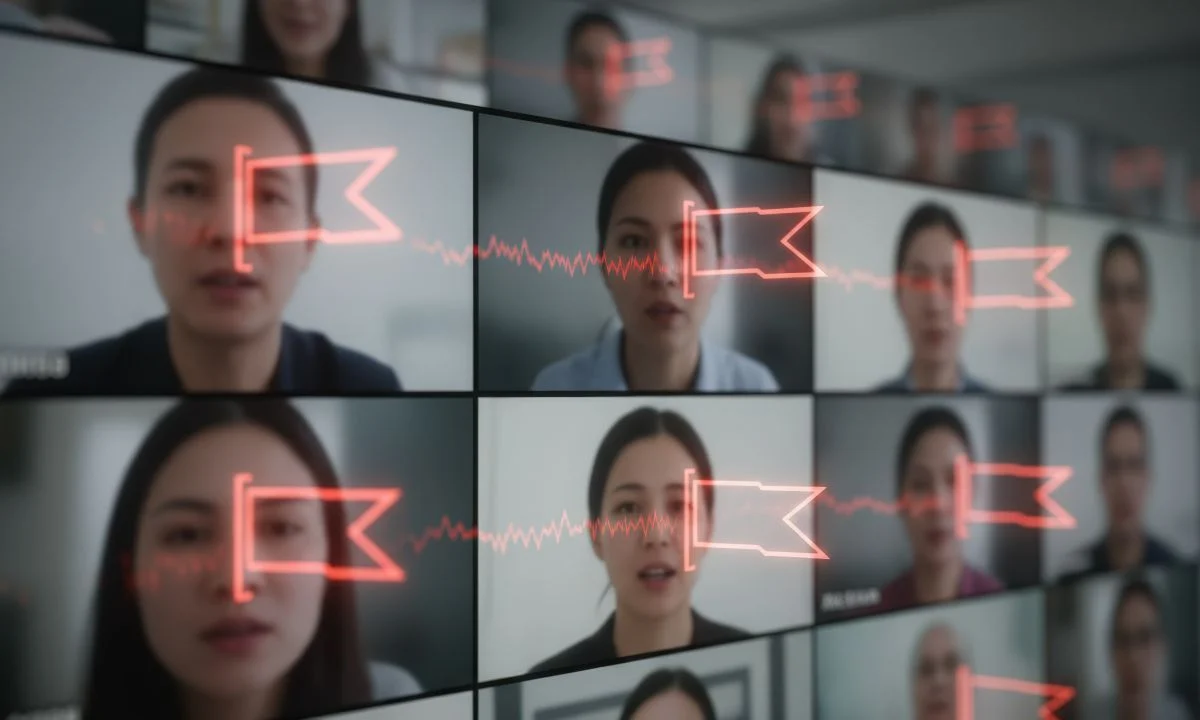
By PYMNTS | June 14, 2026
For decades, Hany Farid has stood as the ultimate arbiter of truth in the digital age. As the world’s foremost expert in digital forensics, his work has been the bedrock upon which governments, law enforcement agencies, journalists, and human rights organizations have relied to distinguish the authentic from the fabricated. Whether exposing doctored images in war zones or verifying the legitimacy of viral media, Farid has been the gold standard.
However, a harrowing profile published by The New York Times on June 14, 2026, reveals a startling shift: the rise of sophisticated, AI-driven deepfakes has pushed even the most seasoned expert to the precipice of professional despair. Farid, once a beacon of confidence in the face of digital deception, is now grappling with the terrifying realization that the landscape of reality is eroding faster than our ability to defend it.
The Erosion of Expertise: When the Expert Goes Blind
Farid’s internal crisis is not born of a lack of skill, but of an existential shift in the threat model. His extensive research has concluded that the average person has effectively lost the ability to distinguish between genuine media and AI-generated hallucinations. More alarmingly, Farid admits that he, too, has begun to fail his own rigorous diagnostic tests.
"I feel like I’m going blind," Farid remarked, articulating a sentiment that resonates far beyond the confines of his lab. This isn’t merely a technical failure; it is a profound psychological toll. The distortion of reality by artificial intelligence is not just threatening the integrity of democratic discourse—it is systematically dismantling the trust required for society to function. This exhaustion has led Farid to make a life-altering decision: he and his wife are planning to leave the tech-saturated environment of Silicon Valley for the quiet, analog isolation of a rural Vermont farm.
A Chronology of the Digital Arms Race
The descent into this "post-truth" reality has not happened overnight. It is the culmination of a decade-long technological arms race that has shifted power decisively into the hands of bad actors.
- The Early Era (2015-2019): Digital forensics was defined by "pixel-peeping." Experts could identify anomalies in light reflection, shadow consistency, or unnatural skin textures. Fakes were clumsy, requiring significant human effort and compute power.
- The Generative Surge (2020-2023): The arrival of GANs (Generative Adversarial Networks) and early diffusion models changed the game. Detection became a game of cat-and-mouse, with developers creating "detectors" that were immediately bypassed by new iterations of generative models.
- The Current Crisis (2024-2026): We have entered the era of "democratized deception." With open-source tools, a bad actor with minimal technical expertise can generate hyper-realistic audio, video, and biometric data in seconds. The cost of creating a fake has plummeted to near zero, while the cost of verifying a single piece of media has skyrocketed.
Farid, during his lectures at the University of California, Berkeley, paints a bleak picture for his students. He emphasizes that the primary obstacle is no longer just the quality of the fake, but the velocity of the lie. The half-life of an average social media post is under 90 seconds. By the time a forensic analysis is completed—a process that requires meticulous verification—the disinformation has already permeated the public consciousness, shaping opinions and influencing events.
"Within 20 minutes, the whole ballgame is basically over," Farid noted. In the digital information ecosystem, by the time the truth arrives, the "fake" has already become "fact" in the minds of the public.
The Asymmetry of Detection: Why the Fakers Are Winning
The fundamental problem identified by Farid and his students is an asymmetric economic reality. One student aptly summarized the crisis during a lecture: "The creation of deepfakes is easy, cheap, fast, and reliable. Detection is costly and difficult."
This asymmetry is the core of the digital insecurity crisis. For a forensic investigator, every piece of content requires a deep-dive analysis. For the creator, the AI model does the heavy lifting. This creates a "detection gap" that is currently unbridgeable by technology alone.
Furthermore, the scale of content consumption means that even if a detection tool is 99% accurate, the sheer volume of daily uploads results in thousands of "false negatives" that can cause irreparable real-world damage. The infrastructure of the internet is currently designed for speed and virality, not for provenance or verification.
Implications for Global Finance: The Rise of the "Synthetic Borrower"
While the damage to democratic institutions is profound, the impact on the global financial system is equally devastating and perhaps more immediate. As previously reported by PYMNTS, we are witnessing the emergence of a new category of fraud that leverages the exact technologies causing Hany Farid such distress.
Across the lending industry, criminals are deploying "synthetic personas." These are not simple identity thefts; they are sophisticated, algorithmically optimized constructs. A single synthetic fraudster may combine:
- Deepfake Video: For KYC (Know Your Customer) video verification.
- Cloned Voices: For bypassing voice-based banking authentication.
- Fabricated Histories: Using AI to create consistent, multi-year employment and credit histories that pass automated underwriting checks.
- Engineered Financial Behavior: AI models that simulate "natural" spending patterns to build a credit score before triggering a massive, fraudulent withdrawal.
These synthetic borrowers are designed to survive the very onboarding checks that banks have spent billions of dollars to build. They satisfy underwriting models that rely on the assumption that "more data equals more certainty."
The Inversion of Data: A New Risk Landscape
The traditional banking model is built on the premise that fraud is an anomaly that will eventually reveal itself through inconsistency. If a fraudster tries to create a fake identity, they will eventually trip up, providing conflicting data or failing a verification check.
Synthetic borrowers invert that premise entirely. They are built on data consistency. In an AI-saturated environment, the presence of "more data" does not necessarily improve the signal; it often just creates a more convincing illusion. When an AI generates the entire history of a person, it ensures that all data points are perfectly aligned, effectively "poisoning the well" of credit scoring models.
According to the PYMNTS Intelligence report, “The AI MonitorEdge Report: COOs Leverage GenAI to Reduce Data Security Losses,” 55% of companies are aggressively pivoting to AI-powered cybersecurity. Yet, this creates a paradox: a lender may spend millions to build an AI-based anti-fraud infrastructure, while a criminal organization can use the same open-source generative AI tools for a fraction of the cost to bypass those very defenses.
Official Responses and the Path Forward
The situation has reached a point where the industry is beginning to acknowledge that traditional, reactive defense strategies are failing. Regulators are under increasing pressure to mandate "content credentials"—digital watermarking that proves a piece of media has not been altered since its creation. However, such systems require universal adoption, which is currently a pipe dream in a fragmented, global internet.
The financial sector is similarly pivoting toward "identity-as-a-service" and hardware-based biometric authentication (such as physical security keys), moving away from the "data-only" approach that synthetic borrowers are so adept at exploiting.
Yet, as Hany Farid’s departure to Vermont suggests, there is a growing sense that the digital world may have become fundamentally incompatible with the human need for truth. If the world’s leading expert can no longer trust his own eyes, the burden of verification is being pushed onto the individual.
We are entering an era of radical skepticism. In the coming years, the inability to distinguish between the real and the synthetic will force a fundamental restructuring of how we conduct business, how we consume news, and how we interact with one another. The "digital forensics" of the future may no longer be a technical challenge, but a social one—requiring us to rebuild systems of trust that exist outside the digital ether.
As the lines between fact and fiction continue to blur, one thing is certain: the era of blind faith in digital evidence has come to a definitive end. The only question that remains is whether our institutions can adapt to a reality where the "perfect fake" is the new standard of operation.
 Nana Muazin
  Evan Lee Salim
  rifanmuazin