
 By Muslim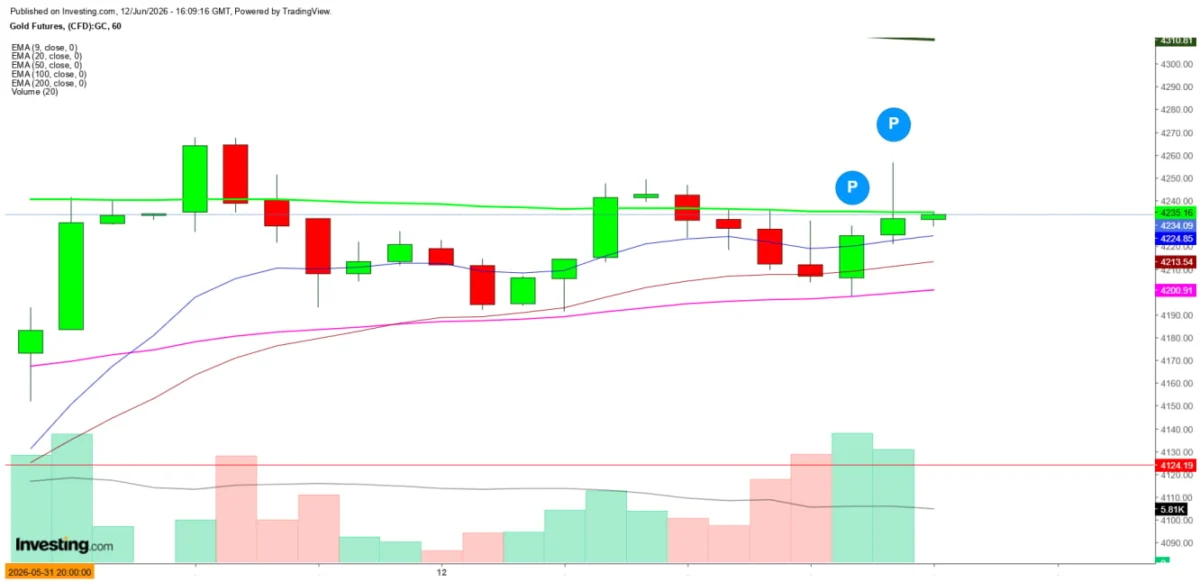
Executive Summary: A Geopolitical Tightrope
The prospect of an end to the hostilities between the United States and Iran has ignited a firestorm of cautious optimism, tempered by deep-seated skepticism and volatile rhetoric. As reports swirl regarding a potential memorandum of understanding (MoU) to de-escalate the conflict, the international community watches with bated breath. While U.S. President Donald Trump has publicly touted the potential for a "great settlement," the path to a formal agreement remains fraught with contradictory claims, leaked narratives, and a breakdown in diplomatic trust.
At the heart of the crisis lies a complex web of military posturing and economic anxiety. With the Strait of Hormuz—the world’s most critical maritime oil chokepoint—hanging in the balance, both Washington and Tehran appear to be navigating a path that could either lead to a historic stabilization of the Middle East or plunge the region into a deeper, more protracted period of instability.
Chronology of the Current Crisis
The last 72 hours have been defined by a frenetic oscillation between brinkmanship and back-channel diplomacy.
- Mid-Week: President Trump announces the cancellation of planned airstrikes on Iranian targets, signaling a shift toward a diplomatic solution.
- Thursday: The U.S. President publicly discusses a "great settlement," suggesting that the terms are near finalization and that a formal signing ceremony could take place in Europe.
- Friday: Sources familiar with the negotiations inform international media that a potential signing ceremony for an MoU could be hosted in Geneva, Switzerland, potentially as early as Sunday, to coincide with G7-related movements.
- Saturday: Iranian Foreign Ministry officials confirm that the "main body" of the text is largely finalized, yet they simultaneously accuse the U.S. of moving the goalposts and acting in bad faith.
- Sunday: The narrative fractures as President Trump takes to Truth Social to aggressively denounce Iranian leaks as "fake news," further complicating the fragile consensus.
Official Responses and Diplomatic Friction
The disconnect between the two parties is profound. While Iranian officials have indicated for the first time that substantive progress has been made, they have also been quick to dismiss speculation regarding the timeline or venue of a signing as premature "media conjecture."
The U.S. Stance
President Trump’s recent social media activity underscores the volatility of the situation. He has explicitly stated that the terms circulating in the Iranian press bear no resemblance to the written agreements, characterizing the Iranian leadership as "dishonorable" and lacking in good faith. This public rebuke suggests that even if a framework exists, the political appetite to finalize it is being tested by domestic optics and the desire to maintain a position of strength.
The Iranian Perspective
Tehran’s Foreign Ministry, while confirming that the "main body of the text" is complete, has expressed frustration over what it describes as "greedy" new demands being introduced by American negotiators. This dynamic reflects the perennial difficulty in these talks: the transition from a broad conceptual agreement to the granular details of implementation.

Regional Implications: The Lebanon Factor
One of the most dangerous misconceptions currently circulating is the belief that a U.S.-Iran deal would automatically lead to a comprehensive regional ceasefire, particularly regarding Lebanon.
The history of recent failed truces provides a sobering warning. On April 8, following mediation efforts by the Pakistani Prime Minister, there was an expectation of a ceasefire in Lebanon. Instead, the country witnessed its deadliest day of the war, characterized by 100 Israeli strikes in less than ten minutes.
It is a grave error to assume that Israel considers itself a signatory to any agreement brokered between Washington and Tehran. Israeli officials have been unequivocal in their stance: they do not view themselves as parties to these negotiations. As long as Prime Minister Benjamin Netanyahu remains committed to his current military objectives, the cessation of hostilities in southern Lebanon remains an elusive, if not impossible, goal under the current diplomatic framework.
Economic and Market Analysis: The Gold Outlook
The uncertainty surrounding the peace deal has created significant volatility in global financial markets, particularly within the precious metals sector. Investors are currently gripped by a "wait-and-see" approach, reflected in technical indicators that suggest a decisive move is imminent.
Technical Analysis: The Daily Chart
On the daily charts, the formation of a "Bearish Doji" indicates that the market is struggling to find a clear direction. Gold futures are currently trading significantly below the 200-day Exponential Moving Average (EMA) of $4,300. This positioning suggests that unless a concrete, verified deal is signed, the market may see a sharp breakdown rather than a breakout. The surge in skepticism regarding the reopening of the Strait of Hormuz has served as a catalyst for this cautious sentiment.
1-Hour Chart Trends
On the 1-hour timeframe, gold futures show a "bullish engulfing" pattern following a test of the $4,045 low on June 10. However, the asset is facing stiff resistance at the 100 EMA ($4,235.34). The immediate support level sits at the 50 EMA ($4,199). Should gold fail to hold this level, traders are bracing for a retest of the $4,124 support zone.

The market is currently being driven by a lack of trust. Every tweet from the U.S. President and every press release from Tehran is causing rapid, knee-jerk fluctuations. Traders are advised to monitor the 200 EMA closely, as it remains the primary indicator of long-term trend strength.
Challenges to Lasting Stabilization
For any agreement to result in genuine stability, two pillars must be addressed:
- The Strait of Hormuz: An unconditional agreement to ensure the free flow of commerce through this vital waterway would be a major, objective step toward de-escalation.
- The Nuclear Question: Beyond the immediate military strikes, the long-term diplomatic hurdle remains the Iranian nuclear program.
Without a resolution to these core issues, even a successful signing ceremony in Geneva would only represent "Phase Two" of an ongoing process. If the deal fails to address the underlying animosity—or if Netanyahu continues to pursue independent military action against Hezbollah—the cycle of retaliation is likely to resume.
Conclusion: A Precarious Future
The current diplomatic effort is a high-stakes gamble. If the agreement holds, it could be the most significant geopolitical achievement for the region in decades, effectively cooling the fires of a war that has threatened to engulf the Middle East. However, the persistent "fake news" accusations, the exclusion of key regional actors like Israel, and the fundamental lack of trust between Washington and Tehran suggest that we are nowhere near a permanent peace.
For now, the world must look past the optimistic headlines and focus on the cold reality: no ink has dried on a final document, no concrete timeline has been established, and the military apparatus on the ground remains fully active. Until an official, verified, and inclusive agreement is produced, the region remains trapped in a state of perilous suspension, where a single miscalculation—or a single tweet—could turn a fragile peace process into a renewed theater of war.
 Raul Delapena Setiawan
  Nana Muazin
  Nana
Nana