
 By Dwi Wanna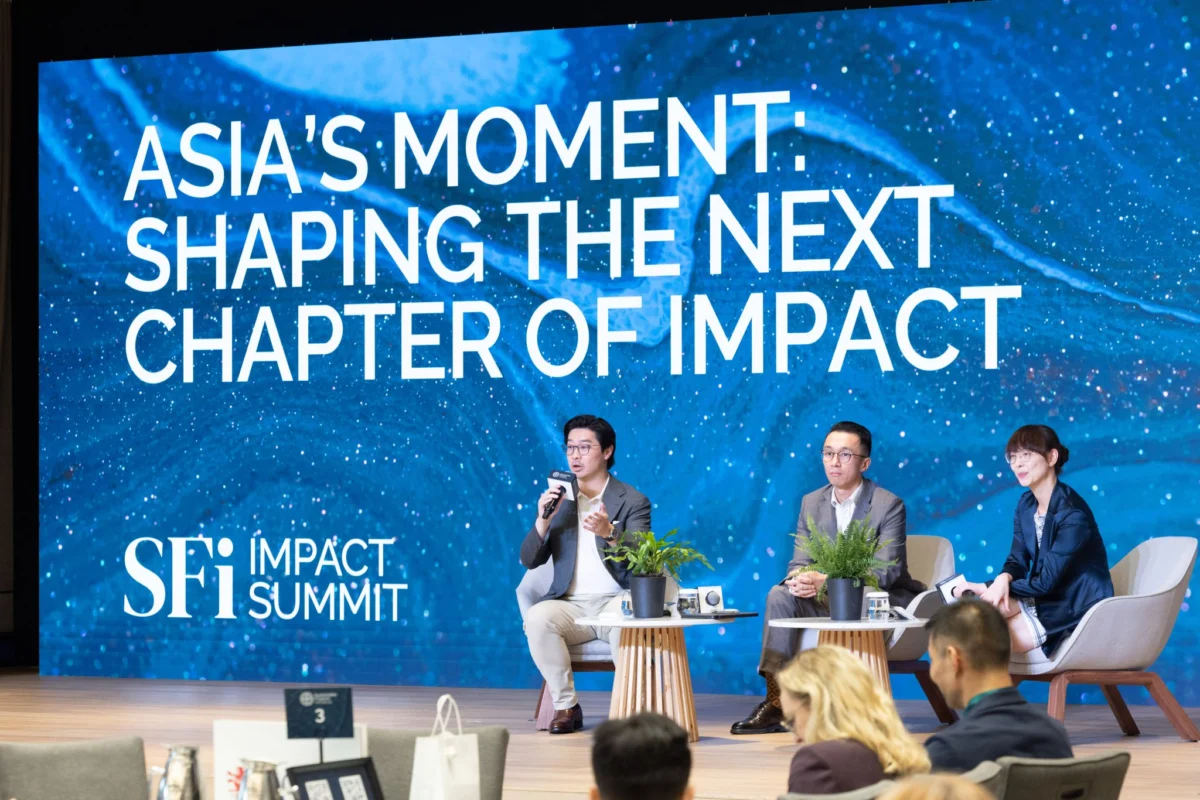
Across the vibrant economic corridors of Hong Kong, Singapore, Seoul, and beyond, a quiet but profound transformation is underway within the boardrooms of Asia’s most storied family enterprises. For decades, these conglomerates—the backbone of the regional economy—were defined by rapid industrialization, expansionist growth, and centralized control. Today, a new generation of leaders is pivoting, utilizing their vast supply chains, operational reach, and multi-generational capital to "future-proof" their businesses against a rapidly changing global landscape.
As highlighted during the recent Sustainable Finance Initiative (SFi) Impact Summit in Hong Kong, this shift is not merely an exercise in corporate social responsibility; it is a strategic repositioning. Asia, home to nearly one in five of the world’s 500 largest family-owned enterprises—a collective force generating $8.8 trillion in annual revenue—is uniquely positioned to become the engine room for global impact investing.
The Strategic Shift: Integrating Impact into Core Operations
The narrative surrounding "impact" is evolving. It is no longer viewed as a peripheral philanthropic activity or a separate asset class. Instead, for the fourth-generation leaders of firms like the Singapore-based Tsao Pao Chee Group (TPC), impact is being baked into the bedrock of industrial operations.
"We believe family businesses will ultimately play a central role in the capital stack behind impact in Asia, given their multi-generational perspective, tolerance for complexity, and deep roots in the real economy," says Hareesh Nair, chief investment officer at TPC.
TPC, which holds deep roots in maritime logistics and industrial supply chains, is moving beyond traditional profit metrics. For Nair, long-term relevance in a post-industrial world requires a fundamental adaptation: preparing businesses for an era defined by human and planetary well-being. By deploying business operations, investment, advocacy, and philanthropy as a single, unified lever, the firm aims to drive change at a scale that venture-capital-backed startups often struggle to achieve.
Chronology of Change: From Risk Mitigation to Proactive Stewardship
The journey toward impact-driven operations has been gradual, moving through distinct phases of institutional evolution:
- The Industrial Expansion (1970s–1990s): Focused on rapid scaling, manufacturing, and building regional dominance.
- The Compliance Phase (2000s–2010s): Initial integration of ESG (Environmental, Social, and Governance) standards largely to satisfy international investors and regulatory requirements.
- The Operational Integration (2020–Present): A pivot where sustainability is treated as a core business driver, risk-management tool, and growth engine.
This transition is visible in the work of figures like Carissa He of Hong Kong’s manufacturing giant, Actmax. He is spearheading initiatives to slash carbon emissions and material waste across her family’s manufacturing lines. "Corporations sit in a sweet spot between customers, the supply chain, and government regulation," she notes. "If the end goal for me was how to create greater impact and leverage what I have, family business was the right decision."
Similarly, in Korea, the evolution is taking a preventive form. Kyungsun Chung, grandson of the late Hyundai Group founder Chung Ju-yung, is reshaping how Hyundai Marine and Fire Insurance views its mandate. By moving from a "passive risk mitigator" to an active agent of social health, Chung is pushing the company to tackle societal issues—such as youth mental health—to preemptively reduce long-term claims. "This kind of preventative method," Chung argues, "not only for healthcare but for the prevention of climate damages, could make an insurance company much more sustainable."
Supporting Data: A Landscape of Growing Ambition
The appetite for this shift is evidenced by the metrics gathered at the SFi Impact Summit. A live poll of over 300 asset owners revealed that nearly one-third of participants already have more than 50% of their assets deployed in impact or sustainability-focused vehicles.
- Regional Focus: Over 90% of these investors are prioritizing opportunities within the Asia-Pacific region.
- Thematic Priorities: Food and agriculture, alongside ocean sustainability, have emerged as the top two investment themes.
- Emerging Markets: Beyond the core Asian hubs, there is a marked, growing interest in the potential of the African market for impact-first capital.
- Capital Scale: The Centre for Impact Investing and Practices (CIIP), established by Temasek Trust, surveyed 165 funders representing over $1 trillion in assets, confirming that climate adaptation and resilience are the most critical challenges facing the region today.
Bridging the Mindset Gap: Official Perspectives
Despite the momentum, the transition is not uniform. Angel Chia, who leads the Hong Kong Academy for Wealth Legacy, notes that the "if it isn’t broken, don’t fix it" mentality remains a hurdle for many traditional patriarchs and matriarchs.
"If the business is okay, then why rock the boat? If the business is in a challenging situation, then we’re patching it up," Chia explains. To bridge this, the Academy focuses on education and exposure, helping families realize that impact is not a threat to the legacy, but a preservation tool for it. According to Chia, the turning point for most families is a personal, internal realization—often sparked by a book, a conversation, or a specific, resonant experience.
Chii-Fen Hiu of the CIIP echoes this, noting that many Asian investors have been practicing "impact" for years without using the terminology. "When we describe what impact investing really is, they basically say, ‘Hey, we’re actually doing that, we just haven’t called it that,’" Hiu says. The challenge, she notes, is not a lack of interest, but a lack of "pipeline"—a coordinated, cross-sector effort to identify and scale investable, impact-positive projects.
Implications: A New Financial Philosophy
The implications of this shift are far-reaching. For family offices like the Hong Kong-based RS Group, the question has transitioned from "Does impact investing work?" to "Where can capital be most catalytic?"
Annie Chen, a leading voice at RS Group, has recently announced a new program to support nature-positive, early-stage ventures. Crucially, this program utilizes philanthropic capital that is free from traditional financial return mandates. This flexibility allows the family to take risks that private equity or commercial banks cannot, providing a crucial "patient capital" layer for experimental, high-impact technologies.
"Financial performance is just one of the consequences," Chen says, urging her peers to shift their vocabulary from "impact investing" to considering the "consequences" of their capital allocation. "I think of it as trying to bring us to a kinder, gentler system."
Harnessing Pragmatism
Experts like Sam Richards of Sydney-based Brightlight suggest that Asia’s secret weapon is its inherent pragmatism. Rather than viewing the family business and the portfolio as separate entities, the region’s most successful investors are using their operational expertise to inform their investment strategy.
Marie-Laure Schaufelberger of the Pictet Group observes that geopolitical tensions are further accelerating this trend. As investors seek to diversify away from concentrated exposure to U.S. markets, they are increasingly viewing sustainability as a core component of resilience. "Long-term investors are reframing the risk-return equation," Schaufelberger notes. "If you start to think about risk differently, you will construct your portfolios differently."
Conclusion: The Future of Asian Stewardship
As these family businesses look toward the next century, the synthesis of tradition and transformation is becoming their defining characteristic. By moving beyond the binary choice between profit and purpose, they are creating a new model of stewardship.
In the corridors of power from Singapore to Seoul, the message is clear: the most successful families of the future will be those that view their capital not just as a financial resource to be grown, but as a dynamic tool to shape the world. As the barriers between operations and investment continue to dissolve, Asia’s family dynasties are proving that their greatest legacy may not be the wealth they preserve, but the sustainable, resilient future they help build.
 Pevita Pearce
  Nana Muazin
  Lina Irawan