
 By Suro Senen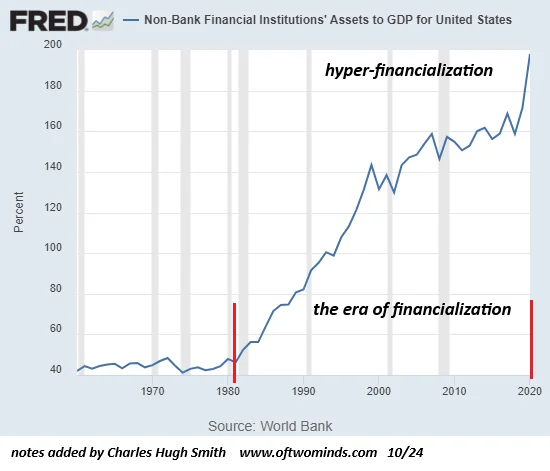
The growing global anxiety over inflation, ballooning sovereign debt, and the fragility of fiat currencies has sparked a flurry of proposals for monetary reform. From Central Bank Digital Currencies (CBDCs) and dollar-pegged stablecoins to gold-backed crypto tokens and a return to commodity-standard currencies, the modern discourse is saturated with the belief that changing the medium of exchange will fix what is broken in the global economy.
However, a deeper systemic analysis suggests that this focus on monetary engineering is a dangerous distraction. The premise that modifying or replacing currency can resolve the deep-seated structural crises of our time—such as hyper-financialization, extreme wealth inequality, resource depletion, and broken supply chains—is fundamentally illusory. It reflects a deeper "civilizational psychosis": a collective delusion that money is a self-sustaining entity independent of the physical, material world and the productive labor that sustains it.
Main Facts: The Illusion of the "Money-Only" Economy
At the heart of modern economic complacency lies a wry but accurate summary of the developed world’s mindset: "We don’t need the world; we only need money."
This perspective assumes that as long as one possesses capital, the physical biosphere, resource availability, and the complex logistics of global supply chains will automatically self-regulate and deliver goods on demand. It detaches the consumer from the invisible realities of manufacturing, transport, and raw material extraction. When a consumer plugs in an appliance, fills a vehicle with fuel, or purchases goods from a shelf, the immense physical work, environmental degradation, and geopolitical friction required to facilitate that transaction remain entirely hidden.
+------------------------------------------------------------+
|                  THE CIVILIZATIONAL PSYCHOSIS              |
+------------------------------------------------------------+
|  "We don't need the world, we only need money."             |
|                                                            |
|  [Financial Assets / Speculation]  <-- Disconnected from   |
|               ^                                            |
|               | (Valuation Illusion)                       |
|               v                                            |
|  [Physical Supply Chains & Labor] <-- Real-world foundation|
+------------------------------------------------------------+
This disconnect has fostered a speculative economy where wealth generation is increasingly decoupled from productive work. Instead of investing in real-world utility, capital is channeled into financial assets and speculative instruments. This dynamic has given rise to three deeply flawed assumptions regarding monetary transitions:
- The Infrastructure Fallacy: The belief that if the current fiat system collapses, the physical infrastructure of the world—power grids, agricultural distribution, shipping lanes, and manufacturing plants—will continue to operate flawlessly.
- The Passive Serfdom Assumption: The expectation that the majority of the population, stripped of their purchasing power in a currency collapse, will quietly accept a neo-feudal arrangement dominated by a "New Nobility" who successfully converted their fiat wealth into scarce alternative assets.
- The Scarcity Liquidity Paradox: The assumption that a highly scarce replacement currency (such as gold or a hard-capped cryptocurrency) can seamlessly absorb the scale of global trade without causing a catastrophic liquidity freeze.
Chronology: The Road to Hyper-Financialization
To understand how the global economy arrived at this state of material detachment, it is necessary to trace the post-war evolution of the international monetary system.

  1971: Nixon Shock
   │  (USD unpegged from gold; era of pure fiat begins)
   ▼
  1980s–1990s: Structural Shift
   │  (Deregulation, globalization, and decoupling of productivity from wages)
   ▼
  2008: Great Financial Crisis
   │  (Quantitative Easing begins; massive central bank balance sheet expansion)
   ▼
  2020–Present: The Double Crisis
(Pandemic supply chain shocks meet unprecedented monetary expansion)- 1971 – The Nixon Shock: President Richard Nixon suspends the convertibility of the U.S. dollar into gold, ending the Bretton Woods system. This ushers in the modern era of pure fiat currencies and floating exchange rates, separating money from any physical commodity anchor.
- 1980s to 1990s – The Financialization Era: Structural shifts in Western economies deprioritize domestic manufacturing in favor of services, intellectual property, and financial engineering. Wealth generation shifts from industrial production to asset price appreciation. During this period, the gap between labor productivity and real wages begins to widen significantly.
- 2008 – The Great Financial Crisis: In response to the collapse of the subprime mortgage market, central banks embark on unconventional monetary policies, including Quantitative Easing (QE). By purchasing trillions of dollars in distressed assets, central banks flood the financial system with liquidity, permanently distorting asset valuations and suppressing interest rates.
- 2020 to Present – The Pandemic and Geopolitical Shocks: The COVID-19 pandemic and subsequent geopolitical conflicts expose the extreme vulnerability of "just-in-time" global supply chains. Despite severe physical shortages of semiconductors, energy, and agricultural products, financial markets reach record highs, driven by unprecedented monetary and fiscal stimulus. This period solidifies the "civilizational psychosis," as financial assets soar while the material foundations of the economy fracture.
Supporting Data: The Widening Chasm
The structural disconnect between the financialized economy and the real world is clearly reflected in long-term macroeconomic data.
1. The Concentration of Financial Wealth
The distribution of financial assets has become highly asymmetric over the past three decades. According to historical wealth tracking data:
- The share of financial assets held by the top 1% of households has increased by 42% since 1990.
- Conversely, the share of financial assets held by the bottom 50% of the population has declined by 28% over the same period.
This concentration illustrates that the benefits of monetary expansion and asset speculation accrue almost exclusively to the ultra-wealthy, leaving the majority of the population highly vulnerable to systemic shocks.
2. The Decline of Labor’s Share of the Economy
Data from the U.S. Bureau of Labor Statistics (and corresponding global indexes) tracking the Nonfarm Business Sector: Labor Share for All Workers reveals that labor’s share of economic output has plummeted to historic lows.
Labor Share of the Economy (%)
  High (Post-WWII Era) ───► [====================] (~64-66%)
  Current Era          ───► [==============------] (~56-58%)
                               (Historic Lows)
This trend confirms that the modern economy rewards capital ownership and speculative investment far more than productive work, undermining the social contract that links labor to economic security.
3. The Rise of the Shadow Banking Sector
The hyper-financialization of the global economy is further evidenced by the growth of the non-bank financial sector. Assets held by non-bank financial intermediaries (such as hedge funds, private equity firms, and special purpose vehicles) have grown exponentially, eclipsing traditional banking assets. This "shadow banking" system operates with high leverage and minimal regulatory oversight, creating a fragile financial superstructure built upon a volatile material base.

Official Responses and Institutional Perspectives
International institutions and monetary authorities have begun to acknowledge the risks of hyper-financialization, though their proposed solutions remain firmly technocratic.
The Federal Reserve and Central Bank Digital Currencies (CBDCs)
Central banks, including the Federal Reserve and the European Central Bank (ECB), have focused their research on the development of CBDCs. According to official reports from the Bank for International Settlements (BIS), CBDCs are intended to:
- Improve payment system efficiency and lower transaction costs.
- Maintain the dominance of sovereign currencies in the face of private cryptocurrency competition.
- Provide central banks with more direct tools for monetary policy implementation.
However, critics point out that CBDCs do not address the underlying structural imbalances. They merely digitize and centralize the existing fiat framework, leaving the wealth gap, the decline of labor, and resource dependency untouched.
The International Monetary Fund (IMF) on Systemic Fragility
In its Global Financial Stability Reports, the IMF has repeatedly warned of the growing divergence between financial market valuations and real economic performance. The IMF notes that prolonged periods of low interest rates and monetary injections have encouraged excessive risk-taking, pushing leverage in the non-bank financial sector to dangerous levels. Despite these warnings, institutional policy recommendations continue to rely on monetary adjustments and regulatory tweaks rather than addressing the material reality of resource limits and supply chain vulnerabilities.
Implications: The Failure of the Monetary Escape Hatch
The belief that we can simply transition to a new monetary standard—whether gold, crypto, or a CBDC—to escape a systemic crisis overlooks critical economic and social realities.
The Scale and Liquidity Problem
Proponents of gold- or commodity-backed currencies often overlook the immense scale of modern global trade. The daily volume of transactions in global foreign exchange and debt markets is estimated at $9 to $10 trillion.

+-----------------------------------------------------------------+
|                    THE LIQUIDITY SQUEEZE PARADOX                |
+-----------------------------------------------------------------+
|  Global Daily Transaction Demand: ~$10 Trillion                 |
|                                                                 |
|  Scenario A: Scarce Currency (Gold/Hard Crypto)                 |
|  [ Liquidity Pool: $1 Trillion ]  ==> System freezes; trade stops|
|                                                                 |
|  Scenario B: Ramped-Up Issuance to Meet Demand                  |
|  [ Liquidity Pool: $10 Trillion ] ==> Scarcity value destroyed  |
+-----------------------------------------------------------------+
If a replacement currency backed by a scarce commodity is introduced, it faces an insolvable paradox:
- If the currency’s supply remains strictly limited to preserve its backing, it cannot provide the necessary liquidity to settle trillions of dollars in daily global trade. The global supply chain network would instantly freeze up due to a lack of circulating medium.
- If the issuing authority expands the supply of the currency tenfold to meet global trade demand, the scarcity value of the underlying commodity is diluted, defeating the entire purpose of the commodity backing.
The Collapse of Supply Chains
If the current fiat currency system experiences a loss of trust or hyper-inflationary collapse, the enterprises that form the links in global supply chains cannot simply switch to a new currency overnight.
Many businesses that continue to accept depreciating currency will face bankruptcy. Others, opting to wait for the monetary situation to stabilize, will halt operations. Because modern manufacturing relies on highly complex, interdependent, "just-in-time" logistics, a break in even a minor link can shut down entire industries. The real-world consequence is not a smooth transition to a new currency, but empty shelves, fuel shortages, and power grid failures.
Social Unrest and the Illusion of "New Nobility"
The assumption that those who successfully navigate a currency collapse with their wealth intact will easily maintain their social status is highly unrealistic.
In a systemic collapse where basic necessities become scarce, the impoverished and middle-class populations will lose faith in the system. Stripped of their savings and facing survival threats, they are unlikely to respect the property rights or wealth of a "New Nobility." Historically, such extreme levels of inequality and systemic failure do not result in orderly neo-feudalism; instead, they lead to social unrest, lawlessness, and the forced redistribution or expropriation of assets.
+-----------------------------------------------------------------+
|                   PATH TO SYSTEMIC REBALANCING                  |
+-----------------------------------------------------------------+
|  Fiat Currency Collapse                                         |
|         │                                                       |
|         ▼                                                       |
|  Supply Chain Disruption (Empty shelves, power outages)         |
|         │                                                       |
|         ▼                                                       |
|  Loss of Public Hope & Trust                                    |
|         │                                                       |
|         ▼                                                       |
|  Social Unrest / Expropriation (Wealth preservation fails)      |
+-----------------------------------------------------------------+
Conclusion: Realigning Money with the Material World
The systemic crises of the 21st century cannot be solved by simply changing the unit of account. The monetary system is not the root cause of our civilizational imbalances; rather, it is a reflection of our societal priorities, skewed incentives, and a disregard for the physical limits of our planet.

Reorganizing the financial system is a necessary step, but it is entirely insufficient on its own. A sustainable economic order requires a fundamental shift in values:
- Wealth generation must be reconnected to productive work and tangible utility in the physical world.
- Speculative asset bubbles must be discouraged in favor of long-term investments in resource resilience, infrastructure, and human capital.
- Economic metrics must account for ecological health and social cohesion, rather than prioritizing "consumption and profits at any cost."
Until we bridge the gap between financial abstraction and physical reality, any new currency will eventually reproduce the same imbalances as the one it replaced. The path forward requires us to change how we live, produce, and value labor—not just how we pay for it.
 Muslim
  Jia Lissa
  Asep Darmawan