
 By Layla Zulfa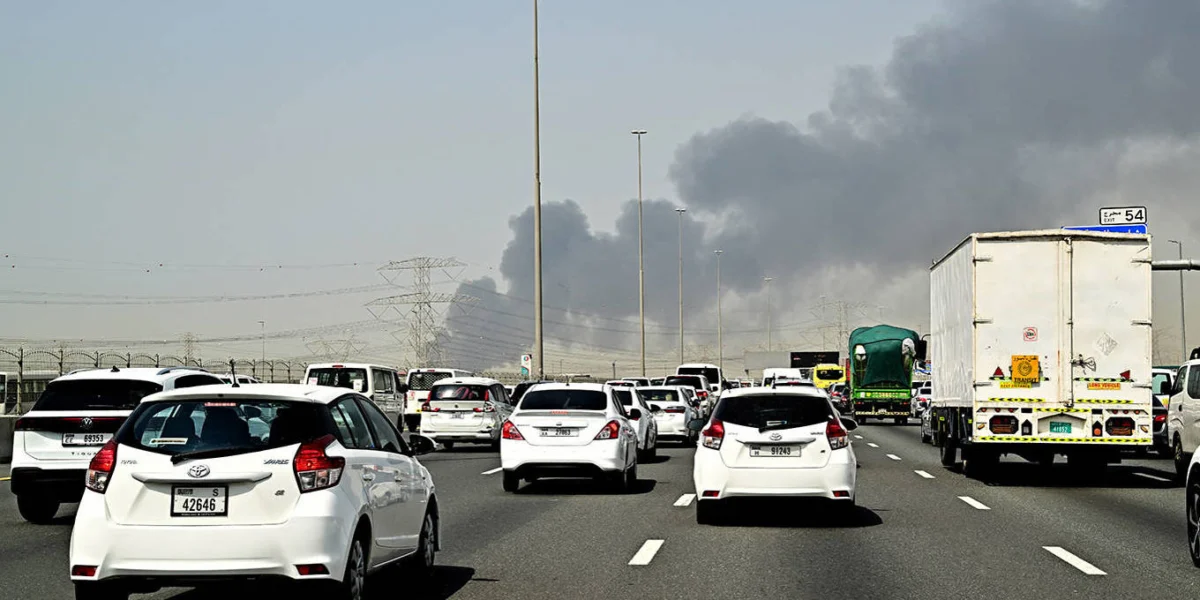
By Don Aviv
June 15, 2026
As the smoke hangs heavy over the Strait of Hormuz and the geopolitical tremors of the Iran conflict continue to rattle global markets, the world is fixated on a singular, elusive question: How does this war end?
For weeks, international diplomats have scrambled to mediate a ceasefire between the Islamic Republic and a coalition of regional and Western powers. Yet, as the fog of war begins to thin, a sobering consensus is emerging among security analysts and regional experts. The most likely outcome is not a durable peace, but a fragile, unsatisfying cessation of hostilities that leaves the foundational drivers of the conflict—nuclear ambition, regional hegemony, and proxy warfare—entirely unresolved.
This prospective "frozen conflict" suggests a future defined by an uneasy equilibrium. In this new reality, Gulf nations are increasingly charting their own paths, American influence is undergoing a perceptible contraction, and the Middle Eastern order remains in a state of permanent, volatile transition.
The Core Reality: A War Without a Decisive End
The current hostilities, which have pushed the global economy to the brink of a systemic energy crisis, represent a tipping point in 21st-century statecraft. Unlike the contained skirmishes of the past decade, this conflict has shattered the veneer of stability that allowed for the rapid economic modernization of the Gulf Cooperation Council (GCC) states.
The immediate desire for a ceasefire is driven by economic desperation. With oil and gas supply chains severed or threatened, the global economy is grappling with inflationary pressures not seen since the 1970s. However, the diplomatic focus on "stopping the shooting" risks ignoring the structural fissures that necessitated this war in the first place. A ceasefire, while welcome, serves only to pause the kinetic phase of a contest that has moved into the realms of cyber-warfare, intelligence sabotage, and economic warfare—arenas where the battle lines are invisible and the stakes are just as high.
A Chronology of the Escalation
To understand the precariousness of the current moment, one must look at the rapid deterioration of the status quo over the last six months.
- January 2026: The collapse of back-channel nuclear negotiations triggers a series of tit-for-tat maritime seizures in the Persian Gulf.
- February 2026: A major cyber-attack cripples critical energy infrastructure in the region, leading to a spike in crude oil prices beyond $150 per barrel.
- March 2026: The conflict escalates into direct state-on-state aerial engagements, prompting the United States to deploy additional carrier strike groups to the region.
- April 2026: Israel and Iran engage in a series of precision strikes against military-industrial sites, forcing a massive humanitarian and diplomatic mobilization.
- May 2026: The regional economy enters a state of paralysis. Saudi Arabia’s "Vision 2030" initiatives face indefinite delays as foreign direct investment retreats to safe havens.
- June 2026: International mediators—led by a coalition of neutral powers—begin drafting the framework for a "de-escalation agreement," though enforcement mechanisms remain deeply contested.
Supporting Data: The Economic Toll
The cost of the conflict is written in the ledgers of global trade. The disruption to the Strait of Hormuz—the world’s most important oil chokepoint—has forced a recalibration of energy markets.
According to recent data from the International Energy Agency (IEA), global energy security is at its most vulnerable point in a generation. The surge in energy costs has acted as a regressive tax on developing nations, while simultaneously forcing developed economies to accelerate, albeit frantically, their transition to renewables.
Furthermore, the regional impact on the "post-oil" diversification plans of countries like Saudi Arabia and the UAE cannot be overstated. Projects that were once beacons of regional stability have been mothballed. Investor confidence in the Middle East, once thought to be insulated from the "security discount," has been severely undermined. The "uncertainty premium" now attached to any investment in the region will likely persist for years, regardless of when the ceasefire is signed.
Official Responses and Diplomatic Friction
The diplomatic theater is currently characterized by a divide between Western interventionism and regional pragmatism.
The Washington Perspective: The U.S. administration maintains that its primary objective is the restoration of maritime security and the containment of Iran’s nuclear program. However, there is a palpable sense of exhaustion within the halls of power in Washington. The "pivot to Asia" has been delayed once again, and there is internal debate regarding whether the U.S. has the political capital to enforce a long-term peace agreement in a region that is increasingly skeptical of Western staying power.
The Tehran Stance: The Islamic Republic, while feeling the bite of renewed sanctions and the degradation of its military assets, continues to project a posture of defiance. For Tehran, the ceasefire is not a surrender but a strategic necessity to regroup and preserve its "forward defense" network of regional proxies.
The GCC Strategy: The Gulf states are playing a nuanced game. While they remain reliant on U.S. security guarantees, there is a growing recognition that Washington’s interests may not perfectly align with their own. Consequently, Riyadh and Abu Dhabi are aggressively diversifying their diplomatic portfolios, engaging with both Beijing and Moscow to ensure that, regardless of the outcome of this war, their national interests are shielded from the volatility of Western electoral cycles.
The Implications: A New, Uneasy Order
As we look toward the potential conclusion of this conflict, several long-term implications emerge:
1. The Decline of American Hegemony
For decades, the United States served as the primary arbiter of order in the Middle East. That role is rapidly diminishing. The current war has highlighted the limits of U.S. military projection and diplomatic persuasion. As influence wanes, a "vacuum-filling" process is underway, where regional powers—and emerging global players—are stepping in to mediate, trade, and secure their interests, often without consulting Washington.
2. The Normalization of Perpetual Instability
The "unsatisfying ceasefire" mentioned earlier is the most dangerous outcome. It creates a state of "neither war nor peace." In this environment, businesses, governments, and citizens must adapt to a "new normal" where the threat of renewed conflict is constant. This prevents the long-term planning required for true economic development and social progress.
3. The Fragmentation of Alliances
We are witnessing the end of the monolithic "pro-Western" vs. "anti-Western" blocs. Instead, the region is moving toward a system of transactional, ad-hoc alliances. Countries are shifting their allegiances based on immediate security needs and economic opportunities rather than ideological alignment. This makes the regional order more fluid, but also more prone to miscalculation.
4. The Acceleration of Energy Decoupling
The sheer vulnerability of the global economy to regional shocks in the Middle East has accelerated the movement toward energy autonomy. Nations that once relied on the stability of the Persian Gulf are now doubling down on domestic production, nuclear energy, and renewable grids. The long-term consequence of this war may be the diminishing importance of the Middle East as the world’s "gas station."
Conclusion: Preparing for the Long Game
As diplomats finalize the terms of the ceasefire, the international community must temper its expectations. Peace is not arriving in the Middle East; only a pause is.
The underlying issues—the fundamental disagreements over the regional power structure, the nuclear question, and the ideological divide—remain potent and dangerous. For the global investor, the policymaker, and the citizen, the lesson of 2026 is clear: the era of predictable stability is over. We have entered a period of systemic volatility, and the "unsatisfying ceasefire" is not a solution, but merely the opening act of a much longer, more complex struggle for the future of the region.
The coming months will test the resolve of the parties involved. Whether they use this reprieve to address the root causes of the conflict or simply to sharpen their blades for the next round will determine the fate of the Middle East for the remainder of the decade. As of now, the signs point toward the latter.
 Reynand Wu
  Azzam Bilal Chamdy
  Asro
Asro