
 By Asro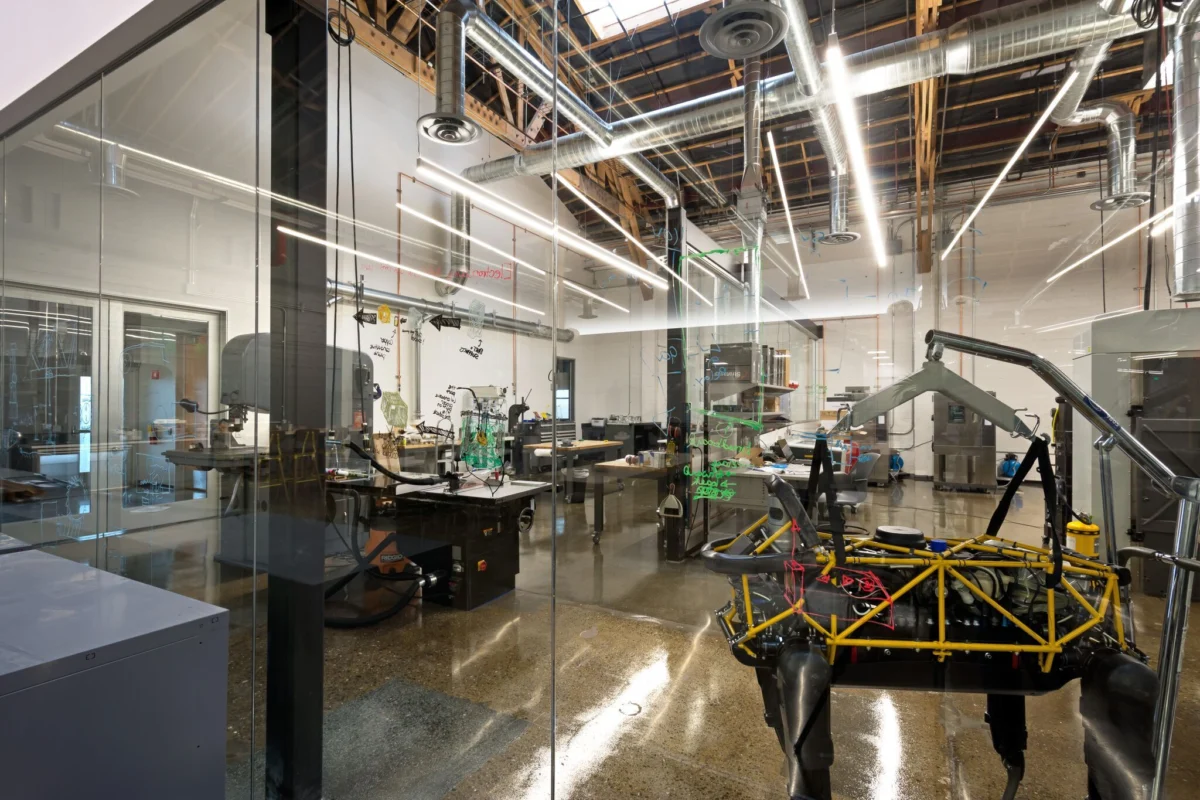
For the better part of the last decade, the venture capital engine of Silicon Valley was almost exclusively fueled by software. As the "software-as-a-service" (SaaS) model reached its zenith, investors flocked to scalable apps and digital platforms, often treating the physical world—semiconductors, energy grids, and heavy robotics—as an afterthought or a "legacy" burden.
However, a quiet, deep-tech powerhouse located in the historic Palo Alto Research Building has been charting a different course. Playground Global, led by veteran technologist Peter Barrett, spent the last ten years betting on the physical plane. While others chased the next viral app, Barrett and his partners were investing in the fundamental building blocks of civilization: quantum computing, advanced materials, and the energy infrastructure required to power the next century.
Now, as the artificial intelligence revolution triggers a desperate scramble for chips, power, and data-center capacity, the market has finally caught up to Playground’s thesis. "Silicon Valley has done very well with software, but while software was eating the world, they forgot about silicon," Barrett told Crunchbase News in a recent interview.
The Core Philosophy: Bridging the Digital and Physical
Playground Global’s investment strategy is predicated on the belief that scientific breakthroughs are the true drivers of long-term economic value. The firm recently closed a $475 million fund specifically targeted at deep-tech startups at the seed and Series A stages.
Unlike firms that look for quick-exit consumer software, Playground operates more like an R&D laboratory. Their Palo Alto facility acts as an incubator for 350 people, housing not only their own staff but also engineers from portfolio companies who require access to high-end hardware, machine shops, and prototyping equipment.
The firm’s leadership team is a "who’s who" of engineering expertise. It includes Peter Barrett, who has spent 50 years coding; Pat Gelsinger, the former CEO of Intel and VMware who joined the firm to spearhead its semiconductor strategy; Jory Bell, a specialist in biotech; and co-founder Bruce Leak.

A Chronology of Vision
Peter Barrett’s career is the roadmap for his firm’s current obsession with "hard" technology. Born in Australia and arriving in Silicon Valley in the 1980s, Barrett’s childhood was defined by the tangible: punch cards, technical drawings of control systems, and mechanical engineering.
His journey through the industry—from founding video game developer Rocket Science Games to building the entertainment browser for WebTV (later acquired by Microsoft) and serving as CTO at CloudCar—provided him with a front-row seat to the transition from mechanical to digital. By the time he co-founded Playground Global in 2015, he had identified a widening gap: the "software-eating-the-world" era had created a fragility in the global supply chain, leaving the underlying physical infrastructure stagnant.
- 2015: Playground Global is founded with a thesis focused on science and engineering breakthroughs.
- 2018-2022: The firm quietly builds a portfolio of "improbable" companies, including quantum computing pioneer PsiQuantum and robotics firm Agility.
- 2023-2024: The AI boom hits. Global demand for compute power exposes the inadequacy of existing power grids and semiconductor manufacturing, validating Playground’s long-term commitment to these sectors.
- 2025: The firm closes a $475 million fund to further accelerate its deep-tech mission.
Supporting Data: Why "Hard Tech" Is the New Growth Engine
The pivot to deep tech is no longer a niche preference; it is an economic necessity. As AI models grow in complexity, the "brute force" method of training on standard CPUs is becoming both inefficient and ecologically unsustainable.
Barrett notes that the current era of AI is effectively the "DOS age"—primitive and inefficient. To move beyond this, the industry requires:
- Post-Transistor Computing: Startups like Snowcap are developing superconducting logic that operates at cryogenic temperatures, offering energy efficiency improvements five orders of magnitude better than current transistors.
- Infrastructure Optimization: Companies like Alva Energy are modernizing the existing nuclear power fleet to provide gigawatts of additional power without requiring new regulatory approval or grid upgrades.
- Advanced Materials: Using quantum computing to simulate chemical interactions, allowing for the discovery of new drugs and materials that were previously hidden by our inability to model quantum mechanics.
"We have technologies that can reduce general-purpose compute workloads by 100x to 1,000x over the state of the art," Barrett says. "We know how to make the energy and deliver it. We know how to connect these systems."
Official Perspectives: The "No-Go" Zones
Despite their optimism, Barrett is deeply skeptical of certain trends currently soaking up venture capital. He is notably vocal about the "stupidity" of space-based data centers.

"Data centers in space are a nonstarter," Barrett argues. "You’re building things in a thermos. You need to get rid of heat, and space is not cold in that sense." He points out that while Elon Musk’s SpaceX is an "amazing company" for its launch capabilities, the notion of building orbital data centers is an inefficient diversion of capital. Instead, he advocates for utilizing massive, renewable-rich land sites—such as those in Western Australia—to build terrestrial infrastructure that is actually scalable.
Furthermore, he expresses frustration with the "bubbly" nature of NFT and metaverse investments. "Small amounts of capital using these tools against our most difficult diseases would yield results," he notes, suggesting that the industry’s allocation of capital has been fundamentally misaligned with the most pressing problems facing humanity.
Global Implications: Sovereign Tech and Strategic Autonomy
Perhaps the most significant takeaway from Barrett’s outlook is the geopolitical dimension of deep tech. The "sovereign capability" of a nation—its ability to control its own semiconductors, energy grid, and AI infrastructure—has become a cornerstone of national security.
Barrett emphasizes that the West must do a better job of translating pension funds and massive capital pools into tangible, societal value. "The safety and durability of liberal democracies depends on creating wealth and staying ahead," he asserts.
He draws a parallel to the pace of innovation in Ukraine, where necessity has forced rapid technological adaptation. He believes that Playground’s mission—to turn science into value—is not just an investment strategy, but a defense against global rivals who are already heavily invested in these areas.
The Path Forward: Unlocking Abundance
As we look to the future, Playground Global remains committed to what Barrett calls the "boundary between computation and the physical world." They are not looking for the next app that changes how we share photos; they are looking for the next breakthrough that changes how we generate energy, how we build materials, and how we compute.
The firm is currently preparing to bring several stealth companies out of the shadows this summer. These companies, according to Barrett, are "indistinguishable from magic."
For the rest of the venture capital community, the message from Palo Alto is clear: the era of easy, app-based growth is fading. The next wave of massive returns will come from the companies that can solve the physical constraints of the modern world. As Barrett concludes, "We’re not in a Malthusian zero-sum game for resources. There is unbounded abundance we can unlock if we spend capital on the right things."
In the race to build the future, Playground Global has spent a decade laying the foundation. Now, the rest of the world is finally starting to build on top of it.
 Jia Lissa
  Laily UPN
  Evan Lee Salim