
 By Nana Muazin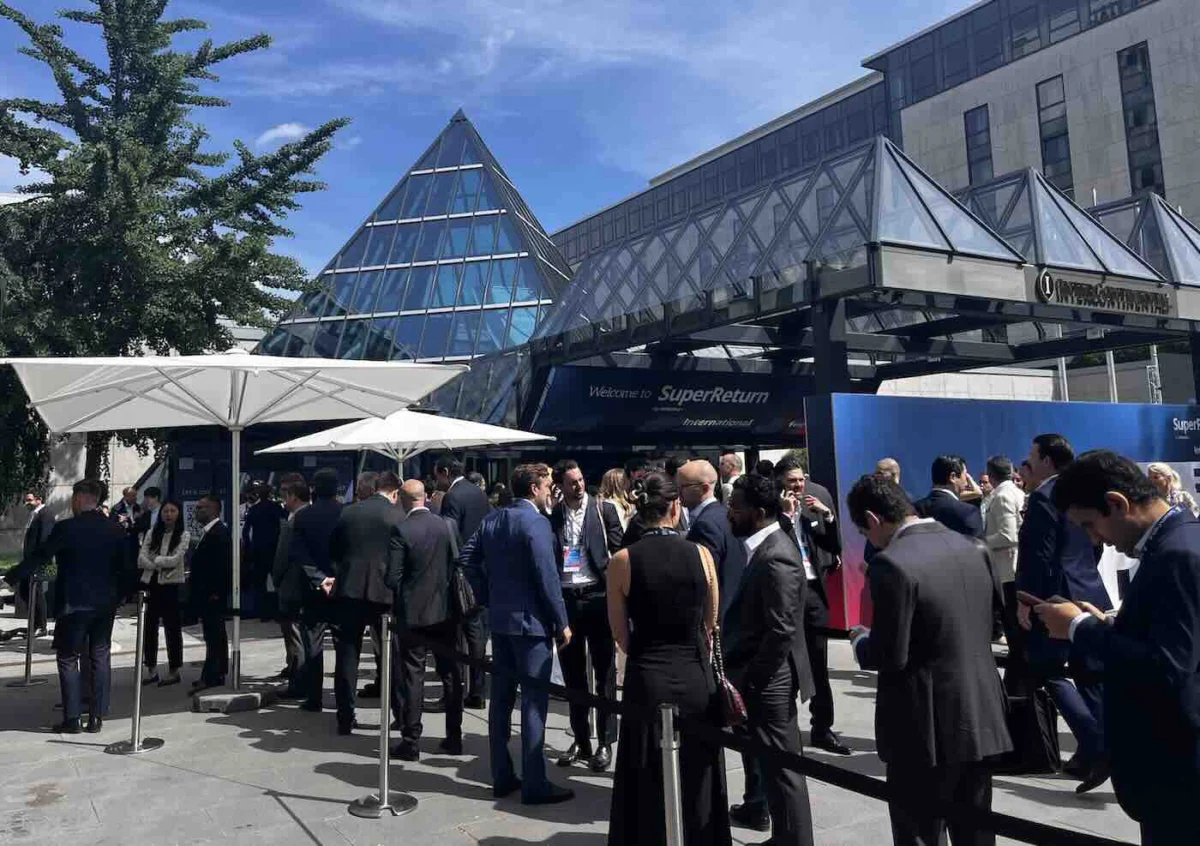
Despite a prolonged slump in fundraising and lingering pressure on valuations, the atmosphere at this year’s SuperReturn conference in Berlin was not one of despair, but of fervent anticipation. As 5,000 of the world’s most influential private equity titans, limited partners (LPs), and general partners (GPs) gathered near the city’s historic zoo, the mood was dominated by a singular realization: the global economy is undergoing a structural transformation of historic proportions.
The industry is moving past the era of easy, asset-light software growth. In its place, a new mandate has emerged, driven by the AI supercycle, the necessity of a radical energy transition, and a geopolitical push toward industrial sovereignty.
The Shift: From Asset-Light to HALO
For the past four decades, the global investment playbook favored globalization and the "asset-light" efficiency of software-as-a-service (SaaS) models. Today, that model is being dismantled.
Scott Kleinman, a senior leader at Apollo Global Management, set the tone for the conference with a bold declaration: “We are in a global industrial renaissance.” According to Kleinman, the next five to ten years will be defined by "reglobalization," a process driven by trade policy shifts and the urgent need for strategic resilience in supply chains. This transition, he noted, will require trillions of dollars in capital to build out the physical infrastructure required to support the digital age.
Jeffrey Currie, a senior advisor to Carlyle, echoed this sentiment, framing the shift as a move toward what he calls "HALO"—Hard Assets, Local Operation. Currie predicts a massive rotation in the U.S. alone, with $10 trillion in capital migrating away from pure software plays toward energy infrastructure, semiconductor manufacturing, and robotics. “We’re at the beginning of a decades-long rotation,” Currie said. “I want to own the HALO assets.”
AI Disruption: Wealth and Existential Risk
The promise of artificial intelligence—and the wave of mega-IPOs expected from industry leaders like SpaceX, Anthropic, and OpenAI—provided the conference with its primary narrative. While AI promises to unleash unprecedented wealth, the potential for disruption has created a palpable tension within the investment community.
Anthropic’s recent warnings regarding the risks of human-controlled systems being eclipsed by AI were largely sidelined in favor of the immediate business opportunities. One fund manager characterized the industry’s collective attitude as "the boiling frog," noting that investors are so fixated on the upside of AI that they are largely ignoring the existential threats to business and societal models.
However, former Vice President Al Gore offered a sobering counterpoint. During a session with his colleagues from Generation Investment Management, David Blood and Lila Preston, Gore argued that AI must be treated as a critical sustainability issue.
“We really have to face up to the fact that this technology is advancing so quickly that it is going to challenge not only business models but societal models, civilization models, cultural models,” Gore stated. He advocated for a bilateral agreement on responsible AI governance between global superpowers, suggesting that frontier model developers should be required to publish the "constitutions" that govern their AI behavior to foster public debate and accountability.
For those invested in the software sector, the threat is more immediate. The "SaaSpocalypse" has already erased billions in valuation as AI begins to commoditize software creation. Seth Bannon of the deep-tech firm Fifty Years argued that software is becoming "abundant and nearly free." Consequently, the software companies that will survive are those possessing proprietary data, entrenched human network effects, or significant regulatory moats.
The New Joule Order: Energy as Strategy
At the energy transition side conferences, the conversation moved beyond simple climate goals. Energy security has become the primary driver for investment, leading to what Jeffrey Currie has termed the "New Joule Order."
Currie argues that the energy transition is no longer a climate-led project but a strategic one. Electrification is about purchasing "optionality"—the ability to source power from wind, solar, uranium, or natural gas, thereby insulating economies from the chokepoints of fossil fuel dependency.
This perspective was validated by the attendees, including Par Lindstrom of i(x) Net Zero, who noted that renewable energy has transitioned from a cost center to a critical component of national security. "Renewable energy is not just a cost center anymore," Lindstrom said. "It’s strategic; it’s about how you create stability, availability, redundancy, and security."
For investors, this shift creates an "investable universe" of grid technology, battery storage, and EV infrastructure. China’s aggressive stance on building out nuclear and renewable capacity is seen as a blueprint, with the ultimate goal being the achievement of zero marginal cost energy—the necessary fuel for a scalable, global AI infrastructure.
European Sovereignty and the Rise of Defense
Perhaps the most significant thematic shift in Europe is the focus on sovereignty. Whether in technology, energy, or defense, the continent is doubling down on resilience. Danijel Višević, general partner at World Fund, highlighted that the push for decarbonization and technological independence represents a $35 trillion market opportunity by 2030.
“This is our path back to power,” Višević remarked, noting that the technologies required to fix Europe’s dependencies are also the ones that will birth the next generation of industrial giants.
This shift has significantly altered the landscape for defense investing. Once a stigmatized corner of the market, defense tech is now a structural trend. Frederic De Mevius of Planet First Partners noted that the war in Ukraine has provided a tragic but undeniable tailwind for defense innovation.
The institutional appetite for this sector is immense. The European Investment Fund is expected to launch its second Defense Equity Facility, targeting $17.5 billion—a tenfold increase over its predecessor. KfW Capital, Germany’s state-backed fund of funds, has also recently expanded its mandate to include weapons and dual-use technologies, acknowledging that the future of European tech will be heavily influenced by defense-driven innovation.
The Challenge: Building a Homegrown Ecosystem
As the conference concluded, the focus turned to the long-term viability of this European renaissance. Denis Gursky, founding partner of 1991 Ventures, posed the critical question facing European policymakers and LPs: Will the new generation of companies being built in Europe actually stay in Europe?
Currently, there is a persistent migration of high-growth tech companies to the United States, where deeper capital markets await. Gursky warned that for Europe to truly achieve the sovereignty it seeks, it must not only fund the inception of these companies but also provide the growth-stage capital necessary to keep them on the continent.
Implications for the Next Decade
The Berlin conference underscored that the era of "easy money" is over. The coming decade will be defined by the hard work of physical infrastructure buildout, the volatile pursuit of energy independence, and the high-stakes navigation of AI governance.
For investors, the implications are clear:
- Valuation Repricing: Portfolios weighted heavily in legacy SaaS models will continue to face headwinds as AI renders software development nearly free.
- Infrastructure Dominance: The "HALO" thesis is the new gold standard. Capital that prioritizes physical assets—energy, chips, and grid technology—is positioned to capture the value created by the AI supercycle.
- Geopolitics as Investment Alpha: Investment strategies that ignore the geopolitical necessity of sovereignty will fail. Defense tech and local industrial supply chains have moved from the fringe to the core of institutional portfolios.
- The Sovereignty Trap: For Europe, the challenge is no longer just innovation, but retention. Creating a robust, independent industrial ecosystem will require a fundamental realignment of how European capital is deployed and retained.
The consensus at SuperReturn was not one of fear, but of professional mobilization. As the industry faces these structural changes, the winners will be those who recognize that the world is no longer optimizing for efficiency alone—it is now optimizing for resilience, power, and the hard, physical reality of the next industrial era.
 Iffa Jayyana
  Layla Zulfa
  Dwi Wanna