
 By Reynand Wu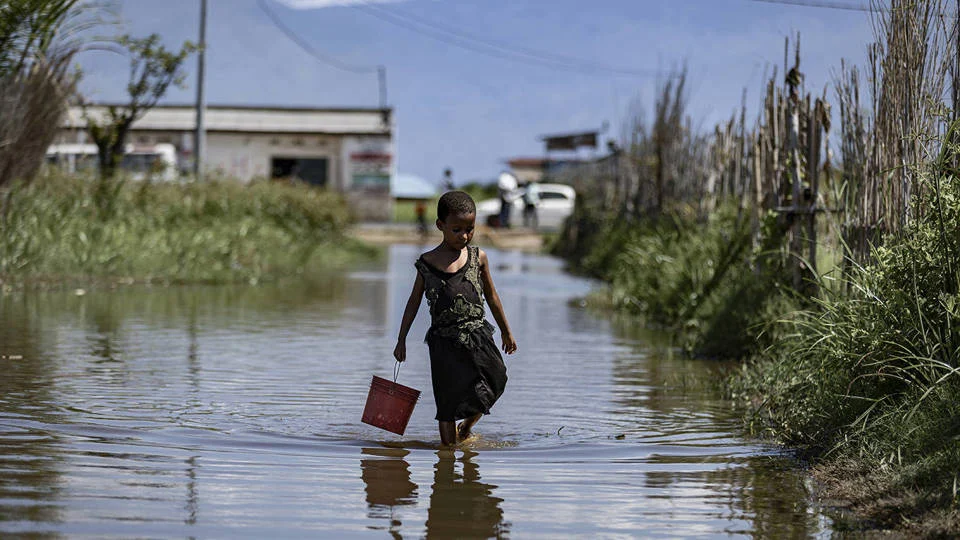
While the global discourse on climate change remains dominated by the mechanics of decarbonization and the race to net-zero emissions, a profound human crisis is unfolding in the shadows. From the sinking atolls of the Pacific to the drought-stricken corridors of the Sahel and the flood-ravaged plains of South Asia, climate change is no longer a distant threat—it is a present-day architect of displacement, impoverishment, and systemic instability.
As the second Berlin Climate Mobility Forum convenes this month, the international community faces a reckoning: how to protect the agency, rights, and dignity of the millions whose lives have been uprooted by a warming planet. The answer, proponents argue, lies in the newly minted Global Climate Mobility Principles, a framework designed to transform a fragmented, reactive global response into a cohesive, rights-based movement.
The Human Cost of a Warming World: Main Facts
The primary catalyst for this shift in policy is the realization that climate change acts as a "threat multiplier." It does not merely alter weather patterns; it fundamentally disrupts the social and economic fabric of vulnerable societies.
The crisis manifests in three distinct ways:
- Forced Displacement: Sudden-onset disasters—hurricanes, wildfires, and catastrophic floods—render homes uninhabitable overnight, forcing immediate, often chaotic, migration.
- Gradual Erosion: Slow-onset processes, such as desertification, sea-level rise, and saltwater intrusion, slowly strip away the ability of communities to sustain themselves, forcing a "migration of necessity."
- The Trap of Immobility: Perhaps the most overlooked aspect is the plight of those who cannot leave. Poverty, lack of information, or the desire to maintain cultural heritage leaves many trapped in regions that can no longer support human life, leading to deeper cycles of impoverishment.
Current data from organizations like the Internal Displacement Monitoring Centre (IDMC) suggest that climate-related disasters now displace more people annually than conflict. Yet, these individuals remain in a legal vacuum. Because the 1951 Refugee Convention does not classify "climate change" as grounds for asylum, those who cross international borders in search of safety are often denied the legal protections afforded to political refugees.
Chronology of a Crisis: From Berlin to the Future
The path toward a formalized response began in earnest last year at the inaugural Berlin Climate Mobility Forum.
- June 2023: The inaugural forum brought together leaders from across the Global South, including representatives from the Pacific Islands, Africa, and the Caribbean. The consensus was clear: the current international framework for migration is siloed, reactive, and entirely ill-equipped to handle the scale of climate-induced movement.
- Late 2023 – Early 2024: A period of intense diplomatic consultation followed, involving civil society, Indigenous groups, and legal experts. The goal was to draft a document that could bridge the gap between climate negotiations and migration policy.
- June 18–19, 2024: The second Berlin Climate Mobility Forum takes center stage. This gathering marks the formal presentation and anticipated endorsement of the Global Climate Mobility Principles.
- The Road Ahead (2025–2027): The post-endorsement phase shifts focus toward implementation. The organizers have set a concrete deadline: the delivery of a comprehensive "Community Transition Roadmap" by June 2027, designed to operationalize the principles across national and regional borders.
Supporting Data: The Gaps in Global Policy
The failure of current policy frameworks stems from their fragmented nature. When a disaster strikes, the immediate response is humanitarian aid. However, once the emergency phase ends, the support vanishes.
Consider the following discrepancies in global policy:
- The Legal Gray Area: Most climate-displaced people are internally displaced persons (IDPs). While they are technically protected by their own governments, those governments are often the very entities overwhelmed by the disaster, leaving these citizens with no recourse.
- Siloed Frameworks: Current efforts are divided among the Paris Agreement (focused on mitigation), the Sendai Framework (focused on disaster risk reduction), and the Global Compact for Migration (focused on orderly migration). None of these effectively address the unique intersection where environmental degradation meets human mobility.
- Economic Vulnerability: Research indicates that for every dollar spent on post-disaster recovery, only a fraction is invested in proactive adaptation that would allow communities to remain in their homes. This reactive cycle perpetuates poverty.
Official Responses: A New Multilateralism
The Global Climate Mobility Principles, set for endorsement at this month’s forum, represent a departure from the "top-down" models of the past. These principles are voluntary and non-binding, but they carry significant political weight as they aim to consolidate existing international law.
Government officials and NGO leaders involved in the drafting process have emphasized that the principles prioritize "human agency." They argue that mobility should be a choice, not a last-resort survival strategy. Key pillars of the official response include:
- Localization of Adaptation: Moving away from centralized aid to supporting community-led, data-driven adaptation strategies that allow people to stay in their homes as long as safely possible.
- Legal Pathways: Creating, for the first time, formal, safe, and dignified pathways for those who must move due to environmental changes.
- Statehood Continuity: Addressing the existential threat faced by island nations—such as Tuvalu or Kiribati—by creating frameworks to preserve statehood and sovereign rights even if their physical territories are submerged.
- Cultural Heritage Protection: Ensuring that the relocation of communities does not result in the erasure of their cultural and spiritual heritage.
"We are building a coalition of the willing," says a representative from the forum organizing committee. "By involving private firms, indigenous groups, and local municipalities, we are demonstrating that international cooperation isn’t dead—it’s just evolving to focus on the people who are actually on the front lines."
Implications: The Moral and Practical Imperative
The implications of failing to adopt these principles are dire. Without a clear framework, the world faces the prospect of mass, unregulated migration, which inevitably fuels xenophobia and geopolitical tension. Conversely, the successful implementation of the Global Climate Mobility Principles could create a template for a more resilient, empathetic international order.
For the developed world, the implication is a shift in financial responsibility. The principles call for a new paradigm of "climate finance" that includes funding for early-warning systems, infrastructure that can withstand climate shocks, and the facilitation of safe migration routes. This is no longer just a matter of foreign aid; it is a matter of global stability.
For the affected communities, the principles offer something more profound: the restoration of their rights. By acknowledging climate mobility as a legitimate, albeit tragic, consequence of global inaction, the international community is finally moving toward a policy that treats these individuals not as "climate refugees" to be feared, but as citizens of the world to be supported.
As we look toward 2027 and the proposed transition roadmap, the test will be whether governments have the political courage to move beyond rhetoric. The climate crisis is already uprooting lives; the question is whether our policies will be fast enough, and fair enough, to catch them. We have the data, we have the framework, and we have the moral clarity. The choice to follow this path is the defining challenge of our time.
 Azzam Bilal Chamdy
  Asro
Asro  rifanmuazin