
 By Lina Irawan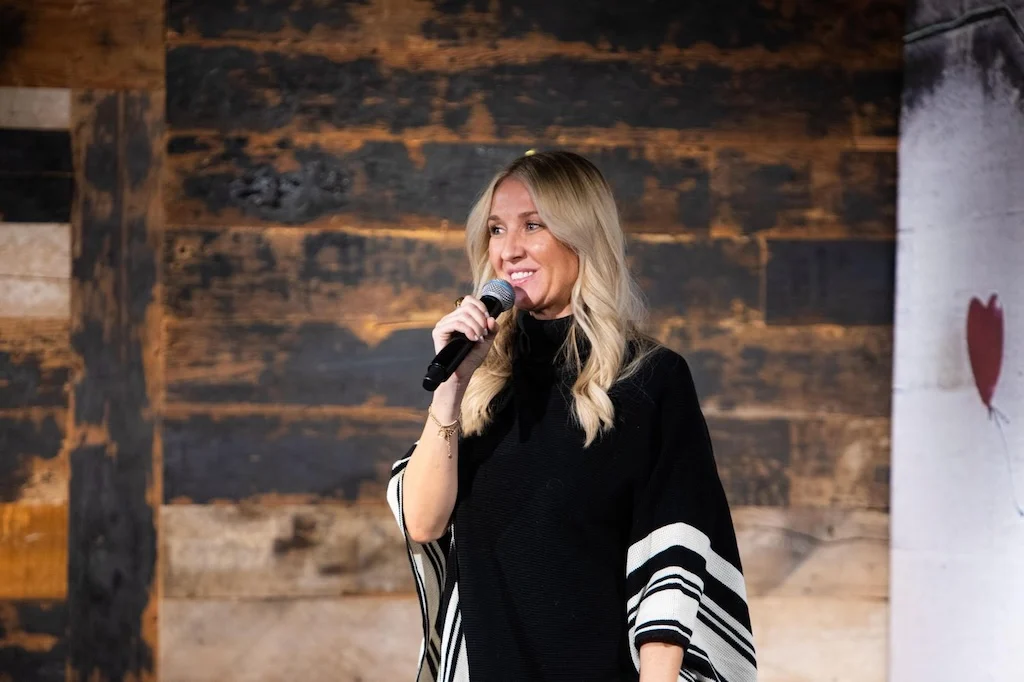
In the corridors of global film festivals—from the frost-kissed streets of Park City to the bustling docks of Cannes—filmmakers often share a singular, melancholic refrain: the traditional model of film financing is broken. For the independent creator, the path from script to screen has never been more perilous. Securing full funding is a Herculean task, and obtaining a distribution deal with a major studio or streamer, once the holy grail of indie success, has become increasingly elusive.
The statistics are sobering. The vast majority of independent projects never see a wide theatrical release. Furthermore, industry data suggests that fewer than one-third of indie films ever turn a profit. In an era dominated by tentpole franchises, risk-averse studios, and the disruptive influence of artificial intelligence, original storytelling is fighting for its life.
Enter Lindsay Hadley, a serial entrepreneur and visionary who believes the solution lies not just in better business, but in better philosophy. Two years ago, she co-founded the Harbor Fund, a non-profit organization designed to buck these steep odds by treating cinema as a catalyst for social evolution.
The Visionary: From Global Citizen to Hollywood Disruptor
Lindsay Hadley is not a typical film financier. Before turning her gaze toward the silver screen, she spent her career in the trenches of high-stakes philanthropy, most notably as a founding member and chief development officer for Global Citizen. During her tenure with the organization—which uses music and advocacy to combat extreme poverty—Hadley helped raise more than $100 million directly, while mobilizing billions in government and private sector commitments.
"Movies are empathy-making machines," Hadley says, articulating the core ethos of the Harbor Fund. "We live through narrative, and whatever story we carry in our heads is how we shape and define our lives. If we want to change the world, we have to change the stories we tell."
Hadley’s approach is to marry the rigorous financial discipline of venture capital with the altruistic urgency of a non-profit. The goal is to unlock the dormant capital sitting in donor-advised funds and family foundations—money that is often earmarked for social impact but rarely directed toward the cultural power of the arts.
A Portfolio Strategy: The "Evergreen" Model
The Harbor Fund operates much like a venture capital firm, spreading its bets across a curated portfolio of projects to mitigate the inherent volatility of the film industry. By diversifying its investments, the fund aims to insulate itself from the "all-or-nothing" nature of single-film financing.
Crucially, the fund is structured as an "evergreen" entity. Rather than seeking fresh donations for every individual project, proceeds from successful, profitable films are recycled back into the fund to finance the next wave of social-impact cinema. This self-sustaining mechanism is designed to provide the stability required to take "bigger swings" on complex, meaningful narratives that traditional studios might shy away from due to their lack of existing intellectual property (IP).
To date, the Harbor Fund has raised $15 million from over 80 donors, with $10 million already deployed across 20-plus film projects. With a bold target of raising $100 million by mid-2028, Hadley intends to place the Harbor Fund in the top 1% of independent film financiers, effectively creating a "category leader" in the impact-entertainment space.
The Impact Engine: A Slate of Purpose-Driven Cinema
The fund’s portfolio is a testament to the idea that storytelling can be both commercially viable and socially transformative. By attaching A-list talent to these projects, the Harbor Fund ensures that their messages reach beyond niche audiences and into the mainstream consciousness.
Current highlights from the portfolio include:
- "By Any Means": A civil rights crime thriller starring Mark Wahlberg. The film explores systemic racial injustice in the American legal system through a high-stakes, gripping narrative. Its commercial potential was validated by an acquisition deal with Paramount, which secured an extended 45-day theatrical release.
- "Evicted": Produced by Chris Pine, this documentary is based on Matthew Desmond’s Pulitzer Prize-winning investigation into the US housing crisis. By grounding the narrative in rigorous journalism, the film seeks to illuminate the human cost of the American eviction epidemic.
- "The Lake": Directed by Utah filmmaker Abby Ellis, this documentary covers the environmental collapse of the Great Salt Lake, focusing on the race against time by scientists and insiders to save a vital ecosystem.
- "Hershey": Starring Finn Wittrock and Alexandra Daddario, this biographical drama examines the life of Milton Hershey, juxtaposing his rise as an industrial titan with his enduring legacy of philanthropy and community support. It is set for a nationwide theatrical release this Thanksgiving via Angel Studios.
- "Orphan Myth": Produced by Tea Leoni, this film interrogates the societal concept of "otherness" and the systems surrounding child welfare, serving as the narrative centerpiece of a broader advocacy campaign.
Strengthening the Narrative Infrastructure
Beyond direct financing, the Harbor Fund is building an ecosystem. One of its most significant contributions is the Harbor Film Forum, an invitation-only gathering that brings together philanthropists, filmmakers, and cultural leaders. The 2025 forum, held at the remote and scenic Crazy Mountain Ranch in Montana, was designed to foster direct, one-on-one relationships between capital and creativity.
"One of the only antidotes to hopelessness is storytelling," said Shannon Sedgwick Davis, an activist and head of the Bridgeway Foundation, during the forum. "It’s helping others see themselves in a story and see the role that they might be able to play to make a difference."
The fund’s Advisory Board is equally formidable, featuring industry titans such as Mark Burnett (the architect of Survivor and Shark Tank), actor Gerard Butler, veteran journalist Katie Couric, entrepreneur Mark Cuban, and acclaimed producer Geralyn Dreyfous. Their involvement provides the Harbor brand with both industry legitimacy and a deep network of distribution and production resources.
Measuring Success: From Empathy to Real-World Change
Quantifying the impact of a film is notoriously difficult. Unlike a standard investment, where success is measured solely in EBITDA, the Harbor Fund measures its return on investment through a dual lens of financial sustainability and social "zeitgeist" penetration.
Hadley points to historic films like Schindler’s List and Hotel Rwanda as the gold standard—projects that did not merely entertain but forced a national or global conversation. A modern success story often cited by the team is the 2016 film Lion, which depicted the realities of the orphanage system in India. The film’s emotional resonance was so potent that it inspired UNICEF to launch "Project LION," a collaborative effort with the Indian government that has provided family-based alternative care for over half a million children.
For donors like Brooke Zaugg, Vice President for The Faith & Media Initiative at the Radiant Foundation, this outcome-oriented approach is the key differentiator. "Harbor Fund is abundant in the best way," Zaugg noted. "They curate tremendous people doing incredible work, and then bring everyone together for experiences and connections that lead to meaningful work and lasting change."
The Path Forward: Challenges and Opportunities
The film industry is currently navigating a period of profound uncertainty. The rise of generative AI, the consolidation of legacy media, and the decline of the traditional theatrical "event" have created a climate of anxiety among creators and investors alike.
"There is this perception that the industry is on fire right now and that it’s a difficult time to get into film," Hadley acknowledges. "Yes, the industry is hurting, and we know that most studios prefer existing IP to minimize risk. But this is also why Harbor is needed."
By providing an alternative source of capital—one that is unburdened by the demand for franchise-based quarterly returns—the Harbor Fund is creating a "safe harbor" for original stories. In doing so, it is challenging the assumption that social impact and box-office success are mutually exclusive.
As the Harbor Fund continues to scale toward its $100 million goal, the organization remains focused on its primary objective: proving that when you invest in empathy, the returns are measured not just in dollars, but in the evolution of the human experience. Whether through a civil rights thriller or a documentary about an endangered lake, the Harbor Fund is betting that the world is hungry for stories that don’t just ask us to watch, but ask us to participate.
 Nana Muazin
  Iffa Jayyana
  Layla Zulfa