
 By Azzam Bilal Chamdy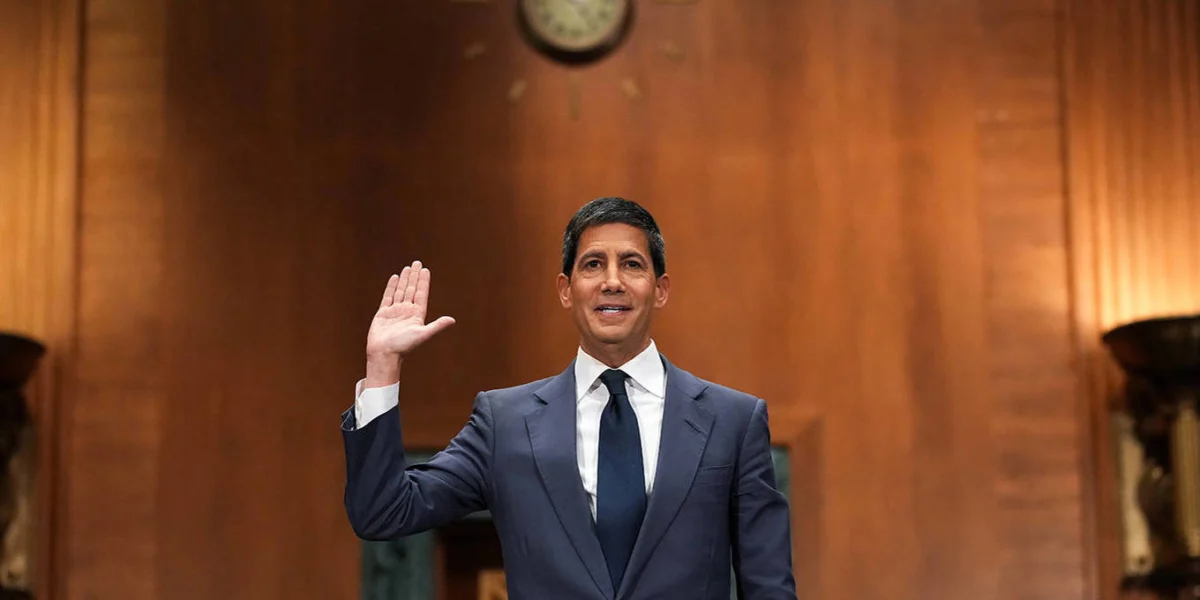
By Todd G. Buchholz
June 16, 2026
It would be easy—and a profound mistake—to blame the U.S. Federal Reserve’s recurring policy blunders on the specter of corrupt bureaucrats or the machinations of imagined conspiracies. The reality is far more clinical and, perhaps, more dangerous. The central bank has become a prisoner of its own architecture, relying on an outdated regional map of the American economy and a dashboard of lagging indicators that no longer capture the nuance of a digital-first, hyper-globalized marketplace. All the while, the Fed is tasked with extinguishing macroeconomic blazes that politicians in Washington continue to stoke with fiscal recklessness.
As Kevin Warsh settles into the chair at the Eccles Building, he assumes control of a cockpit where the instruments are increasingly disconnected from the terrain below. The challenge for the new Fed chair is not merely technical; it is a fundamental test of whether the institution can regain its vision before the mountain in the windshield becomes an unavoidable collision.
The Instrument Problem: Lagging Data in a Real-Time World
In aviation, pilots are rigorously trained to trust their instruments, particularly when flying through the "instrument meteorological conditions" of a volatile market. However, the smartest pilots know that gauges have limits. They know to peek out the window.
For the better part of a decade, the Federal Reserve has behaved like a pilot who stares intently at a flickering altimeter, reciting precise figures to the nearest foot while failing to notice the mountain looming directly in the flight path. The central bank’s reliance on data sets like the Consumer Price Index (CPI) and quarterly GDP reports—metrics that are essentially "rear-view mirror" statistics—has left it consistently a step behind the reality of the American consumer.
In 2026, the economy moves at the speed of high-frequency trading algorithms and real-time payment rails. Yet, the Fed remains tethered to a framework developed in the mid-20th century. By the time a "shock" appears in the official monthly labor report, the market has already moved on, rendering the Fed’s subsequent policy adjustments reactive rather than preemptive.
Chronology of a Policy Crisis
The path to the current uncertainty was paved with well-intentioned but poorly timed interventions. To understand the gravity of Kevin Warsh’s appointment, one must examine the timeline of the Fed’s recent drift:
- 2023–2024: The Era of "Transitory" Miscalculation: Following the post-pandemic supply chain disruptions, the Fed maintained a posture of extreme accommodation, banking on the belief that inflation would prove "transitory." When the inflation fire intensified, the Fed was forced into a rapid-fire series of interest rate hikes, scrambling to regain credibility.
- Late 2025: The Fiscal-Monetary Tug-of-War: As the Fed attempted to tighten liquidity to curb price pressures, federal deficit spending reached historic highs. This created a classic "tug-of-war," where the Fed’s contractionary monetary policy was being directly offset by expansionary fiscal policy from the legislative branch.
- Q1 2026: The Leadership Transition: Amid growing public frustration and stagnant productivity growth, the Fed’s leadership saw a shakeup. Kevin Warsh was appointed as Chair, tasked with stabilizing a market that had grown weary of "data-dependent" rhetoric that seemed to result in more uncertainty than clarity.
- June 2026: The Current Crossroads: Today, markets are engaged in a fierce debate. With industrial output slowing and the labor market showing signs of fragility, the Fed is being pressured to loosen policy. Conversely, lingering service-sector inflation suggests that a pivot toward easing could trigger a secondary price spike.
Supporting Data: The Disconnect Between Metrics and Reality
The Fed’s reliance on specific regional maps has exacerbated its policy failures. The Federal Reserve System, divided into 12 districts, was designed to ensure local economic nuances were captured. However, the "average" American economy no longer exists.
Data from the first half of 2026 highlights the growing disparity:
- Productivity Divergence: While technology-heavy corridors are reporting record-high output per worker, the traditional manufacturing heartlands are struggling with elevated input costs and energy price volatility.
- Credit Spreads: Corporate credit spreads have widened significantly for mid-sized firms, yet the Fed’s broad-market indicators suggest a "stable" credit environment. This discrepancy indicates that the Fed’s tightening has disproportionately harmed the engine of the American economy—small-to-medium enterprises—while leaving large, cash-rich conglomerates largely unscathed.
- The Velocity of Money: The velocity of M2 money supply has become erratic, defying historical models that the Fed has used for decades to forecast inflation. When the relationship between money supply and inflation breaks down, the Fed’s primary lever—interest rate adjustment—loses its precision.
Official Responses and Institutional Stance
The Fed’s official communication strategy has recently shifted toward "transparency," yet this has often manifested as "information overload." In recent FOMC minutes, members have emphasized the need for a "balanced approach," a phrase that critics suggest is code for indecision.
"We remain committed to our dual mandate," stated a spokesperson for the Board of Governors last week. "However, the structural shifts in the global economy require a recalibration of how we interpret incoming data. We are not ignoring the terrain; we are simply acknowledging that the map is changing."
Market analysts, however, remain skeptical. Wall Street institutions have increasingly bypassed official Fed guidance, instead building their own proprietary "shadow" indices to track economic health. This development is a damning indictment of the Fed’s perceived relevance: when the market stops listening to the central bank, the central bank’s ability to influence economic outcomes through signaling is effectively neutralized.
The Implications: A Pilot with a Nimble Neck
Kevin Warsh steps into this role with a reputation as a pragmatist, but pragmatism is not enough. To succeed, he must fundamentally alter the Fed’s "cockpit culture."
The Need for Real-Time Analytics
Warsh must lead a transition toward high-frequency, alternative data sets. By integrating real-time credit card transaction data, satellite imagery of shipping activity, and digital labor market trends, the Fed can build a "now-casting" model that is superior to its current lagging methodology.
Addressing the Fiscal Shadow
The Fed cannot succeed if it continues to pretend that fiscal policy is an exogenous variable. Warsh must find a way to communicate more forcefully with the Treasury and Congress regarding the inflationary impacts of excessive deficit spending. While the Fed is technically independent, it operates within the political reality of the U.S. government. Ignoring that reality is a dereliction of duty.
The Risk of Over-Correction
Perhaps the greatest danger is that in an attempt to prove he is "different" from his predecessors, Warsh may over-correct. A sudden pivot to aggressive easing could reignite inflation, while a dogmatic refusal to acknowledge economic weakness could trigger a preventable recession.
Conclusion: The View from the Cockpit
The American economy is currently flying through a dense fog of geopolitical uncertainty and structural transformation. The Fed’s reliance on historical gauges—the "instruments" of the past—has left it poorly equipped for the descent.
Kevin Warsh has the opportunity to redefine the role of the central bank. He must move away from the obsession with academic models that fail the test of the real world and embrace a more tactile, observational approach to monetary policy. He will need a "nimble neck" to look beyond the gauges, to identify the mountains before they arrive, and to guide the U.S. economy through this turbulence. The question is not whether the Fed has the power to act; the question is whether it has the vision to see where it is actually headed. If the Fed continues to stare at its altimeter while ignoring the horizon, the crash will be not just a policy failure, but a historic tragedy for the American middle class.
 Reynand Wu
  Asro
Asro  rifanmuazin