
 By Pevita Pearce
Editor’s note: This article is the second in a three-part series examining the state of venture investment for Black-founded startups in 2026. This report utilizes data from Crunchbase’s Diversity Spotlight, which tracks leadership demographics across startups and investment firms. Read Part 1 on the state of funding for Black founders [here]. Part 3 will be published next week.
The architecture of venture capital has long been defined by pattern recognition, pedigree, and exclusive networks. For Black founders, this structure has historically served as a formidable gatekeeper. Recent data from Crunchbase reveals a sobering reality: in 2025, startups with at least one Black founder secured approximately $942 million—a mere 0.32% of total U.S. venture funding. This figure represents one of the lowest shares in recent years, reflecting a decline of more than two-thirds compared to the levels seen just three years prior.
As the industry grapples with these stagnating numbers, a new trend has emerged: successful Black entrepreneurs are bypassing the traditional gatekeepers by becoming investors themselves. By transitioning from the "asker" to the "allocator," these founders are attempting to dismantle the structural barriers they once faced, aiming to widen the aperture of who receives capital and why.
The State of Funding: A Fragile Recovery
The venture landscape in 2026 remains volatile, yet there are faint glimmers of improvement. As of May 20, 2026, U.S.-based startups with Black founders have raised $643 million. The vast majority of this capital was deployed in the first quarter, marking the highest single-quarter total since Q2 2022, when $653 million was raised.
While this uptick provides a brief reprieve from the dismal figures of the previous year, it does not mask the systemic underinvestment that persists. For many Black founders, the disparity in capital access is not merely a matter of economic cycles but a reflection of a system that favors established, homogenous networks.
Chronology of a Systemic Challenge
The journey for many Black founders is marked by a recurring cycle of exclusion. In the early 2010s, the "diversity in tech" conversation gained momentum, briefly raising expectations that venture capital would become more inclusive. However, the subsequent years showed that without a fundamental change in the "pattern recognition" used by limited partners and general partners, the distribution of capital remained heavily concentrated.
- 2020–2021: A period of heightened corporate and venture awareness regarding racial equity, leading to a temporary, albeit modest, increase in funding for diverse founders.
- 2022–2024: A sharp market correction in venture capital, which disproportionately impacted underrepresented founders. As investors "fled to safety," they retreated to familiar, traditional networks.
- 2025–2026: A period of "re-evaluation," where founders like Clarence Bethea and Cortney Woodruff have moved into investment roles to proactively address the lack of infrastructure for diverse talent.
The Catalyst for Change: Two Perspectives
To understand the mechanics of this shift, one must look at those who have navigated the gauntlet as both founders and investors.
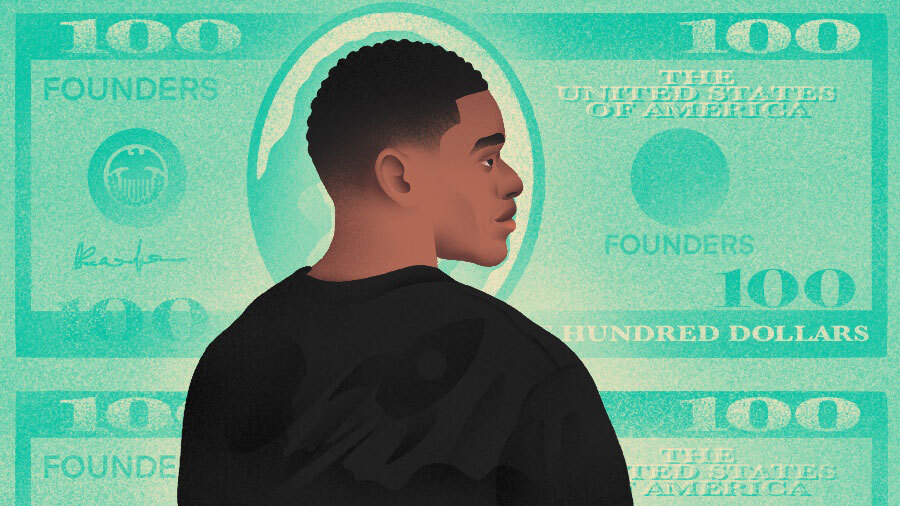
Clarence Bethea: From Upsie to Advocacy
Clarence Bethea founded the extended warranty startup Upsie in 2014. Over the course of his journey, he raised nearly $30 million before the company’s acquisition by Akko in 2024. Despite his success, the path was grueling.
"I believe that raising money for anyone is very difficult. When you add in race, gender, and proximity, it becomes even more difficult," Bethea told Crunchbase News. "I often tell founders, raising that first million will be your hardest. Do I believe that race played a factor? Yes! Because it plays a factor in every part of my life."
Bethea’s realization that "the system wasn’t built for me" did not lead to withdrawal; it led to mastery. In 2023, he joined True Ventures as an investor and entrepreneur-in-residence. The move was a strategic effort to demystify the "black box" of venture capital. His subsequent initiative, What VCs Won’t Say, serves as an educational platform designed to provide early-stage entrepreneurs with the tactical, unfiltered knowledge necessary to navigate the fundraising landscape.
Cortney Woodruff: Analyzing the "Pattern"
Cortney Woodruff, who founded Trainersvault and the online learning platform Assemble, echoes the sentiment that the playing field is far from level. His experience as an entrepreneur led him to conclude that minority founders are often held to a different standard of "readiness."
"I often felt young minority founders were expected to arrive as finished products," Woodruff said. "There seemed to be less patience, less coaching, less developmental support. I watched founders receive years of benefit-of-the-doubt capital while learning on the job. Many minority founders are expected to prove everything upfront."
Woodruff’s transition into angel investing provided a bird’s-eye view of how systemic bias operates. He argues that the issue is not necessarily overt malice, but rather the reliance on narrow, familiar signals. "Investors are trying to identify signals that increase the probability of success," he explains. "The challenge is that those signals are often informed by prior successes, which can unintentionally narrow the range of founders and ideas that receive attention."
The Implications of "Pattern Recognition"
The core issue, according to both Bethea and Woodruff, is that venture capital is fundamentally relationship-driven. When an investment committee shares a similar educational, professional, and social background, they naturally gravitate toward founders who mirror those traits. This "homogenous deal flow" perpetuates a cycle where only a small slice of the entrepreneurial population receives the "grace to stumble."
The "Grace Gap"
One of the most significant, yet rarely quantified, disparities is the "grace gap"—the difference between founders who are given the time and capital to pivot and iterate, and those who are denied funding after their first minor setback. Woodruff emphasizes that this is where the real inequity lies: "The difference is often not who gets funded eventually. The difference is who receives patience, coaching, introductions, and the opportunity to grow into the founder investors believe they can become."
The Role of Technology as an Equalizer
Despite the structural hurdles, there is a burgeoning sense of optimism. Bethea points to the rise of AI as a potential "massive equalizer." By lowering the costs of building an MVP, conducting customer discovery, and achieving initial traction, technology allows founders to bypass some of the traditional gatekeepers who rely on "pedigree" rather than performance.
"AI brings down the walls of building an MVP," Bethea says. "That’s really exciting for founders who don’t fit the normal founder stereotype. But we have to get better at the game of venture."
Looking Ahead: Can the System Be Reengineered?
When asked whether venture capital can be truly reengineered for fairness, both men offer a pragmatic view. Woodruff, in particular, rejects the notion that the industry was ever designed to be equitable. "It was designed to generate returns," he notes.
The path forward, according to these founders-turned-investors, is not to fix the system from the outside, but to change the composition of the people inside the rooms where decisions are made.
- Diversifying the Allocators: If every investment committee is composed of people with similar backgrounds, they will continue to produce similar results. Diversity in the investor seat is the most effective way to change the "pattern recognition" that currently plagues the industry.
- Radical Transparency: Initiatives like What VCs Won’t Say are crucial. By equipping founders with the "rules of the game," they can navigate a flawed system more effectively until that system can be fundamentally improved.
- Network Expansion: Investors must intentionally source opportunities from outside their immediate, familiar circles. True equity will only come when "deal flow" is no longer synonymous with "referral flow."
As the industry moves through 2026, the rise of founders-turned-investors like Bethea and Woodruff represents a vital, albeit challenging, evolution. They are not merely seeking a seat at the table; they are building a new table, one where the criteria for success are based on innovation, resilience, and potential, rather than the narrow patterns of the past. The road to parity is long, but the shift in perspective—from being the subject of the system to being the architects of its future—is a necessary step toward a more representative and efficient venture ecosystem.
 Jia Lissa
  Asro
Asro  Laily UPN