
 By Nila Kartika Wati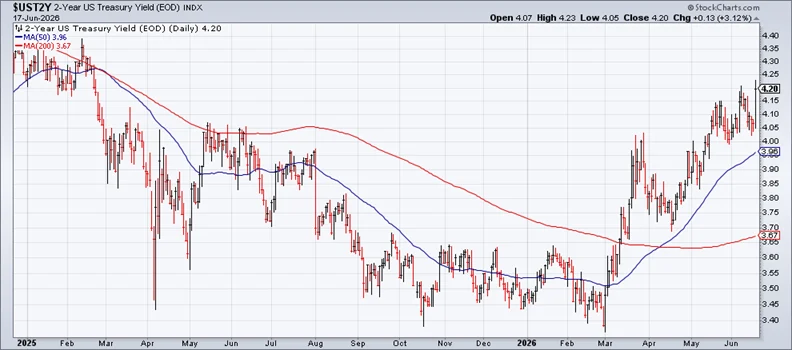
In a high-stakes public debut that has recalibrated market expectations, Federal Reserve Chair Kevin Warsh signaled a definitive shift in the central bank’s posture on Wednesday. Facing intense scrutiny regarding his independence from the Trump administration’s vocal demands for lower interest rates, Warsh delivered a clear, if measured, message: the Federal Open Market Committee (FOMC) is prioritizing price stability above all else.
By declaring that the Committee "will deliver price stability," Warsh effectively signaled a hawkish tilt, catching many observers off guard. While he cushioned his remarks with institutional caution, the underlying message was clear—the era of accommodative rhetoric may be yielding to a more disciplined, inflation-focused regime.
The Chronology of a Pivot: From Expectations to Action
The lead-up to Wednesday’s meeting was fraught with speculation. Markets were positioned for a potential "dovish" surrender, anticipating that the new chair might capitulate to political pressure to ease monetary conditions. Instead, the FOMC proceedings followed a more rigorous trajectory.
The Wednesday Debut
During his post-meeting press conference, Chair Warsh balanced the announcement of a unanimous decision to leave the target interest rate unchanged with a firm rhetorical stance against inflation. By highlighting that inflation has persisted well above the Fed’s 2% target for over five years, Warsh framed the current economic environment as one that places an untenable burden on the American public.
The Task Force Strategy
In a move that serves both as a diagnostic tool and a strategic hedge, Warsh announced the formation of a specialized task force. This group is mandated to "examine the drivers of inflation, first principles, and weigh the full range of ideas for delivering price stability." This announcement provides Warsh with necessary political breathing room, allowing him to conduct a deep dive into the mechanics of inflation—potentially utilizing his preferred "trimmed mean" metrics—without committing to an immediate, aggressive rate hike cycle that could fracture the Committee’s consensus.
Supporting Data: A Market in Disarray
The bond market’s response to the FOMC’s updated Summary of Economic Projections (SEP) was far from uniform, reflecting a deep-seated uncertainty regarding the Fed’s future path.
The Treasury Market’s Mixed Verdict
- The 2-Year Yield: As the most policy-sensitive instrument, the 2-year Treasury yield surged to 4.20%, marking its highest level in over two years. This move suggests that investors are increasingly pricing in a "higher for longer" interest rate environment, discounting the possibility of immediate cuts.
- The 10-Year Benchmark: The 10-year Treasury yield also climbed, settling at 4.50%. While this reflects a rise, it remains within a "middling" range, suggesting that long-term inflation expectations remain somewhat anchored despite the Fed’s hawkish pivot.
- The 5-Year Maturity: In a surprising divergence, the 5-year yield—often considered the most sensitive to immediate inflation fluctuations—actually fell to 4.93%. This decline, the lowest in over a month, suggests a segment of the market that may be betting on a cooling economy or the success of the new inflation-fighting initiatives.
The Fed Funds Futures
Current pricing in the Fed funds futures market paints a complex picture. While a rate hike at the July 29 meeting is not the consensus expectation, the probability of a 25-basis-point hike has risen from "negligible" to "non-trivial." Looking toward the September meeting, the odds skew noticeably toward an increase, suggesting that the market is beginning to take Warsh’s rhetoric at face value.
Official Responses and Internal Dynamics
The FOMC is, by design, a collective body, and Warsh’s success in securing a unanimous vote to hold rates steady was a significant early victory. However, the internal landscape of the Committee has shifted.
The Summary of Economic Projections (SEP)
The most tangible evidence of the hawkish shift can be found in the updated SEP. The median projection for the Fed funds rate has been revised upward to 3.8%, a significant jump from the 3.4% projected just three months ago. Perhaps most telling is that half of the FOMC members now expect at least one, if not multiple, rate hikes before the end of the year.

This data suggests that while Warsh is the public face of the shift, the sentiment within the Fed is increasingly aligned toward tighter policy. The "Warsh Doctrine"—if it can be called that—appears to be one of consensus-building through data-driven caution rather than aggressive, unilateral directives.
Economic Implications: The Path Forward
The path ahead for the Federal Reserve is fraught with geopolitical and macroeconomic variables that remain outside the control of any central banker.
The Geopolitical Variable: The U.S.-Iran Peace Deal
One of the primary catalysts for the recent inflationary surge has been the volatility in energy markets. The recent U.S.-Iran peace deal is being closely watched as a potential relief valve for energy prices. If this geopolitical cooling leads to a sustained decrease in oil and gas costs, the Fed may find the inflationary pressure easing faster than anticipated.
However, the critical question remains: has the energy-fueled surge already become embedded in core inflation? If the answer is yes, the Fed will be forced to maintain its hawkish stance even as headline inflation numbers improve.
The Primacy of Data over Rhetoric
Despite the carefully crafted narrative from the Chair’s podium, the reality of monetary policy is that it is slave to the incoming data.
- The "Trimmed Mean" Debate: By advocating for trimmed mean inflation metrics, Warsh is attempting to filter out "noisy" price spikes. If the Committee adopts this framework, they may effectively "look through" headline volatility, which could allow them to be more patient in hiking rates than the raw CPI data might otherwise demand.
- Market Constraints: Ultimately, the bond market serves as the Fed’s harshest judge. If yields continue to rise, the cost of capital will naturally tighten financial conditions, effectively doing the Fed’s work for them. Conversely, if the market views the Fed’s rhetoric as empty, it may "test" the central bank by selling off Treasuries, forcing rates higher and pushing the Fed into an even more hawkish corner.
Conclusion: A New Tone, But Old Constraints
Chair Kevin Warsh has succeeded in changing the atmosphere of the Federal Reserve. He has effectively signaled that the "wait and see" approach of previous quarters is being replaced by a more active, inflation-conscious mandate.
However, his challenge lies in the divide between his public persona and the reality of a committee-driven institution. The unanimous vote yesterday was a triumph of diplomacy, but the mixed reaction in the Treasury markets serves as a stark warning: investors are not yet fully convinced of the Fed’s resolve.
As we move toward the next FOMC meeting, the focus will shift from the Chair’s press conference to the cold, hard numbers of the monthly economic reports. Whether the Fed remains hawkish will not be determined by the nuances of Warsh’s rhetoric, but by the trajectory of core inflation and the market’s appetite for long-dated debt. In the current economic climate, the numbers remain the final arbiter of policy, and the Fed is merely the messenger. The "Warsh Era" has begun, but it is currently operating within the narrow, unforgiving corridor of data-dependent reality.
 rifanmuazin
  Sagoh
Sagoh  Raul Delapena Setiawan