
 By Neng Nana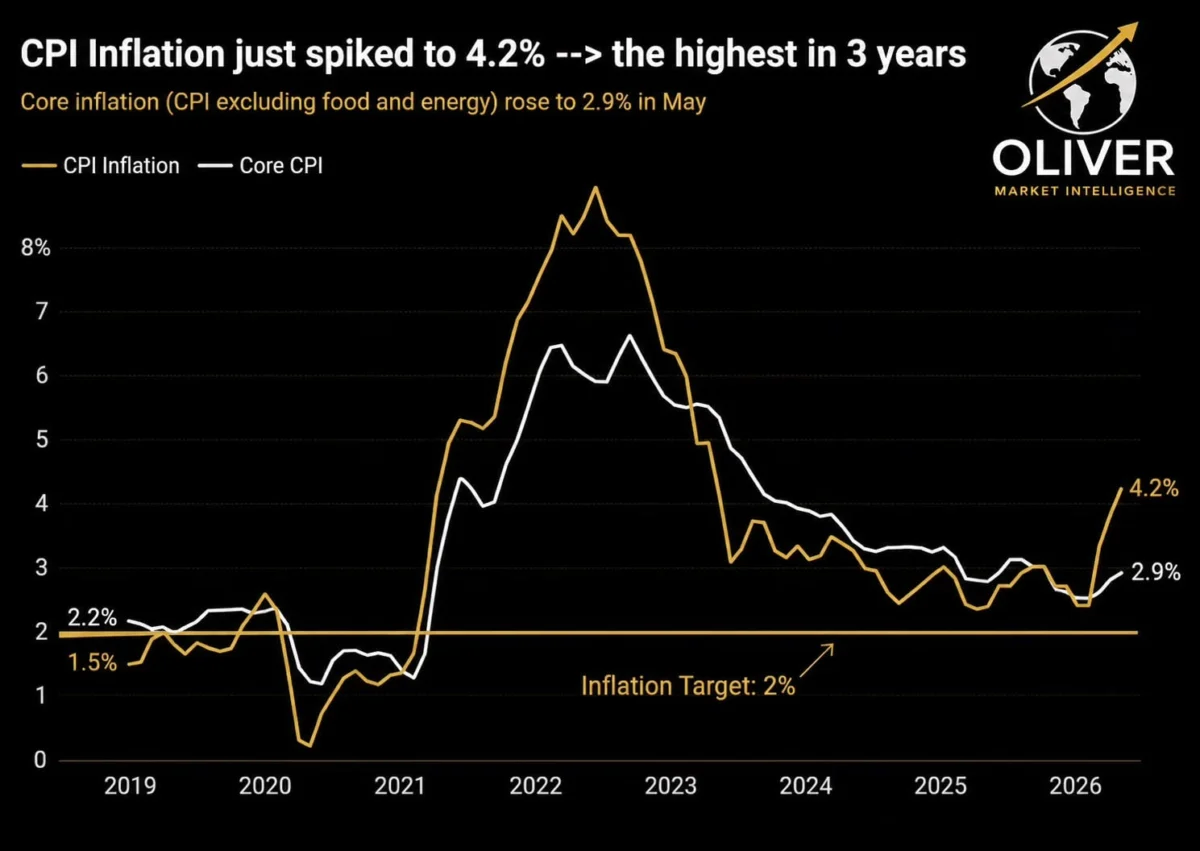
When the San Francisco earthquake of 1906 reduced the city to smoldering rubble, the immediate reaction of the financial markets was, in hindsight, profoundly illogical. Investors rushed to dump shares in fire insurance companies, fearing that the inevitable deluge of claims would bankrupt the insurers and render the stocks worthless. They focused entirely on the immediate, tangible cost of the catastrophe, missing the most salient point: the disaster had not made insurance less valuable; it had, in the most violent way possible, reminded the world why insurance existed in the first place.
Today, we are witnessing a modern-day echo of that 1906 panic. As precious metals prices retreat in the wake of a robust jobs report and sticky inflation data, investors are once again fixating on the "cost of protection" while ignoring the underlying erosion of the monetary foundation that necessitates such protection.
The Chronology of a Reflexive Sell-Off
The recent volatility in the precious metals market was triggered by a specific, mechanical sequence of events that highlights the current market’s Pavlovian response to macroeconomic data.
- The Employment Surge: The week began with a stronger-than-expected jobs report. Employers added significantly more positions than economists projected, signaling an American economy that refuses to cool.
- The Bond Market Reaction: With labor demand remaining white-hot, the bond market immediately priced in a more hawkish Federal Reserve. Treasury yields climbed, and the U.S. Dollar gained ground.
- The Metals Correction: Gold and silver, which often compete for capital against the yield-bearing safety of Treasuries, were marked down with mechanical efficiency. Silver, due to its industrial beta and smaller market cap, suffered a sharper decline than gold.
- The Inflation Print: When the CPI inflation print arrived at 4.2%, the market reaction hardened. Rather than viewing the elevated inflation as a fundamental tailwind for hard assets, traders viewed it as a "rate shock" catalyst—a signal that the Federal Reserve would be forced to keep interest rates higher for longer.
By Monday morning, the narrative was neatly filed away: higher-for-longer rates, a resilient dollar, and a robust economy are bad for non-yielding assets like gold. While this logic is mathematically consistent in a vacuum, it is profoundly incomplete.
The Anatomy of Central Bank Dependency
The market’s reaction to the 4.2% inflation print reveals a sobering reality about our financial culture: after fifteen years of central bank intervention, markets have lost the ability to price assets based on long-term purchasing power. Instead, they trade exclusively on "Fed Theatre."
Modern investors no longer ask what an inflation number means for the household budget, the value of savings, or the integrity of the currency. They ask only what the number means for the next Federal Reserve press conference. This is a market that has become structurally addicted to liquidity.

When a "hot" inflation number is released, a sane monetary system would see capital rotate into gold and silver as a hedge against currency debasement. Instead, today’s market triggers a sell-off because the primary concern is not the inflation itself, but the "Fed response function." We have reached a point where inflation is treated not as a threat to money, but as a prompt for a bureaucratic policy adjustment.
Supporting Data: Debt, Deficits, and the Volcker Fallacy
The comparison between today’s inflationary environment and the era of Paul Volcker is a common trope in financial media, yet it remains fundamentally flawed. When Volcker confronted inflation in 1979, the U.S. debt-to-GDP ratio was manageable. Raising interest rates to double digits caused immense economic pain, but the system possessed the structural integrity to absorb it.
Today, the arithmetic is entirely different. Federal debt has swelled to levels where high interest rates are no longer just a policy tool; they are a fiscal death trap. Every basis point added to the Treasury yield increases the interest burden on the national debt, effectively forcing the government to borrow more just to pay the interest on what it already owes.
The Fiscal Reality Check
- Structural Debt: Total U.S. public debt has reached an unprecedented scale.
- The Refinancing Wall: A significant portion of the debt is short-term, meaning that higher rates feed through to government borrowing costs with increasing velocity.
- The "Warsh" Challenge: Incoming policy thinkers like Kevin Warsh may be skeptical of monetary excess, but they inherit a system that is fundamentally incompatible with the contractionary policies required to truly "kill" inflation.
The question is no longer whether the Fed will raise rates; it is what happens when the weight of the debt itself becomes incompatible with the policy required to contain inflation. This is the "uncomfortable reality" sitting beneath the surface of every market debate.
Silver’s Dual Identity: The Industrial vs. Monetary Tug-of-War
Silver’s recent, sharper decline is a testament to its "two masters." Gold functions largely as a monetary asset, but silver occupies a more complex space. It is a monetary metal, yes, but it is also a vital industrial commodity.
In periods of easy money, silver’s dual identity is a massive advantage—industrial demand and investment demand move in lockstep, leading to outsized gains. However, when liquidity tightens, silver is often sold as a "cyclical commodity" by traders long before it is bought as a "monetary safe haven" by value investors.

The long-term case for silver remains intact, but it requires a significantly higher tolerance for volatility. The white metal has a historical tendency to punish late-arriving speculators while rewarding those who possess the patience to hold through the "Fed-induced" corrections.
Official Responses and Global Divergence
While Western markets treat gold as a speculative trade—often liquidating positions based on a single monthly jobs report—the rest of the world views it through a different lens.
Central bank gold purchases continue to reach record levels, particularly in Asia. This is not speculative capital; it is institutional survival. Nations and households that have experienced the direct, painful consequences of currency weakness and geopolitical instability do not care about the next Fed press conference. They buy gold because they have witnessed what happens when promises decay.
This creates a fascinating divergence: Western paper markets are setting the price for gold, but the rest of the world is setting its meaning. The paper market can depress the price in the short term, but it cannot override the long-term reality of central bank accumulation and sovereign distrust of fiat systems.
Implications for the Future: A Shift in Discipline
For the investor, the current market environment suggests that the traditional approach to precious metals needs a shift in philosophy.
The Absurdity of the "Perfect Entry"
Trying to time the market based on every fifty-dollar swing in gold is a fool’s errand. If your thesis is built on the reality of currency debasement, fiscal stress, and the long-term erosion of real returns, then the daily "Fed-watching" game is a distraction.

The Strategy of Humility
- Dollar-Cost Averaging: This is not merely a slogan for the risk-averse; it is an act of humility. It acknowledges that nobody—not even the most sophisticated analyst—can predict the next month’s volatility.
- Accepting the "Fire": Inflation is not a transitory anomaly; it is a permanent feature of a system that relies on debt-funded growth. When governments have an incentive to repay debts in units that buy less, inflation is not a failure of policy—it is a feature of the fiscal design.
Conclusion: The Fire is Still Burning
The recent sell-off in gold and silver was a test of conviction. If investors bought these metals as a tactical "rate-cut trade," they were rightfully disappointed. If they bought them as a hedge against a monetary system that is increasingly trapped by its own debt, the recent price action is merely noise.
We are, in essence, in the same position as the 1906 investors. The market is currently obsessed with the "cost of protection"—the temporary pain of higher yields and a stronger dollar—while failing to look at the burning city behind them.
The inflation print of 4.2% was not a signal to sell insurance. It was a confirmation that the old "2% world" of price stability has not returned and likely never will. The debt continues to mount, the deficits remain systemic, and the policy tools are increasingly exhausted. The fire is still burning; the only question left for the investor is whether they recognize the value of their insurance policy before the next wave of volatility arrives.
 Evan Lee Salim
  Nila Kartika Wati
  Sagoh
Sagoh 