
 By Sagoh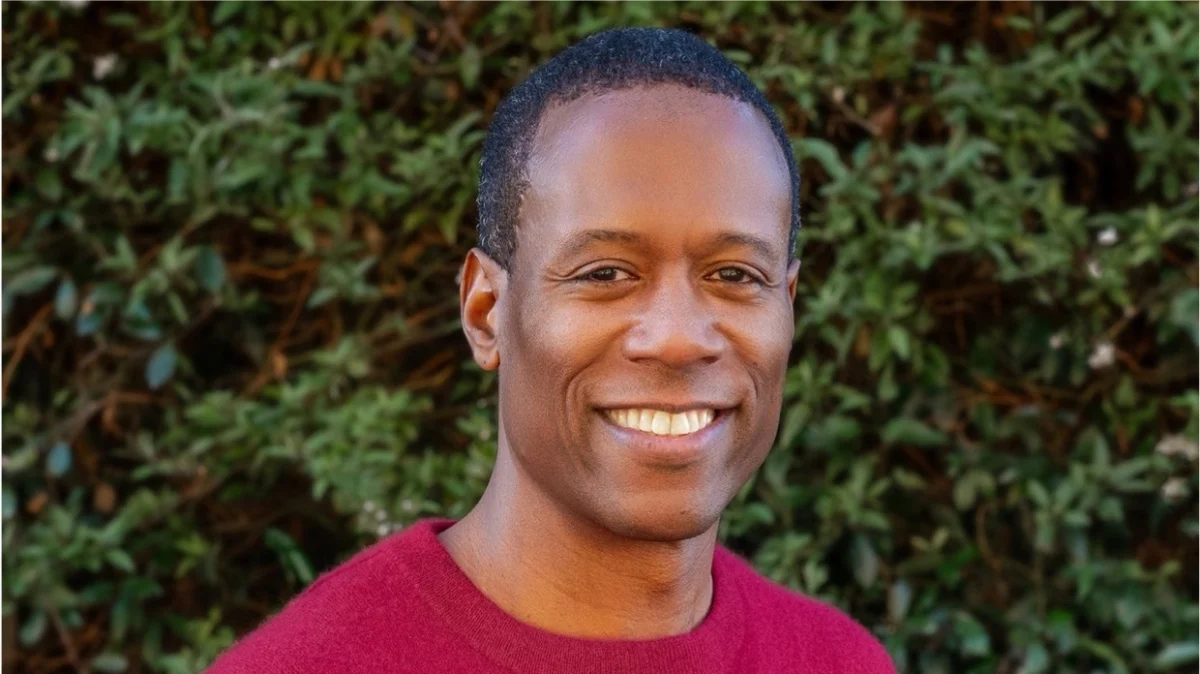
Juneteenth is a day etched in the American consciousness as a celebration of liberation—the moment in 1865 when Union troops arrived in Galveston, Texas, to finally deliver the news of freedom to enslaved people, two years after the Emancipation Proclamation had been signed. It is a day of profound reflection, rightfully honoring the resilience of those who endured the horrors of chattel slavery.
However, as George Ashton, partner and CEO at the impact investment firm Candide Group, argues, we must grapple with a difficult reality: freedom was not the end of the journey. The more grueling, unfinished task has been the transformation of legal freedom into economic freedom. For those who view equity and justice as central to their professional and personal missions, the distance between the promise of 1865 and the economic reality of 2024 remains uncomfortably wide.
The Debt We Have Never Reckoned With
To understand the current economic landscape, one must look back to the aftermath of the Civil War. In his poignant 1967 address, "The Other America," Dr. Martin Luther King Jr. articulated the cruel irony of the era: "America freed the slaves in 1863… but gave the slaves no land, or nothing in reality to get started on."
King’s words resonate with a haunting clarity today. Emancipation without the means of production—land, capital, or infrastructure—was, as he described, "freedom to hunger." It was liberty granted without the foundational tools required for self-sufficiency, leaving millions of newly freed Americans to face the "winds and rains of heaven" without a safety net.
The Historical Persistence of the Wealth Gap
The data regarding the racial wealth gap is a stark indictment of systemic inaction. In 1863, Black Americans held approximately 0.5% of the nation’s wealth. More than 160 years later, that figure has barely inched upward to roughly 1.5%.
The disparity is not merely historical; it is accelerating. The average white family today possesses more than four times the wealth of the average Black family. For those born in the 1940s and 1950s, this gap widened from $181,000 in 1983 to over $1.4 million by 2022. By almost any metric—home equity, retirement savings, or business valuation—the gap is not closing. In many sectors, it is growing, signaling that the economic legacy of slavery has never been substantively addressed.
A Challenge to the Impact Investing Community
George Ashton issues a direct challenge not to the broader public, but to those within the "impact investing" and philanthropic ecosystems. This is a call for a shift in strategy. Too often, the pursuit of social justice is hampered by a desire for novelty. There is a tendency to chase the "next big thing"—the idiosyncratic experiment that garners trade press headlines or makes for a compelling panel discussion—at the expense of proven, scalable solutions.
"Are we here to entertain, or are we here to solve problems and change lives?" Ashton asks. The impact sector must move beyond early-stage experiments and commit to the "scientific method" of scaling what works. This requires a transition from performative gestures to the rigorous application of resources toward systemic correction.
Three Proven Levers for Economic Parity
There is no mystery regarding the pathways to closing the racial wealth gap. The evidence points to three primary levers that require deep, sustained investment:
1. The Power of Homeownership
The racial gap in homeownership currently stands at approximately 30 percentage points. Given that home equity remains the single greatest driver of wealth for the American middle class, expanding access to housing is the most efficient mechanism for wealth transfer available. Policies designed to dismantle discriminatory lending and support first-time Black homebuyers are not charitable acts; they are essential economic corrections.
2. Entrepreneurship and Employee Ownership
Business ownership is a rapid path to wealth accumulation. However, this must extend beyond traditional entrepreneurship to include employee stock ownership plans (ESOPs) and cooperative models. By shifting communities from the "labor side" to the "capital side" of the divide, we create enduring agency. As Ashton notes from his own experience in the solar development industry, ownership provides not just financial stability, but the ability to build an asset that survives across generations.
3. Education and Debt Reform
Education is often touted as the "great equalizer," but for Black Americans, the reality is more complex. The wealth gap between Black and white households actually increases with higher education levels when student loan debt is factored in. The current system saddles Black graduates with disproportionate debt, effectively erasing the economic gains a degree should provide. True equity requires a K-12 pipeline that is well-resourced and affordable higher education that does not lead to financial precarity.
The Broader American Condition
While the economic disparities faced by Black Americans are the most acute and directly traceable to historical policy, the resulting financial fragility is now a broad, national condition. Total U.S. household debt has surged to nearly $18 trillion. With average revolving credit card debt exceeding $10,000 at interest rates of 23%, and inflation hitting essential categories like housing and healthcare, the American Dream is becoming increasingly elusive for the middle class.
This widening insecurity should not be seen as a zero-sum game. The economic precarity of the broader population does not negate the specific, historical harms done to Black communities; rather, it amplifies them. A more economically empowered Black America is, fundamentally, a more robust American economy.
The Political Cost of Inequality
Perhaps most alarmingly, the failure to close these wealth gaps is eroding the very fabric of our democracy. Research from Princeton University suggests that income inequality has a significant causal effect on political polarization. A landmark study published in PNAS found that economic inequality is a leading predictor of democratic decline, noting that even long-standing democracies are vulnerable when wealth is highly concentrated.
The correlation between partisan polarization in the U.S. House of Representatives and the Gini coefficient (a measure of inequality) between 1947 and 2015 was a staggering 0.96. We cannot hope to achieve structural political reforms—such as ranked-choice voting or the end of gerrymandering—while the electorate remains trapped in financial instability. Durable democracy cannot be built on a foundation of economic fear.
Conclusion: Preparing for the Pendulum
On this Juneteenth, the political and economic climate may feel daunting. However, history teaches us that political pendulums inevitably swing. The question for the impact community is whether they will be ready when that moment arrives.
The path forward is unglamorous. It does not involve "moonshot" ideas or flashy new financial instruments. It requires a commitment to the patient, methodical work of scaling homeownership, education, and broad-based ownership. It requires looking unflinchingly at the data and doubling down on what works, rather than pivoting to the next shiny object.
As George Ashton concludes, the real meaning of Juneteenth is not merely a memory of freedom delayed, but a living, breathing obligation to make that freedom substantive. The work of transforming 1865’s promise into today’s reality is the defining economic challenge of our time. It is time to get to work.
George Ashton is a partner and CEO at Candide Group, an impact investment and advisory firm focused on driving capital toward social justice. This article is intended for informational purposes only and does not constitute investment, tax, or legal advice.
 Nana
Nana  Layla Zulfa
  Iffa Jayyana