
 By Asep Darmawan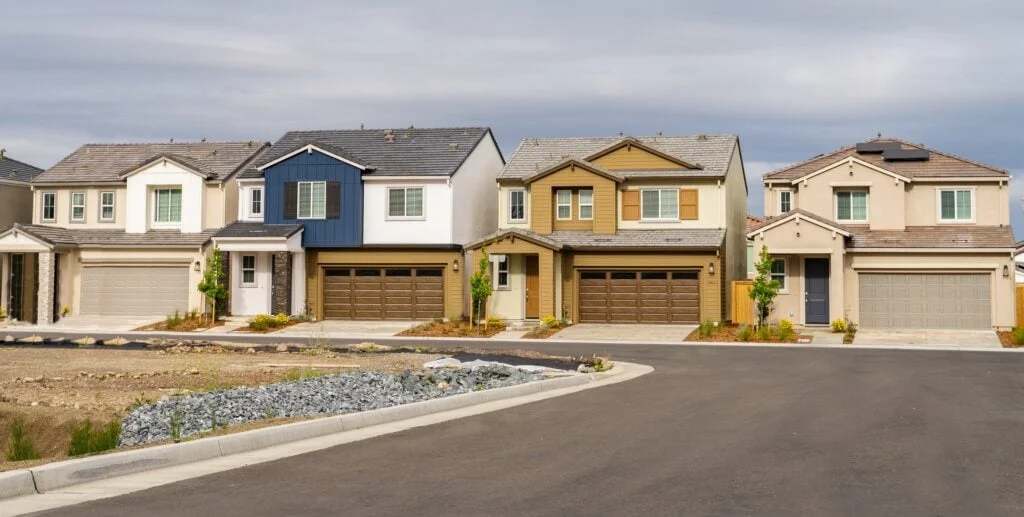
In the current real estate climate, a silent divide has emerged between two types of investors. On one side are the "Wait-and-Seers"—a massive contingent of capital holders currently sitting on the sidelines, refreshing Federal Reserve dashboards and praying for a return to the 5% mortgage rate era. On the other side are the "Active Strategists," who have recognized that waiting for the perfect macro-economic environment is a fool’s errand.
While the former group waits for the market to hand them a discount, the latter is already closing on properties with interest rates starting with a "4"—and in some aggressive cases, dipping into the 3s. This article explores how a pivot toward new construction, combined with sophisticated financing strategies, is allowing savvy investors to manufacture their own bull market, even while the rest of the world remains in a state of paralysis.
The Illusion of the "Perfect Rate"
The logic guiding the sidelines-investor is intuitively sound: why settle for a 7.5% interest rate on a rental property when, eventually, rates must come down? The problem, however, is one of market dynamics.
Real estate markets are self-correcting mechanisms. The moment the Federal Reserve signals a sustained pivot toward lower rates, the "sidelines" will evaporate. Millions of investors who have been waiting for the green light will flood the market simultaneously. This influx of capital will not lead to cheaper deals; it will lead to immediate, intense competition. Prices will climb, bidding wars will return, and the modest discounts currently available to those brave enough to act will vanish overnight.
You do not save money by waiting for a rate drop; you simply pay for the asset in a different currency: competition and compressed yields.
Chronology: The Evolution of the "Rate-Chasing" Trap
To understand why the current strategy of waiting is flawed, we must look at the recent timeline of the residential real estate sector:
- 2022–2023 (The Shock): The rapid escalation of interest rates caused a massive "valuation shock." Buyers and sellers alike were stunned, leading to a temporary freeze in transaction volume.
- 2024–2025 (The Stagnation): Investors began to adapt, but many remained paralyzed by the "locked-in" effect, where resale inventory remained thin because owners refused to trade their 3% mortgage for a 7% one.
- Mid-2026 (The Current Window): We have entered a period of "builder desperation." Builders have spent the last 18 months managing inventory levels. They are now faced with the reality that, while interest rates remain elevated, they must move inventory to satisfy shareholders and clear balance sheets. This creates the "concession window" we are currently in.
The "Builder Credit" Lever: Manufacturing Your Own Rate
The single greatest misunderstanding among retail investors is the belief that the "sticker price" and the "market rate" are fixed. In the new construction sector, this is rarely the case.
Builders operate under a specific set of constraints: they cannot lower the price of their homes without hurting the "comps" (comparables) for the rest of their development. If a developer sells one house for $300,000 and then sells an identical house next door for $280,000, they have effectively lowered the value of every other asset they own in that community.
Instead of cutting the price, builders offer "concessions" or "closing credits." Most amateur buyers take these as a cash-back incentive for upgrades or closing costs. Sophisticated investors, however, treat these credits as rate-buydown ammunition.
By applying a builder’s concession toward a permanent or temporary interest rate buydown, an investor can artificially lower their effective interest rate. When combined with a motivated builder who is eager to offload inventory, this strategy can effectively move an investor from a 7.5% market rate to a 4% effective rate. This is not a "miracle"—it is a tactical use of available developer capital.
Supporting Data: The Case for New Construction vs. Resale
When comparing the long-term viability of an investment, the math often favors new construction, regardless of the interest rate.
1. The Capital Deployment Gap
Standard investment property loans typically require a 20% to 25% down payment. On a $300,000 property, that’s $75,000 in capital locked away. Conversely, many new build-to-rent programs allow for significantly lower entry points—sometimes as low as 5% down. This allows the investor to deploy $15,000 instead of $75,000, enabling them to purchase multiple units for the same capital outlay.
2. The Capex "Cliff"
The "charming" 1980s fixer-upper is a siren song for many investors. While the price might seem lower, the "hidden" cost of ownership is staggering. A new construction home offers:
- Warranty Protection: No unexpected roof replacements or HVAC failures in the first 5–10 years.
- Energy Efficiency: Modern builds use materials that significantly lower monthly utility costs, which is a major selling point for tenants.
- Lower Risk Profile: Modern building codes ensure safety and structural integrity, reducing insurance premiums and maintenance headaches.
3. The DSCR Advantage
For investors whose personal income might not support multiple traditional mortgage applications, Debt Service Coverage Ratio (DSCR) loans remain a powerful tool. These loans underwrite the property based on the rental income it generates, not the investor’s W2 salary. New construction properties, due to their desirability and low maintenance, are favored by lenders for DSCR qualification, making them easier to finance at scale.
Official Industry Perspective
Industry analysts and turnkey providers—such as Rent to Retirement—have noted a distinct shift in investor behavior. According to institutional data, the most successful investors in 2026 are those who have moved away from the "hunt" (searching for distressed deals) and toward "systemized acquisition."
"The market has become too efficient for the average person to find a ‘hidden gem’ by driving for dollars," says one industry lead. "Today, the alpha is found in the financing structure and the operational efficiency of the asset. By partnering with developers who offer turnkey management and in-house financing, investors are effectively outsourcing the headache of property management while simultaneously leveraging the builder’s need for rapid sales."
Implications: Why You Need to Move Now
If you are waiting for a rate drop to enter the market, you are waiting for a "crowded trade." The implications of this wait are twofold:
- Reduced Inventory: The best, most desirable properties are being picked up by those willing to execute in the current environment.
- Higher Costs: Even if the interest rate drops by 1% in the next 18 months, if property prices rise by 5% due to increased buyer demand, you have not gained anything. In fact, you have lost purchasing power.
The "Turnkey" Solution
For the busy professional—the W2 earner who lacks the time to manage a renovation project—the turnkey model has become the standard for wealth building. By working with firms that provide the construction, the financing, and the property management under one roof, investors are buying a "finished income stream." This removes the primary friction points of real estate investing: the search, the construction, and the tenant search.
Conclusion: The Path Forward
The real estate market does not reward those who wait for perfect conditions; it rewards those who understand the mechanics of the market. While the headlines scream about high rates, the reality is that the tools to mitigate those rates exist right now.
By focusing on new construction, utilizing builder credits for aggressive rate buydowns, and leveraging the efficiency of turnkey partnerships, you can secure an asset that performs in any economic environment. The "cheap" house with the 7.5% rate and the looming repair bills was never cheap—it was simply a liability waiting to happen.
Stop pricing your strategy around a hypothetical rate cut. The window of opportunity is open now, defined by builder motivation and the silence of your competitors. When the rates finally do drop, you’ll want to be the one holding the keys to the property, not the one standing in the back of the line at an open house.
Disclaimer: Real estate investing involves significant risk, including market volatility, vacancy, and unexpected expenses. Always conduct your own due diligence, consult with financial advisors, and run your own numbers before making any investment decisions.
 Lina Hope
  Laily UPN
  Layla Zulfa