
 By Nana Muazin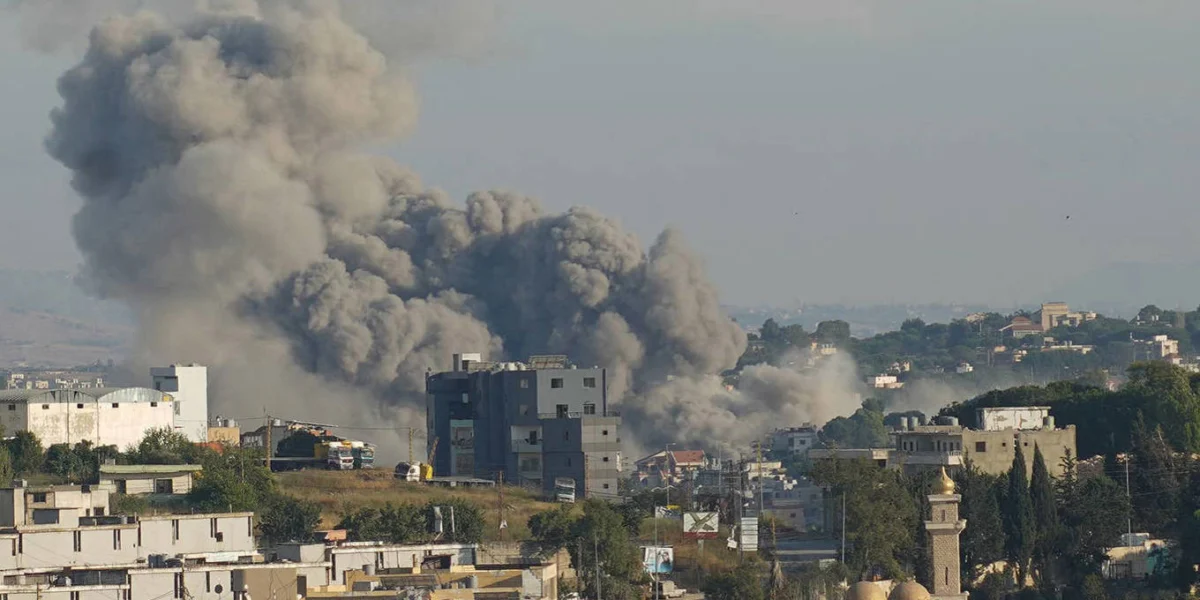
By Shlomo Ben-Ami
June 16, 2026
The geopolitical architecture of the Middle East is undergoing a violent and unpredictable reconfiguration. As of June 16, 2026, the United States and Iran have reportedly reached a tentative ceasefire, a development that marks a pivotal, if desperate, shift in the strategy of the Trump administration. President Donald Trump, who has asserted his singular authority over the negotiation process, finds himself attempting to disentangle the United States from a conflict that has yielded few strategic gains while escalating regional instability to unprecedented levels.
However, the deal, which aims to secure maritime transit and initiate a framework for future nuclear talks, is far from a comprehensive peace. By positioning the United States as a de facto guarantor of Lebanon’s stability, Washington has inadvertently set itself on a potential collision course with its most critical regional ally: Israel.
I. The Anatomy of a Forced Ceasefire
The ceasefire is, by all professional assessments, a retreat masquerading as diplomacy. Having entered the conflict with a bombastic list of objectives—ranging from total regime capitulation to the total dismantlement of Iran’s regional proxy networks—the Trump administration has settled for a reality that is strikingly similar to the status quo ante.
The primary terms of the agreement focus on the reopening of the Strait of Hormuz—a vital maritime artery that was, ironically, functional before the war began—and the establishment of a new round of negotiations regarding Iran’s nuclear capabilities. For the White House, this is a "win" intended for domestic consumption. For the Iranian leadership, it is a survival tactic that grants them a reprieve to consolidate their position. The disconnect between these goals is stark, and the narrowness of the agreement suggests it may be a temporary cessation of hostilities rather than a durable resolution.
II. Chronology of the Conflict (March–June 2026)
To understand the current impasse, one must look at the rapid deterioration of regional security over the past 108 days.
- March 1, 2026: Initial hostilities break out following a series of maritime skirmishes in the Persian Gulf and a breakdown in back-channel communications between Tehran and Washington.
- March 15, 2026: The Trump administration officially announces "Operation Iron Resolve," committing naval and air assets to secure the Strait of Hormuz.
- April 10, 2026: Iran escalates by activating its proxy networks across the Levant, specifically tasking Hezbollah in Lebanon with targeting strategic infrastructure.
- May 5, 2026: The war enters a stalemate. U.S. air superiority fails to curb Iranian asymmetric warfare, while the economic impact of the closure of the Strait of Hormuz causes global oil prices to surge by 40%.
- June 1, 2026: Diplomatic channels, mediated by neutral third parties, begin to open in Geneva.
- June 15, 2026: The tentative ceasefire is announced, halting direct U.S.-Iran combat operations, though leaving the Israel-Hezbollah front unresolved.
III. The Lebanon Variable: A Strategic Collision
The most dangerous element of this ceasefire is the U.S. promise to guarantee Lebanon’s security. In practice, this serves as a shield for Hezbollah, the most potent of Iran’s regional proxies. Israel, viewing Hezbollah as an existential threat, has made it clear that its military operations in Lebanon are non-negotiable, regardless of any deal struck in Washington or Tehran.
Trump’s insistence that he "calls the shots" ignores the reality that Israel operates under a different strategic calculus. If the United States acts as the protector of a Lebanese state dominated by Hezbollah, it creates a scenario where an Israeli strike on a Hezbollah munitions depot could be interpreted as a violation of the U.S.-brokered ceasefire. This places the U.S. military in the position of either policing its own ally—Israel—or watching the ceasefire collapse under the weight of a regional conflict that the White House had hoped to terminate.
IV. Supporting Data: The Economic and Military Cost
The human and financial toll of the last 108 days provides a grim context for the current negotiations.
- Global Market Impact: The disruption of the Strait of Hormuz effectively halted approximately 20% of the world’s petroleum consumption. The resultant "War Premium" on oil futures caused a sharp contraction in European and Asian manufacturing sectors.
- Military Expenditure: The U.S. Department of Defense has reportedly spent upwards of $120 billion in emergency funding to sustain naval patrols and air operations, a figure that has sparked significant backlash from fiscal conservatives in Congress.
- Casualty Estimates: While official figures remain redacted, humanitarian monitors estimate that the conflict has displaced over 400,000 civilians in southern Lebanon and northern Israel, with infrastructure damage in the region estimated at $15 billion.
V. Official Responses and Regional Reactions
Washington’s Narrative
The White House continues to frame the ceasefire as a masterstroke of "America First" diplomacy. Press Secretary statements emphasize that the administration has successfully prioritized the protection of global shipping lanes while keeping the door open for a "better deal" on Iran’s nuclear program. Privately, however, administration insiders acknowledge the exhaustion of the military apparatus and the dwindling political appetite for a prolonged regional war.
The View from Jerusalem
In Tel Aviv, the reaction has been one of cold, calculated frustration. Israeli officials have publicly maintained that their right to self-defense is not subject to U.S.-Iranian negotiations. While Israel remains the United States’ most important strategic partner, there is a palpable sense that the current U.S. administration is prioritizing an exit strategy over the security concerns of its allies. The Israeli cabinet is currently reviewing its operational plans for Lebanon, signaling that the ceasefire in the Gulf does not translate to peace on the Mediterranean coast.
Tehran’s Perspective
Tehran’s rhetoric remains defiant. By successfully surviving a direct confrontation with the United States, the Iranian leadership claims a moral and strategic victory. The ceasefire is viewed by the IRGC (Islamic Revolutionary Guard Corps) as a vindication of their "Forward Defense" doctrine, which utilizes regional proxies to force external powers into concessions.
VI. Implications: A Dangerous Precedent
The long-term implications of this ceasefire are ominous. By decoupling the U.S.-Iran conflict from the broader regional network of proxy wars, the Trump administration has left a vacuum that will likely be filled by further escalation.
- The Erosion of Deterrence: If the U.S. retreats from a conflict after failing to achieve its stated objectives, the perceived credibility of U.S. security guarantees in the Middle East is diminished. This may encourage other regional actors to pursue independent military agendas.
- The Hezbollah Problem: If the U.S. provides any form of protection to the Lebanese state while Hezbollah remains its primary military power, it essentially subsidizes an Iranian asset. This creates a direct point of friction with Israel that the current diplomatic framework does not account for.
- Nuclear Proliferation: The promise of "new negotiations" on the nuclear program is a well-worn path that has previously failed to yield results. With Iran’s enrichment infrastructure still largely intact, the danger of a nuclear breakout remains as high as it was before the hostilities began.
As the world watches the implementation of this ceasefire, the fundamental question remains: Did the Trump administration solve the crisis, or did it merely pause the clock on an inevitable, and potentially more destructive, regional confrontation? For the people of the Levant, the peace is not yet felt. For the strategists in Washington, the hard work of managing a volatile ally and a wounded adversary is only just beginning. The "shots" may be called from the Oval Office, but the consequences will be felt in the streets of Beirut, Tel Aviv, and Tehran for years to come.
 Asep Darmawan
  Lina Irawan
  Evan Lee Salim