
 By Siti Muinah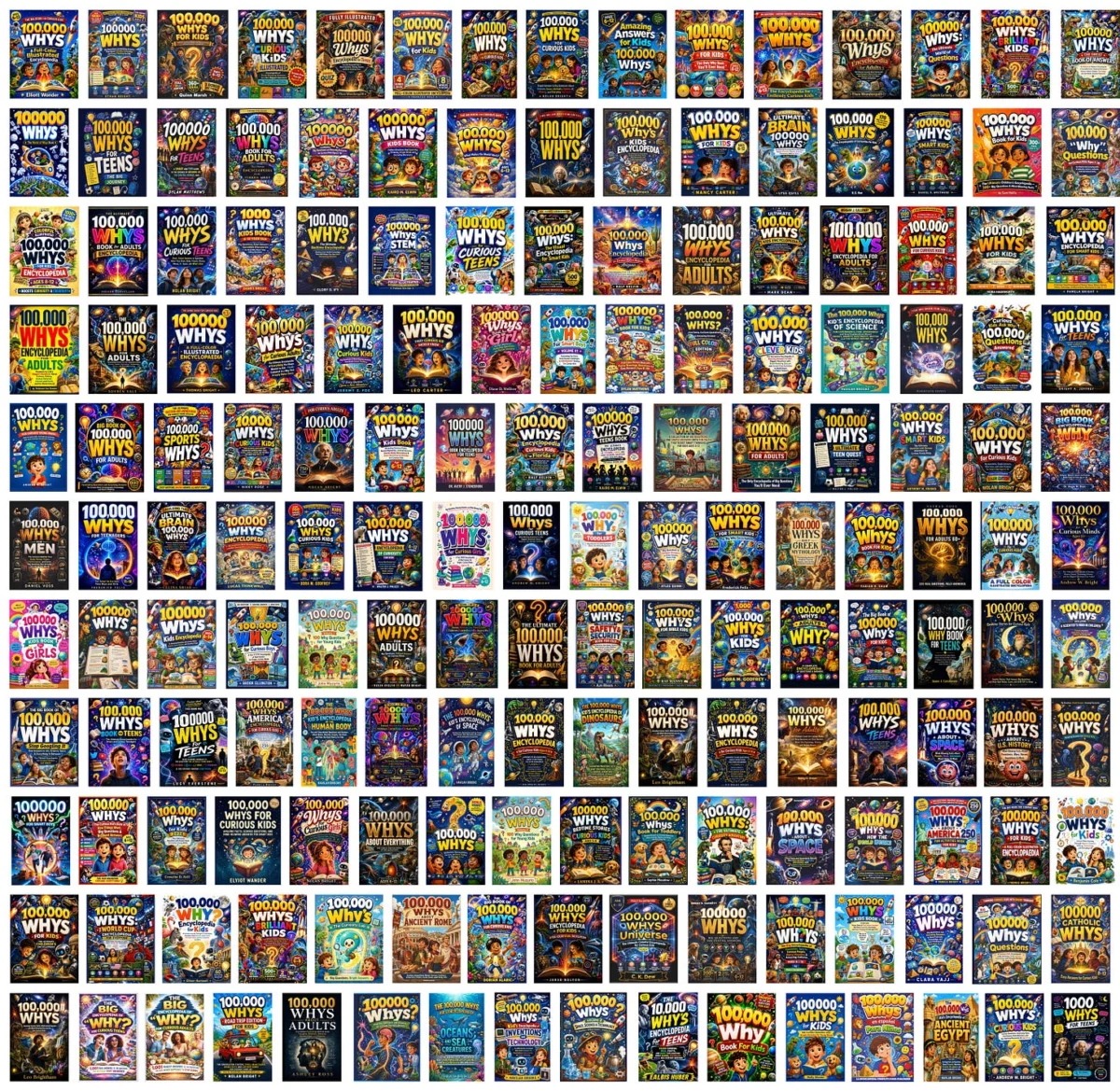
For years, the debate surrounding Artificial Intelligence has centered on a single, elusive question: Can a human reader genuinely distinguish between the prose of a person and the output of a Large Language Model (LLM)?
Tech skeptics and proponents alike have long argued that because LLMs are, at their core, sophisticated statistical models trained on the vast corpus of human expression, their output should be—by definition—indistinguishable from human language. If an AI is trained to replicate the patterns of human thought and speech, it stands to reason that it should eventually pass any Turing-style test of "human-ness."
However, this debate has taken a cynical turn. Many proponents of AI-generated content argue for its legitimacy with a fervor that borders on the defensive, raising questions about whether they are protecting their own reliance on automated workflows. But if you look past the theoretical arguments and examine the digital shelves of the world’s largest marketplace, a different reality emerges. The evidence suggests that while AI may mimic human language, it cannot replicate human intent, leading to a phenomenon of "statistical convergence" that is rapidly turning the internet into a hall of mirrors.
The Evidence: The "100,000 Whys" Phenomenon
The most compelling proof of this phenomenon isn’t found in a laboratory, but on Amazon. A recent search for the term "100,000 Whys"—a generic query often associated with children’s educational nonfiction—reveals a startling reality: hundreds of books, many of which claim "bestseller" status within their sub-categories, that are functionally identical.
A visual collage of these covers reveals a disturbing lack of creative diversity. Across approximately 150 different book covers, specific design motifs repeat with uncanny frequency. In one row, almost every cover features a roaring cartoon dinosaur in the upper-left quadrant. In another cluster, a red-and-white rocket ship or a generic golden retriever appears as the primary focal point, despite these books coming from different "authors" and publishers.
This is not a coincidence; it is the "slop" of the generative age. These books are the artifacts of quasi-deterministic tools. When hundreds of users prompt an AI with a generic command—"generate a reference book for children"—the model, drawing from the same weighted probability distributions, arrives at the same "optimal" design path. The result is a flood of content that is technically literate, grammatically correct, and visually polished, yet fundamentally hollow.
A Chronology of the "Slop" Era
The transition from human-authored content to AI-generated saturation can be traced back to the public release of transformer-based models in late 2022.
- Late 2022: The launch of ChatGPT triggers a gold rush in automated content creation. Freelance marketplaces and self-publishing platforms see an initial uptick in high-quality, AI-assisted content.
- Early 2023: The "low-hanging fruit" phase. Users begin using LLMs to generate high-volume blog posts, SEO-optimized articles, and rudimentary e-books to capitalize on Amazon’s Kindle Direct Publishing (KDP) royalties.
- Mid-2023: Publishers begin to notice a sharp decline in the "discovery" of human-authored niche books as the market is flooded with algorithmically generated titles.
- Late 2023 – Present: The "Hall of Mirrors" effect sets in. AI models are increasingly being trained on datasets that contain the very AI-generated content they produced months prior. This feedback loop accelerates the standardization of content, leading to the "100,000 Whys" phenomenon where every book looks, reads, and feels the same.
The Mechanics of Convergence: Why AI Writing Feels "Different"
Critics often argue that AI writing is "too perfect" or "too sterile." However, the truth is more nuanced. AI writing is not necessarily different because it lacks humanity; it is different because it lacks variance.
The Problem of Statistical Probability
Human creativity is defined by the unexpected: the metaphor that shouldn’t work, the non-sequitur that adds character, or the stylistic risk that deviates from the norm. LLMs are explicitly designed to avoid these outliers. They function by predicting the most statistically probable next word or pixel.
When a human author writes, they make thousands of micro-decisions based on personal experience, cultural context, and intent. When an LLM writes, it makes decisions based on what has historically been the most "common" response in its training data. Consequently, if 1,000 people ask an AI to write a book about space, the model will output the same "best" version 80% of the time.

The Illusion of Distinctiveness
The danger lies in the fact that these models have become exceptionally good at mimicking the mannerisms of human writing. They can adopt a tone, mimic a style, or mirror a specific author’s cadence. However, because the underlying mechanism is a search for the most probable answer, the model eventually resorts to the same set of complex mannerisms in response to any normal prompt. It is a "fuzzy signal"—if you squint, it looks human, but if you look at the aggregate, it looks like a photocopy of a photocopy.
Official Responses and Platform Policies
The reaction from major platforms has been slow and often contradictory. Amazon, for its part, has implemented policies requiring authors to disclose the use of AI in their book production. However, enforcement remains a significant challenge.
In a recent statement, industry analysts noted that the sheer volume of submissions has overwhelmed the moderation capabilities of even the largest retailers. While platforms have attempted to filter out "low-quality" content, the definition of quality remains subjective. If an AI-generated book is grammatically correct and meets the basic requirements of the genre, it is difficult for a platform to justify a ban, even if that book is essentially a duplicate of 50 others.
Furthermore, there is a lack of consensus on whether "AI-assisted" writing constitutes "plagiarism" or "creative labor." Some trade unions and writer guilds have argued for strict labeling requirements, while tech companies argue that their tools are merely sophisticated versions of spellcheck or grammar-correction software.
The Implications for the Digital Ecosystem
The saturation of the market with AI-generated content has profound implications for how we consume information and engage with digital media.
The Collapse of the Attention Economy
Traditional models of online interaction rely on a balance of effort: it takes time and skill to write a piece of content, and it takes time and skill to consume it. When content production becomes effectively free and near-instantaneous, that balance collapses. If it takes less effort to produce a book than it does to read it, the incentive to create meaningful, original work is severely diminished.
The "Dead Internet" Theory
We are approaching what some researchers call the "Dead Internet" state—a digital ecosystem where the majority of content is produced by bots for the consumption of other bots. When search engines begin to prioritize the most "common" (i.e., AI-generated) answers, human voices are pushed to the fringes. This creates a feedback loop: human authors are discouraged by the lack of visibility, leaving the field open for even more AI content.
A Call for Intuition
As we navigate this landscape, our human instincts—our "gut feelings"—are becoming more important than ever. While we should be careful not to dismiss valid, human-assisted work, we must acknowledge that our ability to detect "the slop" is a necessary defense mechanism.
For those using LLMs to automate their writing, the warning is clear: the tech is undeniably impressive, but efficiency is not a substitute for value. If your work looks exactly like the thousands of other pieces of content generated on the same day, you aren’t an author—you are a curator of the average.
The future of writing will not be won by those who can generate the most content, but by those who can provide the one thing the models cannot: a unique, unpredictable, and undeniably human perspective. In a world of 100,000 "Whys," the most valuable commodity will be the one person who dares to ask a question that the algorithm hasn’t already answered.
 Raul Delapena Setiawan
  Iffa Jayyana
  Nila Kartika Wati