
 By Lina Irawan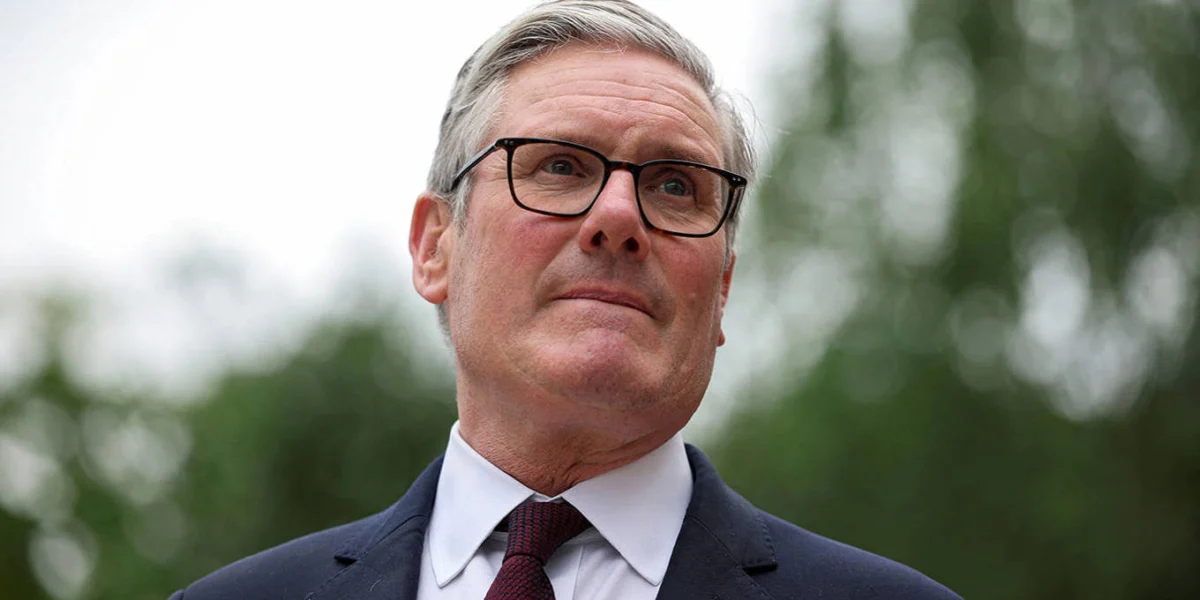
By Anatole Kaletsky
June 18, 2026
As the United Kingdom approaches a pivotal leadership transition within the governing Labour Party, the mood in Westminster is not one of rejuvenation, but of profound, systemic apprehension. With Prime Minister Keir Starmer’s premiership effectively collapsing under the weight of mounting economic stagnation and dwindling public support, the search for a successor has begun in earnest. Yet, rather than offering a beacon of hope, the impending change has triggered a climate of anxiety, echoing the cynical wisdom of Lord Salisbury: "Change? Change? Aren’t things bad enough already?"
The Main Facts: A Government in Retreat
The current crisis facing the Labour government is multifaceted, rooted in a failure to deliver on promises of post-Brexit economic stabilization. Prime Minister Keir Starmer, once hailed as a steady hand capable of navigating the post-Johnson era, now faces record-low approval ratings. The fundamental issue remains the UK’s relationship with the European Union. Despite the shifting tides of public opinion—where a clear majority of British voters now characterize Brexit as a historic policy error—the government has remained paralyzed by its own rigid adherence to the "Brexit means Brexit" paradigm.
The political reality is that the Labour Party is currently caught between an electorate demanding closer alignment with the EU and a party apparatus that fears reopening the divisive wounds of the 2016 referendum. As the party prepares to select a new leader, the markets have reacted with skepticism, fearing that any attempt to pivot will either be too little, too late, or—worse—destabilizing to the remaining pillars of the British economy.
Chronology of a Political Unraveling
To understand the current impasse, one must trace the rapid deterioration of the Starmer administration:
- 2024–2025: The Honeymoon Ends: Initial promises of a "decade of renewal" quickly faltered as inflation remained stubbornly high and public services—particularly the National Health Service (NHS)—buckled under the strain of labor disputes and underfunding.
- Late 2025: The Brexit Pivot Fails: A series of minor trade adjustments with Brussels failed to alleviate the friction caused by the Trade and Cooperation Agreement (TCA), leading to a significant contraction in SME exports.
- Q1 2026: The Economic Inflection Point: Official data confirmed that the UK’s GDP growth had lagged behind every other G7 nation for four consecutive quarters, triggering a revolt within the Labour backbenches.
- May 2026: The Starmer Resignation: Following a disastrous set of local election results and a leaked internal memo suggesting a total loss of confidence from the cabinet, Keir Starmer announced he would step down, effective late June 2026.
- June 2026: The Leadership Vacuum: As of mid-June, the Labour Party has entered a frantic selection process, characterized by deep ideological divisions between those who advocate for a radical re-engagement with Europe and those who prioritize domestic populism.
Supporting Data: The Economic Reality
The skepticism of global financial markets is not merely a matter of political sentiment; it is rooted in cold, hard data.
- Investment Stagnation: Since the implementation of the post-Brexit trade regime, business investment in the UK has remained nearly 15% below its 2016 trend line. Global firms have consistently cited the uncertainty of the UK-EU regulatory divergence as the primary deterrent for capital allocation.
- Productivity Crisis: The UK’s productivity growth has flatlined, with the Office for National Statistics (ONS) reporting that labor output per hour has barely moved in eighteen months. This is directly linked to the exodus of skilled labor from the EU and the administrative burden placed on supply chains.
- Inflationary Pressures: While global energy prices have stabilized, the UK continues to suffer from "Brexit-premium" inflation, as the cost of importing food and consumer goods from the continent remains artificially elevated due to non-tariff barriers.
Official Responses and Political Maneuvering
The response from the Labour frontbench has been a study in cognitive dissonance. While candidates for the leadership have begun to hint at a "new, warmer relationship" with Brussels, they remain hesitant to use the word "Single Market" or "Customs Union," fearing a backlash from the party’s traditional heartlands.
A spokesperson for the Prime Minister’s office recently stated, "The government remains committed to the current framework, which provides the necessary sovereignty for our nation, while acknowledging that improvements to our trading relationship are always a priority."
Conversely, the Conservative opposition has seized upon this hesitation, arguing that Labour is attempting a "stealth re-entry" into the EU, further polarizing the national debate and preventing any substantive, bipartisan path forward.
Implications: The High Cost of Stasis
The implications for the United Kingdom are grave. If the next leader of the Labour Party fails to address the structural deficiencies of the UK-EU relationship, the country faces a prolonged period of "managed decline."
The Economic Implication
Economically, the UK risks becoming a peripheral player in the European market. Without a formal mechanism to align regulations, British businesses are increasingly choosing to relocate operations to the EU to bypass the bureaucratic red tape. This "drip-feed" exit of corporate headquarters is hollowing out the tax base, leaving the government with fewer resources to fund the very public services it promises to revitalize.
The Geopolitical Implication
Geopolitically, Britain is suffering from a loss of influence. In an era defined by great power competition, the UK’s decision to remain an outsider to the European bloc has limited its ability to shape policy in Brussels, Washington, or Beijing. The "Global Britain" slogan, which once promised a new horizon of opportunity, has effectively become a synonym for isolation.
The Social Implication
Socially, the disillusionment with the political class is reaching a boiling point. When a majority of voters believe that the central political event of the last decade was a mistake, but see no path toward correcting that mistake, the result is a toxic mixture of apathy and resentment. This environment is ripe for populism, whether from the fringes of the left or the right, threatening the long-term stability of the UK’s constitutional order.
Conclusion: A Call for Audacity
As the Labour Party moves toward its leadership election, the central question is whether any candidate possesses the political courage to break the cycle. To pivot toward a closer relationship with the EU—be it through a new customs agreement or a return to the Single Market—would require an act of political bravery that has been absent from Westminster for years.
The electorate is waiting. The markets are watching. And the legacy of the Starmer government stands as a stark warning: political expediency may offer a short-term shield against criticism, but it is no substitute for the economic logic that the nation so desperately requires. Britain does not need more of the same, nor does it need the stagnant "change" that Lord Salisbury warned against. It needs a fundamental recalibration of its place in the world. Whether the next leader of the Labour Party is capable of delivering that remains the most significant uncertainty facing the United Kingdom today.
 Nana Muazin
  Asep Darmawan
  Evan Lee Salim