
 By Nana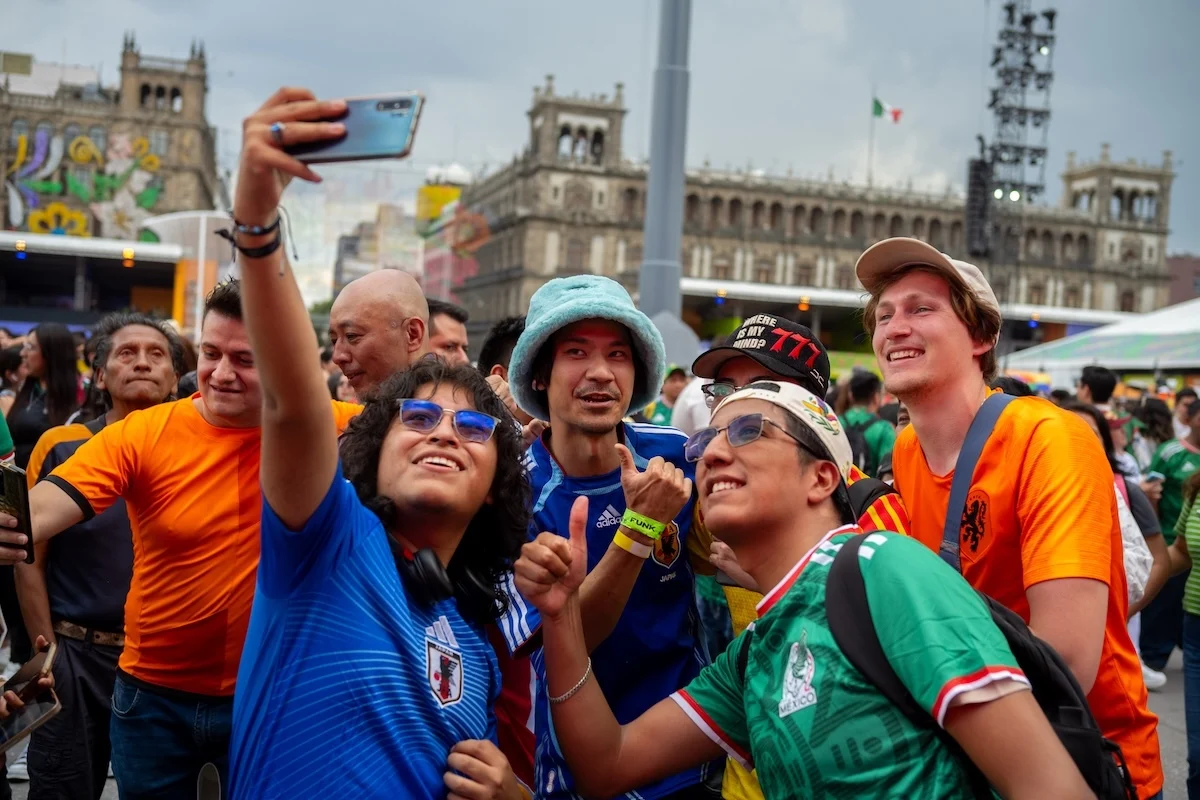
By Editorial Staff
June 19, 2026
As the global community observes Juneteenth—a day marking the emancipation of the last enslaved Americans—we are reminded that the arc of history bends not just toward legal freedom, but toward the arduous, ongoing task of securing economic agency. In a world increasingly defined by rapid technological disruption and geopolitical friction, the core theme of our modern era is emerging: social capital. From the spontaneous, human-centric diplomacy seen in World Cup fan interactions to the boardrooms of global private equity, the ability to connect, trust, and distribute opportunity is becoming the primary metric of resilience.
The World Cup: A Study in Human Connection
While global headlines regarding the current World Cup have been dominated by the logistics of border restrictions, exorbitant ticket prices, and the machinations of statecraft, the view from the ground tells a vastly different story. On the streets of Guadalajara, Mexican supporters transformed the arrival of the South Korean national team into a festival of solidarity, chanting, "Coreano, hermano ya eres Mexicano" (Korean, brother, you are Mexican now).
This is not merely anecdotal; it is the manifestation of social capital—the networks of relationships among people who live and work in a particular society, enabling that society to function effectively. In Lawrence, Kansas, local business owners draped their storefronts in Algerian flags, while the University of Kansas marching band practiced the Algerian national anthem. These acts, and the subsequent move by the Algerian team to open their training sessions to local youth, suggest that even in a polarized era, the impulse for human connection remains a potent, untapped resource.
In Toronto, the playful, competitive spirit of Panama and Ghana fans—trading chants of "Gana Panam!" and "Ghana! Gana!"—further underscores that sport remains one of the few global platforms where agency and participation can supersede political barriers.
AI, Governance, and the Predistribution Challenge
If social capital is the foundation of community, how do we protect it in the age of Artificial Intelligence? As AI models proliferate at breakneck speeds, a growing chorus of stakeholders is warning that the current trajectory risks exacerbating wealth inequality and eroding societal stability.
The debate has shifted from simple "adoption" to "governance." During the SuperReturn conference in Berlin, former U.S. Vice President Al Gore issued a stark warning to the private equity elite. He called for a bilateral agreement on responsible AI between the two dominant superpowers, China and the United States.
"We really have to face up to the fact that this technology is advancing so quickly that it is going to challenge not only business models but societal models, civilization models, cultural models," Gore noted. His sentiment is echoed by experts like Delilah Rothenberg of the Predistribution Initiative, who argues that we must design broad-based ownership models for AI. If we do not bake equity into the architecture of these systems, we risk creating a new form of digital disenfranchisement.
Practically, this means moving beyond the "move fast and break things" mentality. Capria Ventures, for instance, has integrated AI to accelerate investment analysis but has taken the deliberate step of ensuring their models are contextually grounded in the realities of the Global South. By leveraging AI to support—not replace—local human expertise, they demonstrate that technology can be a bridge rather than a wedge.
Resilience Through Distributed Infrastructure
Social capital also serves as the essential bedrock for climate resilience. As global supply chains remain vulnerable to geopolitical shocks, the transition to distributed renewable energy is taking on a new urgency.
Sandra Halilovic of Acumen highlights that distributed energy is not just a climate mitigation tool; it is a fundamental lever for community stability. When neighborhoods can generate their own power, they are shielded from the volatility of global fossil fuel markets. This decentralization of infrastructure is mirrored in the information space. David Bank’s recent reporting on Press Forward details how catalytic capital is being deployed to save local news publishers. By financing the civic infrastructure of news, we are essentially investing in the "connective tissue" of democracy, ensuring that communities remain informed and cohesive.
The Juneteenth Challenge: Economic Emancipation
As we honor Juneteenth, the conversation must inevitably turn to the unfinished business of the American experiment. While 1865 marked the end of legal enslavement, it did not provide the economic scaffolding necessary for generational wealth.
George Ashton of the Candide Group notes that in 1863, Black Americans held approximately 0.5% of national wealth. Over 160 years later, that figure has only inched up to 1.5%. "As a country," Ashton writes, "we have never truly faced the real legacy of that history head on and applied ourselves completely to correcting it."
The lesson for the impact investing community is clear: freedom requires agency, and agency requires access to capital. True social impact is not just about avoiding harm; it is about the active, intentional redistribution of opportunity.
The Path Forward: Career and Talent Trends
For those entering the impact sector, the landscape is shifting. Kimberlee Cornett, director of impact investments at the $14 billion Robert Wood Johnson Foundation, has been inundated with requests for advice from the next generation of leaders. Her guidance remains rooted in the "human" element of high finance.
"I still believe that knowing how to do the work by hand is going to be really important," Cornett shared during our recent Agents of Impact Call. "Understanding the life cycle of a deal, anticipating all the things that can go wrong—yes, you can automate some of the scenario planning, but guiding the system is going to require actually knowing how to do the work."
The industry is currently seeing a significant rotation of talent. Notable shifts this week include:
- Leadership Transitions: Ángel Cabrera of the Georgia Institute of Technology is set to become the CEO of the Aspen Institute this November, succeeding Dan Porterfield.
- Institutional Moves: Allyson Tucker (Washington State Investment Board) and Scott Chan (CalSTRS) have joined the board of Ownership Works, signaling a deepening of institutional commitment to employee-owned business models.
- Strategic Consulting: Don Hinkle-Brown has transitioned from his role as CEO of Reinvestment Fund to launch Emergent Impacts, a new consulting firm focused on scaling social finance.
Implications: Designing for the Future
The implications for the next decade of impact investing are profound. We are moving toward an "ownership economy." Whether it is the collective diligence process pioneered by firms like Archipelago Ventures—which is rethinking the circular materials economy—or the push for social impact filmmaking by the Harbor Fund to provide "antidotes to hopelessness," the common thread is the decentralization of power.
The rapid adoption of AI demands a corresponding increase in human-centered governance. If we view social capital as our most vital asset, then every investment decision, from local renewable energy projects to global tech agreements, must be measured by its ability to foster agency, participation, and shared ownership.
As we look ahead to Tuesday, June 23, when we resume our regular briefings, let us carry the spirit of Juneteenth into our professional endeavors. The promise of freedom is not a static milestone; it is a dynamic process that must be renewed by every generation through the tools of investment, policy, and human connection.
Key Resources & Further Reading:
- Archipelago Ventures: Collective approaches to circular materials.
- Criterion Institute: Exploring the unintended consequences of AI-driven workflows.
- The ImpactAlpha Career Hub: Explore the latest job listings and dealflow reports.
Note: ImpactAlpha will be closed for the Juneteenth holiday. We will return to your inbox on Tuesday, June 23. Have a wonderful weekend.
 Layla Zulfa
  Sagoh
Sagoh  Iffa Jayyana