
 By Lina Irawan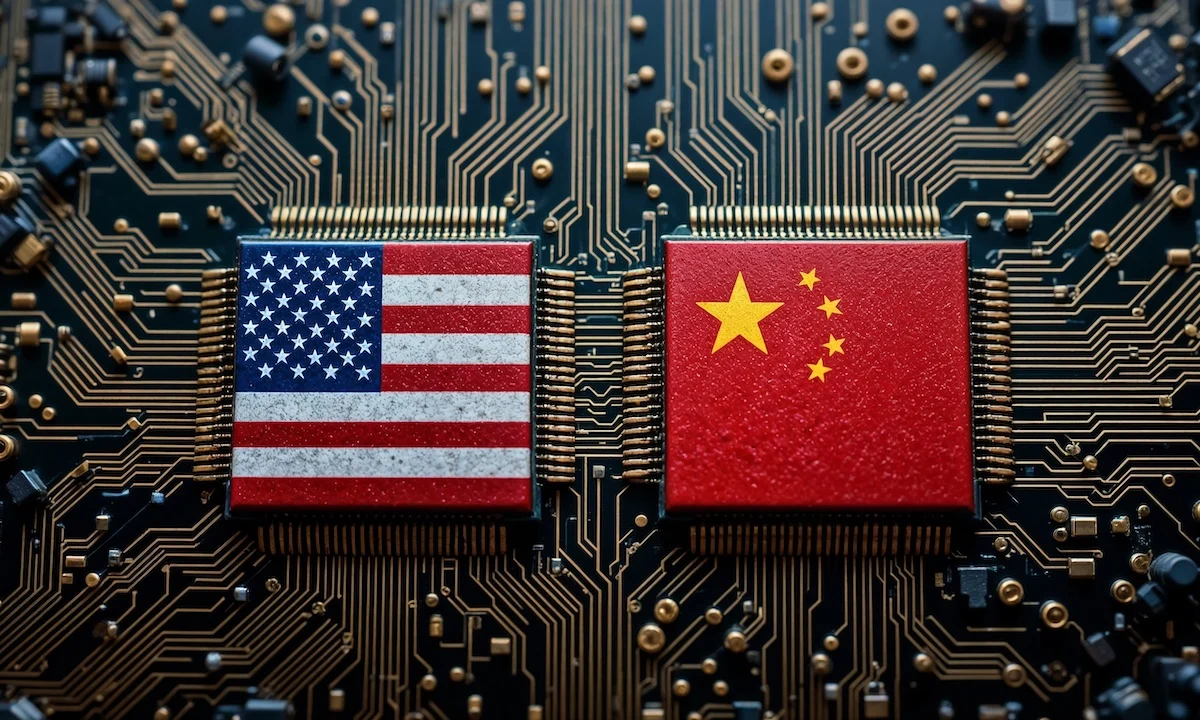
By PYMNTS | June 19, 2026
The initial euphoria surrounding the deployment of Generative AI in the enterprise is meeting a harsh reality: the "token shock." As corporations pivot from experimental pilot programs to full-scale production environments, the financial implications of AI integration have shifted from manageable R&D line items to major fiscal burdens. According to recent reporting, major U.S.-based AI powerhouses—including OpenAI and Anthropic—are facing a growing wave of cost-conscious corporate clients, a trend that is inadvertently creating a strategic opening for Chinese AI developers.
The Paradigm Shift: From Chatbots to Autonomous Agents
The primary driver behind the current budgetary strain is the rapid evolution of AI utility. For much of 2024 and 2025, enterprises focused on "chatbot" interfaces—passive tools that provided summaries or drafted emails upon human request. However, 2026 has been defined by the rise of "AI agents."
Unlike traditional chatbots, agents are designed to execute complex, multi-step workflows autonomously. While these tools offer significant productivity gains, they consume computing power at an exponential rate. Every background process, every recursive loop, and every API call contributes to a mounting bill. The transition from flat-rate SaaS (Software-as-a-Service) subscriptions to granular, usage-based "tokenomics" has caught many CFOs off guard.
In this new billing architecture, companies are no longer paying for a seat license. Instead, they are billed for every token processed, every inference cycle completed, and every autonomous background execution. When these costs are aggregated across thousands of employees, the financial impact is often unpredictable and significantly higher than traditional software overhead.
Chronology of a Crisis: From Adoption to Restriction
The trajectory of corporate AI spending over the past eighteen months reflects a classic "hype cycle" turning into a fiscal reality check.
- Early 2026: Enterprises across sectors began scaling AI deployments, anticipating massive efficiency gains. Many firms offered employees unlimited access to proprietary AI tools to foster innovation and familiarity.
- April 2026: The first major warning signs appeared when ride-sharing giant Uber reportedly exhausted its entire annual AI budget by the end of the first quarter. Executives publicly admitted that the productivity case for their current AI spend had not been fully realized, forcing the company back to the drawing board to reassess its infrastructure.
- May 2026: Industry analysts began noting that the "SaaS-ification" of AI was fundamentally flawed. The commercial infrastructure that governed software sales for decades—predictable per-user pricing—was being dismantled by the volatile, usage-heavy nature of generative models.
- June 1, 2026: Walmart, a bellwether for operational efficiency, moved to curb employee AI use. The retail giant shifted from an "unlimited token" policy to a strictly rationed model for its internal "Code Puppy" AI agent, signaling that even the largest firms are now prioritizing cost control over unrestricted experimentation.
- June 18, 2026: The Financial Times reported that the combination of token-based billing and rising compute demands is forcing global enterprises to seek alternatives, including cheaper, high-efficiency models originating from China.
The Global Competitive Pivot: The Rise of Chinese Alternatives
One of the most consequential developments in the AI market this year is the emergence of Chinese AI labs as formidable price competitors. As U.S. firms grapple with high energy costs and premium pricing models, Chinese developers have leveraged more efficient model architectures and significantly lower domestic energy costs to offer a compelling value proposition.
Data from OpenRouter indicates a massive shift in market dynamics: for the first time, Chinese AI models are seeing higher cumulative token consumption than their U.S. counterparts. This marks a stark reversal from the start of the year. For cost-pressured procurement departments, the decision to migrate from a premium U.S. provider to a more efficient, lower-cost Chinese model is becoming a matter of fiduciary duty rather than geopolitical preference.
Supporting Data: The Anatomy of "Token Shock"
The complexity of AI billing has rendered traditional software budgeting obsolete. To understand why companies are panicking, one must look at the variables that now dictate enterprise IT spend:
- API Call Volume: Every time an application communicates with an AI backend, a fee is triggered.
- Inference Cycles: The computational work required to "think" or generate a response.
- Autonomous Workflows: Unlike human-in-the-loop interactions, agents run continuously in the background, generating charges even when employees are offline.
- Multimodal Costs: Image generation and complex data analysis often carry higher token weights than simple text processing, further inflating costs.
Executives are now tasked with the difficult job of "AI rationalization." This involves auditing which employees actually require high-end, heavy-compute models and which tasks can be handled by smaller, open-source, or older, cheaper models.
Strategies for Cost Mitigation
In response to these ballooning costs, the C-suite is implementing a series of defensive strategies:
- Usage Caps: As seen with Walmart, companies are placing "hard limits" on tokens per user per day.
- Model Tiering: Instead of using the most powerful (and expensive) models for every task, companies are routing simpler queries to smaller, "distilled" models.
- Open-Source Adoption: Many firms are moving away from proprietary, API-gated models in favor of hosting their own open-source versions on internal servers. This shift allows for more predictable infrastructure spending, though it requires higher initial capital expenditure in hardware.
- Task Alignment: IT departments are actively training employees to select the "right tool for the task," preventing the use of high-compute models for low-value administrative work.
The Implications: What This Means for the Future of AI
The current "budget crunch" does not signal the end of the AI revolution, but rather its maturation. The period of "AI at all costs" is being replaced by an era of "AI at a sustainable cost."
For U.S. labs like OpenAI and Anthropic, the challenge is clear: they must demonstrate that the value provided by their superior models justifies the premium price tag. If they cannot prove a definitive, measurable ROI that exceeds the cost of tokens, they risk losing their market share to leaner, more cost-efficient international competitors.
Furthermore, this trend will likely accelerate the commoditization of AI. As companies become more adept at swapping models, the "moat" around top-tier AI developers may shrink. If an enterprise can switch from an industry-leading model to a Chinese alternative without a significant drop in output quality, the pricing power of the current AI leaders will diminish significantly.
Ultimately, the events of June 2026 serve as a reminder that enterprise technology is governed by the laws of economics. No matter how transformative the innovation, if the cost structure is disconnected from operational value, the market will inevitably force a correction. As we move into the second half of the year, the winners of the AI race will not necessarily be those with the most "intelligent" models, but those with the most sustainable and efficient delivery mechanisms.
For all PYMNTS AI and digital transformation coverage, subscribe to the daily AI and Digital Transformation Newsletters.
 Jia Lissa
  Neng Nana