
 By rifanmuazin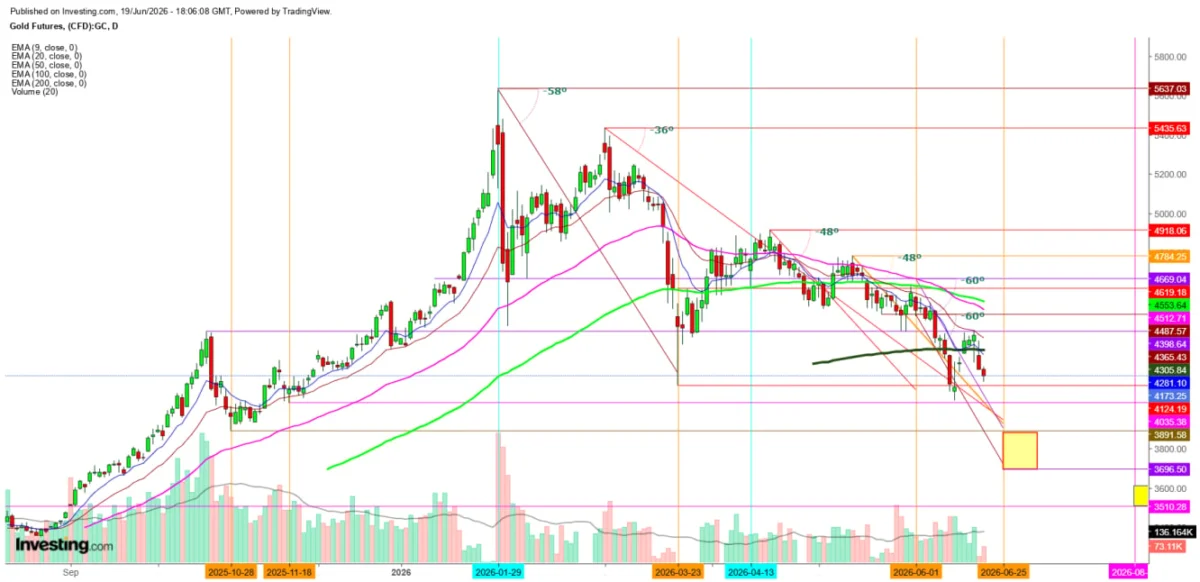
The fragile architecture of the recent ceasefire between the United States and Iran faced a significant setback this week, as scheduled diplomatic negotiations in Switzerland were abruptly cancelled. The dissolution of these talks, precipitated by the withdrawal of U.S. Vice President JD Vance from the delegation, has sent shockwaves through international markets, reigniting fears of a return to the volatile conditions that characterized the conflict’s onset in late February.
As global leaders grapple with the implications of this diplomatic rupture, financial markets have reacted with sharp movements. Oil prices are currently tracking toward their most significant weekly decline in months, while precious metals—most notably gold—are enduring a protracted bearish slide. The uncertainty surrounding the Strait of Hormuz, a critical artery for global energy, remains the primary catalyst for both geopolitical anxiety and the hawkish recalibration of central bank policies worldwide.
A Chronology of Escalation and Stalled Diplomacy
The current crisis traces its roots to late February, when tensions between Washington and Tehran escalated into an active conflict, resulting in the de facto closure of the Strait of Hormuz. This vital maritime chokepoint, which accounts for roughly 20% of global oil and liquefied natural gas (LNG) transit, was effectively shuttered, triggering an immediate energy shock that rippled through the global economy.
Following weeks of intensive back-channel diplomacy, the two nations signed a Memorandum of Understanding (MoU) aimed at de-escalating the situation. The agreement was predicated on the gradual reopening of the Strait and renewed oversight of Iran’s nuclear program. Friday’s scheduled summit in Switzerland was intended to be the cornerstone of this implementation phase.
However, the mood shifted dramatically when Vice President Vance announced his withdrawal from the proceedings. Iranian officials, speaking through state media, expressed deep skepticism regarding the U.S. commitment to the deal, demanding "verifiable evidence" that Washington is adhering to the agreed-upon terms before engaging in further dialogue. This impasse has left the peace agreement in a state of purgatory, neither formally collapsed nor successfully implemented.

The Global Energy Conundrum: Markets Under Pressure
The economic repercussions of the U.S.-Iran standoff have been profound. For energy markets, the initial optimism surrounding the ceasefire—which had promised a return of Iranian oil to the global supply chain—has evaporated. Brent and WTI benchmarks are currently poised for a near-10% weekly loss, trading at levels not seen since early March.
Yet, this price decline is a double-edged sword. While it reflects anticipation of future supply, it is simultaneously tempered by the fear of renewed hostilities. Should the peace process fully disintegrate, the resulting pressure on energy supplies could reignite inflationary cycles that central banks are currently struggling to contain. The potential for a sudden, permanent closure of the Strait of Hormuz remains the "black swan" event that continues to haunt energy traders and policymakers alike.
The Hawkish Pivot: Central Banks Respond to War-Driven Inflation
Perhaps the most significant consequence of the conflict is the aggressive shift in monetary policy among the world’s major central banks. The narrative of "transitory" inflation has been discarded in favor of a hawkish, stability-focused doctrine.
The ECB and BOJ: A Stance of Vigilance
The European Central Bank (ECB) initiated a rate hike cycle, its first since 2023, citing the energy shock from the Strait of Hormuz as a primary driver of domestic price pressures. Similarly, the Bank of Japan (BOJ) enacted a rate increase, bringing borrowing costs to their highest level since 1995. Both institutions have explicitly linked their policy shifts to the necessity of curbing inflation accelerated by the regional conflict in the Middle East.
The Federal Reserve and the "Price Stability" Mandate
In the United States, the Federal Reserve’s latest policy announcement signaled a sea change in strategy. Under the tenure of new Chair Kevin Warsh, the Fed opted to hold rates steady, yet the "dot plot" projections revealed a hawkish consensus: nine members now anticipate rate hikes later this year, a stark contrast to the zero-hike projections from the March forecast.

Critically, the language within the Fed’s statement has pivoted. By emphasizing "price stability" while conspicuously omitting the traditional mandate of "maximum employment," the Fed is signaling that it is prepared to accept economic contraction if it is the price required to neutralize war-induced inflation.
The Bank of England’s Split
The Bank of England (BoE) remains in a precarious position. While it left rates unchanged this week, analysts at Barclays have noted a persistent hawkish bias within the voting committee. Despite softening labor market data, the committee remains wary of the upside risks to inflation posed by the unresolved energy crisis in the Middle East.
Gold Futures: Technical Analysis of a Market in Retreat
The confluence of high interest rates and geopolitical uncertainty has created a difficult environment for non-yielding assets like gold. A technical evaluation of gold futures reveals a market under severe bearish pressure. Since January 2026, the asset has been on a persistent, sixty-degree downward trajectory, punctuated by failed rallies and lower lows.
Monthly and Weekly Trends
On the monthly chart, gold futures have breached the key support level of the 9 EMA ($4,368), indicating that momentum has shifted decisively to the downside. The next major technical floor sits at the 20 EMA ($3,885). A failure to hold this level could trigger a capitulation event, leading to an intensified sell-off.
The weekly chart tells a similarly grim story. With the formation of a "Bearish Crossover"—where the 9 EMA has pierced the 20 EMA—the technical setup confirms that the asset is firmly in the grip of sellers. Trading at $4,173.25, the commodity is hovering precariously above the immediate support at $4,124.

Daily Outlook
The daily chart shows gold trading well below the 200 EMA ($4,305.84). The series of bearish crossovers across multiple timeframes (9, 20, and 50 EMA piercing the 100 EMA) suggests that the path of least resistance remains downward. Investors are watching the $4,124 support level closely; a breakdown here, particularly in the coming hours, could signal the next leg of a broader correction.
Implications and Future Outlook
The cancellation of the Switzerland talks is a stark reminder that geopolitical peace is rarely a linear process. For investors, the weekend represents a period of extreme risk. Given President Trump’s propensity for sudden policy pivots and the unpredictable nature of U.S.-Iran relations, markets are bracing for potential volatility on Monday morning.
The core dilemma remains: can the global financial system withstand a protracted state of "neither war nor peace"? The current central bank strategy suggests that policymakers believe inflation is the greater threat to long-term stability than the risk of short-term market volatility. Consequently, liquidity is being withdrawn from the system, putting further pressure on assets that thrived in a low-rate, high-liquidity environment, such as precious metals and growth equities.
As the world awaits further clarity from Washington and Tehran, the message from the markets is clear: the era of post-conflict recovery has been replaced by an era of defensive positioning. Whether the U.S.-Iran agreement can be salvaged or whether it is destined to become another failed chapter in the history of Middle Eastern diplomacy will likely be decided by the end of the month. Until then, the volatility in energy, precious metals, and bond yields is expected to persist, reflecting the deep uncertainty that currently defines the global order.
Disclaimer: The analysis provided herein is based on technical observations and current geopolitical developments. It is intended for informational purposes only and does not constitute financial advice. Investors are urged to conduct their own due diligence, as market conditions remain highly volatile and subject to sudden shifts based on political events.
 Evan Lee Salim
  Nila Kartika Wati
  Sagoh
Sagoh 