
 By Evan Lee Salim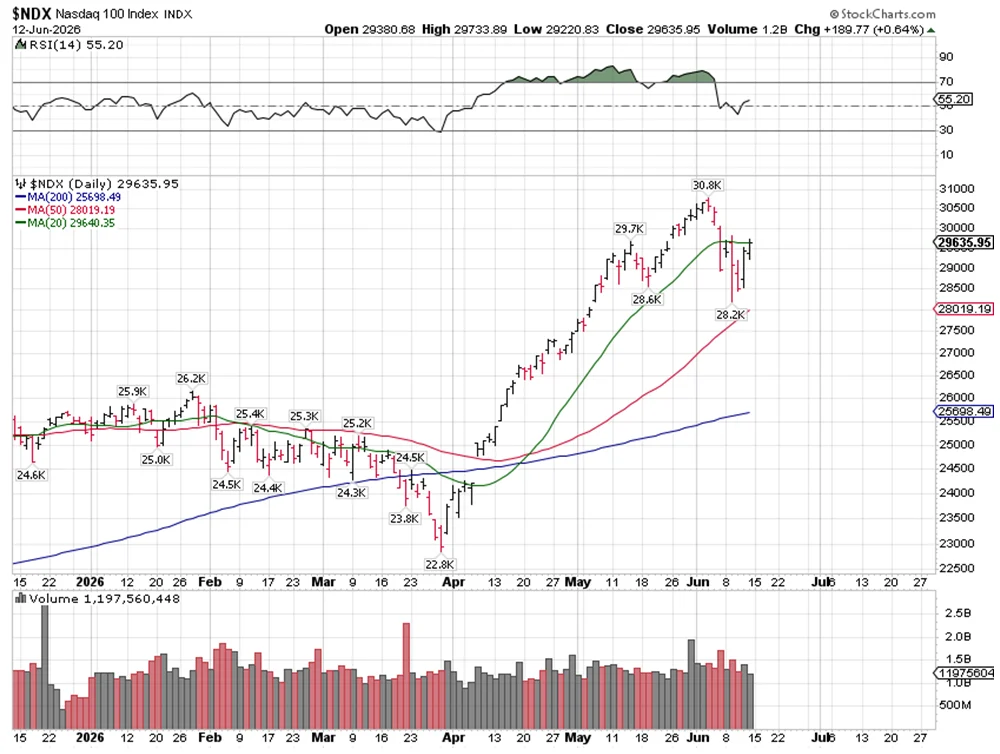
Executive Summary
The global financial landscape is experiencing a rapid realignment as geopolitical anxieties ease and corporate fundamentals reassert their influence on equity valuations. Following a period of heightened volatility characterized by military posturing, the Trump administration has shifted from aggressive rhetoric to diplomatic optimism, signaling the imminent signing of a truce. This geopolitical de-escalation has allowed market participants to reclassify the sharp decline in early June as a temporary market correction rather than the beginning of a prolonged bear market.
Concurrently, Wall Street is preparing for a transition of power within the Federal Reserve, where an incoming chairperson with distinct monetary philosophies is poised to succeed Jerome Powell. Despite these shifting macroeconomic forces, exceptionally strong corporate earnings—particularly within the technology sector—continue to provide a robust floor for equity markets. Meanwhile, the speculative retail space has been re-energized by the high-profile public debut of Space Exploration Technologies (SPCX), highlighting both the potential and the inherent volatility of modern speculative assets.
1. Main Facts
The current market environment is shaped by several critical developments across geopolitics, central banking, corporate finance, and public equity offerings:
- Geopolitical Pivot to Diplomacy: The Trump administration has dramatically altered its tone regarding international conflict, moving away from active threats of military action toward a diplomatic resolution. Official statements indicate that a formal truce is expected to be signed over the weekend, significantly reducing the geopolitical risk premium that had weighed on global markets.
- Reclassification of the June Market Drawdown: Between June 3 and June 11, the tech-heavy NASDAQ 100 Index experienced a sharp contraction of over 2,500 points. With the stabilization of energy markets and Treasury yields, and in light of the impending truce, analysts are now classifying this drop as a standard market correction.
- Imminent Federal Reserve Leadership Transition: A transition is underway at the Federal Reserve. Outgoing Chairman Jerome Powell is set to be succeeded by a new Fed leader whose views on monetary policy, interest rate trajectories, and balance sheet management differ substantially from the current regime.
- Exceptional S&P 500 Earnings Growth: Corporate fundamentals remain remarkably resilient. First-quarter earnings per share (EPS) for the S&P 500 grew by approximately 29% year-over-year. Second-quarter projections estimate a 21% growth rate, which historical trends suggest could ultimately exceed 25%, driven heavily by massive capital expenditures in artificial intelligence (AI) infrastructure.
- The Debut of Space Exploration Technologies (SPCX): The initial public offering (IPO) of Space Exploration Technologies, trading under the ticker SPCX, debuted with a 19% gain on its first day of trading relative to its $135 IPO price. While supported by strong retail enthusiasm, analysts caution that upcoming lockup expirations and speculative valuations could expose the stock to significant downward pressure during future market turbulence.
2. Chronology of Key Market Events
To understand the current state of the financial markets, it is essential to trace the sequence of events over the past several weeks:
Late May to Early June: Escalation and Volatility
In late May, geopolitical tensions reached a boiling point as the Trump administration issued sharp warnings regarding potential military action in the Middle East, specifically targeting Iran. This hawkish rhetoric immediately triggered anxiety across global trading desks.
Between June 3 and June 11, the market experienced a pronounced sell-off. The NASDAQ 100 bore the brunt of this anxiety, plunging more than 2,500 points as institutional investors de-risked their portfolios. During this period, crude oil futures and U.S. Treasury yields spiked, raising concerns about stagflationary pressures on the domestic economy.
[Late May: Geopolitical Escalation]
       │
       ▼
[June 3–11: NASDAQ 100 Drops 2,500+ Points]
       │
       ▼
[Mid-June: Geopolitical De-escalation & Truce Announcement]
       │
       ▼
[Late June: SPCX IPO Debuts at $135, Closes +19%]
Mid-June: The Diplomatic Pivot
By mid-month, the administration’s tone shifted from military posturing to diplomatic engagement. Behind-the-scenes negotiations culminated in an official announcement that truce papers were prepared for a weekend signing.
As the threat of active conflict receded, crude oil prices stabilized and U.S. Treasury yields retreated from their recent highs. This shift allowed the broader stock market to stage a rapid recovery, transforming what threatened to be a deeper downturn into a healthy technical correction.
Late June: The SPCX IPO Launch
Amid the broader market recovery, Space Exploration Technologies launched its highly anticipated IPO. Priced at $135 per share, the stock experienced immediate demand on its first day of trading, closing up 19%. This successful debut occurred despite warnings from institutional analysts regarding the company’s long-term valuation metrics and the impending impact of lockup expirations.
3. Supporting Economic and Financial Data
An analysis of the underlying data reveals the structural drivers behind both the recent market correction and the ongoing recovery.
The Anatomy of the June Correction
The correction in the NASDAQ 100 was swift but remained within historical parameters for a bull-market pullback.
| Metric | Value / Range | Market Interpretation |
|---|---|---|
| NASDAQ 100 Drawdown (June 3–11) | -2,500+ Points | Standard technical correction |
| S&P 500 1Q EPS Growth (Actual) | ~29% | Strong corporate health |
| S&P 500 2Q EPS Growth (Projected) | ~21% (Est. Beat to 25%+) | Continued fundamental support |
| SPCX IPO Price | $135.00 | Baseline institutional valuation |
| SPCX Day 1 Close | ~$160.65 (+19%) | High retail and speculative demand |
The 2,500-point drop in the NASDAQ 100 did not breach key long-term moving averages. Because the spike in oil prices and Treasury yields was short-lived, the indices avoided a more damaging, prolonged downturn.
Corporate Earnings as a Market Anchor
The primary defense against a deeper bear market remains corporate profitability. The S&P 500’s first-quarter EPS growth of 29% far exceeded consensus estimates. For the second quarter, the baseline estimate of 21% is widely expected to be revised upward toward 25% as actual reports come in.
S&P 500 EPS Growth Trajectory:
Q1 Actual:      [==================== 29% ====================]
Q2 Estimate:    [================ 21% ================]
Q2 Projected:   [====================== 25%+ ======================] (Historical Beat Margin)
However, this growth is highly concentrated. The technology sector, driven by capital expenditure on artificial intelligence and data centers, continues to generate the vast majority of these gains. This concentration introduces structural risks, as a slowdown in AI spending could disproportionately affect the broader indices.
The Speculative Dynamics of SPCX
The public debut of Space Exploration Technologies (SPCX) highlights the speculative current running through the market. While a 19% first-day gain represents a strong debut, the stock’s valuation remains disconnected from traditional fundamental metrics.
SPCX Share Price Volatility Risk:
$160.65 (Day 1 Close) ──► Speculative Premium ("Halo Effect")
   │
   ▼
$135.00 (IPO Floor)   ──► Vulnerable to Lockup Expirations & Market Shocks
With its valuation driven largely by long-term projects like lunar infrastructure and Mars exploration, SPCX is highly sensitive to changes in market liquidity. Analysts note that when initial insider lockup periods expire, a significant volume of shares will enter the market. If this coincides with broader macroeconomic tightening, the stock could easily test or fall below its $135 IPO floor.

4. Official Responses and Institutional Commentary
The intersection of political decisions, monetary policy shifts, and speculative market behavior has drawn extensive commentary from policymakers and financial institutions.
Executive Branch and Geopolitical Statements
In a press briefing addressing the sudden shift in foreign policy, a senior administration official emphasized the economic benefits of the upcoming truce:
"Our administration’s primary objective has always been to protect American interests and ensure global stability. The progress we have made toward signing these truce papers this weekend demonstrates that strength and strategic negotiation can avert costly conflicts. We expect this agreement to restore confidence in global supply chains and provide a stable foundation for domestic economic growth."
Federal Reserve Transition Watchers
Monetary policy experts are closely analyzing the transition from Jerome Powell to his designated successor. The change in leadership comes at a delicate moment for the central bank’s balance sheet.
An institutional note from a leading investment bank highlighted the potential for a shift in strategy:
"The exiting Federal Reserve leadership under Jerome Powell maintained a highly structured approach to quantitative tightening and interest rate normalization. However, the incoming Fed Chairman brings a fundamentally different perspective on balance sheet management. We anticipate that the new leadership may favor more flexible, interventionist policies, which could introduce fresh volatility into the Treasury market as the transition takes effect."
This transition recalls past policy shifts, such as the Fed’s over-tightening in late 2018 and its delayed response to inflation in 2022, both of which caused significant market disruptions.
Wall Street Analysis on SPCX and the "Musk Halo Effect"
Equity research analysts remain divided on how to value speculative technology stocks like SPCX. A senior equity strategist commented on the unique challenges of pricing the company:
"SPCX is not a company that can be analyzed using standard price-to-earnings or enterprise-value-to-EBITDA multiples. It is priced on long-term optionality—essentially, the commercialization of low-Earth orbit and deep space. While the ‘Elon Musk halo effect’ is currently keeping valuations high, the reality of lockup expirations cannot be ignored. Once the market float increases, any broader liquidity squeeze is highly likely to push the stock back down toward, or even below, its $135 IPO price."
5. Implications for the Future
The convergence of a geopolitical truce, strong corporate earnings, an impending Federal Reserve transition, and highly speculative retail trading has several key implications for the medium- to long-term market outlook.
Market Rotation and Index Broadening
If the geopolitical truce holds, the market is expected to continue its upward trajectory through the summer, potentially driving the S&P 500 and the NASDAQ 100 to new all-time highs. However, the character of this rally is likely to change.
Without the threat of a war hanging over the market, capital is expected to rotate out of defensive and hyper-concentrated mega-cap technology stocks and into lagging sectors, such as financials, industrials, and energy. This broadening of market participation would result in a healthier, more sustainable upward trend, even if the vertical ascent of the technology sector begins to moderate.
Market Allocation Shift:
[Concentrated Capital in Mega-Cap Tech] ──► [Broadened Allocation: Financials, Industrials, Energy]
                                            (Result: Healthier, Less Top-Heavy Index Growth)
Navigating the Federal Reserve Transition
The transition to a new Federal Reserve Chairman represents a major variable for fixed-income and equity markets. If the incoming chairperson implements a significantly different approach to managing the Fed’s balance sheet, investors will need to adjust their portfolios to account for new liquidity dynamics. Any unexpected changes in quantitative tightening or interest rate policy could quickly trigger a fresh round of market volatility, testing the resilience of the summer rally.
Speculative Assets and the Reality of Lockups
For speculative companies like SPCX, the long-term outlook will depend heavily on market liquidity and execution. While retail enthusiasm and strategic milestones can support the stock price in the near term, the expiration of insider lockup agreements represents a key hurdle.
As more shares become available for trading, the artificial support created by a limited public float will diminish. Investors should prepare for significant price swings, particularly if these lockup expirations coincide with broader macroeconomic challenges or shifts in central bank policy over the coming months.
 Lina Hope
  Nana Wu
  Azzam Bilal Chamdy