
 By Lina Hope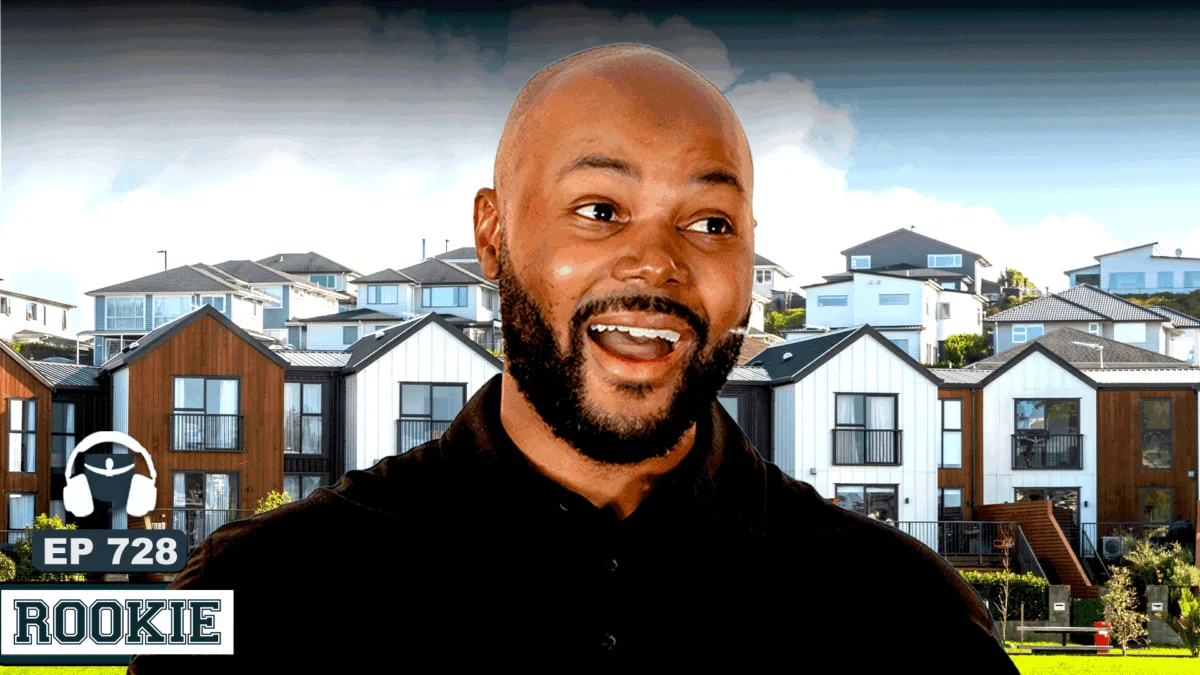
Many novice investors operate under the romanticized assumption that once they break past the "first-deal" barrier and accumulate a significant portfolio, the business of real estate investing becomes a passive, frictionless endeavor. They imagine a life of high-yield checks and minimal oversight. However, for Tony J. Robinson—a seasoned investor with 26 short-term rentals, a 13-unit boutique hotel, and a series of house flips under his belt—the reality is far more nuanced.
In a recent, candid episode of the Real Estate Rookie podcast, co-hosted with Ashley Kehr, Robinson pulled back the curtain on the complexities of scaling. Far from reaching a state of "set it and forget it," Robinson highlights that growth brings its own unique set of operational challenges. By revisiting the performance of his inaugural hotel investment and outlining his pivots for the 2026 market, Robinson provides a blueprint for investors who are ready to transition from amateur status to professional portfolio management.
Main Facts: The Current State of the Robinson Portfolio
The Robinson portfolio is a testament to calculated diversification. Currently, the holding company manages 26 single-family Airbnb properties across California, Tennessee, and Utah. The crown jewel—and the source of his most profound learning experiences—is a 13-room boutique hotel that recently completed its first full calendar year of operations.
Despite the scale, Robinson remains deeply involved. The "day in the life" of a full-time real estate investor, he explains, is not defined by total detachment from the work, but rather by the freedom to choose which problems to solve. While he is no longer tied to a traditional nine-to-five, his days are filled with content creation for his education platform, Alpha Host Academy, and the rigorous task of optimizing systems for his properties.
A Chronological Deep Dive: The Hotel Pivot
The Hypothesis (2021–2024)
Robinson’s entry into the hotel space was born from a desire to graduate from single-family home management. His hypothesis was simple: the operational systems developed for managing multiple, scattered short-term rentals (STRs) should, in theory, translate seamlessly to a centralized boutique hotel.
The strategy was to test this concept on a small scale. By purchasing a 13-room property for $950,000, Robinson sought to prove that his rigorous standards for cleanliness, guest communication, and maintenance could function better in a consolidated building than in 13 separate homes.
The First Full Year (2025)
The year 2025 served as the "proof of concept" phase. Robinson reports that his hypothesis was largely correct. The operational efficiencies gained from the Airbnb side—specifically the practice of documenting property conditions with photos after every turn—surpassed the standards of many traditional hotel operators.
However, the year also brought unexpected friction. The primary challenge was not property management, but labor. Having purchased the hotel in a rural, isolated market, Robinson discovered the pitfalls of operating in a location with a small, transient labor pool. Turnover was high, and the lack of a robust local workforce made tasks like pool maintenance and landscaping a recurring administrative burden.
Supporting Data: Labor and Revenue Projections
Robinson’s experience offers a stark lesson for investors eyeing hospitality assets. When the property was acquired, the previous owner generated approximately $250,000 in annual revenue. Under Robinson’s management, the property is trending toward a "steady state" revenue of over $400,000.
While this growth is impressive, the cost of labor in a small market has been a significant drag on margins. The lesson learned? Future acquisitions will focus on markets with larger population centers. Robinson is clear on his new buy box: he is no longer looking for rural bargains. Instead, he is seeking assets that generate at least $1 million in annual revenue. This higher revenue threshold is essential to support the hiring of a professional General Manager (GM), allowing Robinson and his wife, Sarah, to move out of the day-to-day operations and into a true ownership role.
Official Insights: The Philosophy of Management
The "No Surprises" Rule of Termination
One of the most valuable insights Robinson shared relates to human resources. Drawing on his early corporate experience at Target, Robinson emphasizes that employees should never be surprised when they are terminated.
"As a people leader, people should never be surprised when they’re getting fired," Robinson notes. He advocates for a transparent, documented process—a "paper trail" that includes setting clear expectations, performance improvement plans, and candid conversations about consequences. For rookie investors managing contractors or small teams, this professional approach to HR is essential for minimizing legal risk and maintaining organizational morale.
The Power of Intentionality
Ashley Kehr and Robinson both underscored the dangers of "conference hopping" and aimless content consumption. Robinson argues that investors often fall into the trap of consuming information for the sake of feeling productive.
"At a certain point, you have to flip the switch from learning to application," Robinson says. He suggests a structured path for investors:
- Initial Discovery: Use short-form content (reels, TikToks) to identify the topics that resonate.
- Deep Learning: Transition to long-form content (podcasts, YouTube, books) for technical mastery.
- In-Person Engagement: Join masterminds or events, but only with specific, actionable goals.
Implications for 2026 and Beyond
As the real estate landscape evolves, Robinson’s approach to 2026 reflects a move toward data-driven precision. He is currently developing proprietary AI-driven tools to assist in market analysis. His methodology discourages the "Zillow-first" approach, where investors fall in love with a property’s aesthetics before checking the math.
Instead, Robinson advocates for a market-first strategy:
- Analyze the Market: Look at year-over-year demand, occupancy rates, and Average Daily Rates (ADR).
- Identify the Top 10%: Analyze what the best-performing properties in a market are doing differently—amenities, design, and location.
- Build the Buy Box: Define the exact requirements for a deal based on data, then search for a property that fits those parameters.
Redefining the "Investor Lifestyle"
Perhaps the most significant takeaway for the audience is the definition of "freedom." Robinson describes his week as a balance of content creation, business development, and family time. Whether it is taking his daughter to ballet or managing a surprise $1,000 plumbing repair, the flexibility is the real asset.
Robinson’s journey highlights that the "rookie" phase never truly ends; it simply shifts. The challenges change from how do I buy my first house? to how do I lead a team, optimize a hotel, and build an infrastructure that lasts?
For those listening, the message is clear: Success in real estate is not about escaping work, but about having the autonomy to define the work you do. By starting smaller, proving your concept, and obsessing over systems rather than just the next purchase, investors can scale their portfolios with the confidence that they are building a business—not just a collection of assets.
As Robinson concluded in the podcast, the key to scaling is knowing your motivation. Whether you are in it for the tax benefits, the cash flow, or the long-term appreciation, identifying your "why" is the foundation upon which every successful investment career is built. For the rookie looking to conquer 2026, the advice is to be intentional, remain data-driven, and never underestimate the importance of a well-documented process.
 Laily UPN
  Layla Zulfa
  Nana Muazin