
 By Layla Zulfa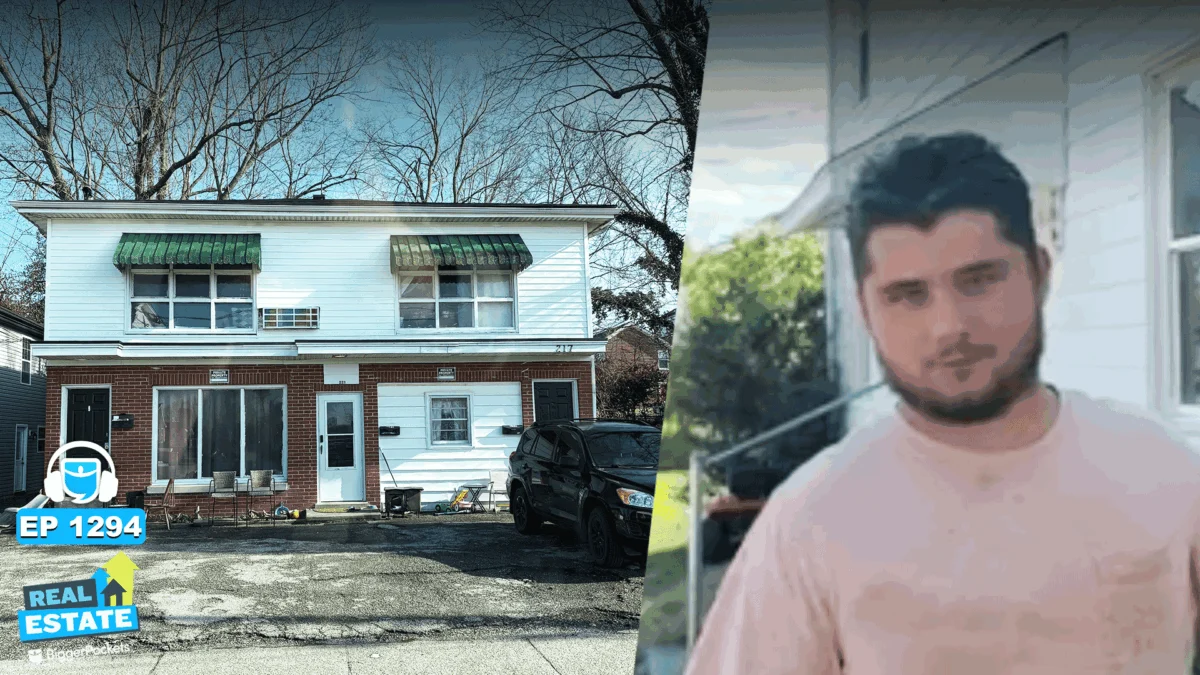
In the high-stakes world of real estate investing, the conventional wisdom often suggests that one needs a high-paying career, a pristine credit score, and years of market analysis before purchasing a first property. Britton Eads, a young investor from Kentucky, serves as a stark, compelling counter-narrative to these assumptions. Four years ago, Eads was earning $15 an hour installing fences, struggling to find a path forward after dropping out of both college and an electrician’s apprenticeship. Today, he manages a portfolio of over 15 rental units, has replaced his former wage-earning income, and sits on more than $200,000 in equity.
His journey, featured on the BiggerPockets Podcast, is not a textbook case of calculated success. It is a raw, often harrowing account of "massive action"—a philosophy that prioritizes forward momentum over meticulous planning. While Eads acknowledges the errors of his early approach, his story provides a blueprint for how persistence, networking, and a focus on cash flow can overcome a lack of traditional capital.
The Catalyst: Finding a Different Path
Britton Eads’s trajectory changed in 2021. After realizing that the traditional educational route—and the subsequent trade training his father encouraged—did not align with his ambitions, Eads felt adrift. He spent his days working physically demanding jobs, only to return home to find himself unfulfilled.
The turning point came when he was gifted a copy of Robert Kiyosaki’s Rich Dad Poor Dad. The book acted as a psychological catalyst. Eads realized that financial freedom was not reserved for the elite or the highly educated, but was a system that could be mastered. He began listening to real estate podcasts, absorbing the strategies of seasoned investors like Ken McElroy, and shifted his mindset from "employee" to "investor." By December 2022, despite having no experience and limited savings, Eads closed on his first property: a $70,000 duplex.
A Chronology of Rapid Scaling
The "Wild West" Beginnings (2022)
Eads’s first deal was emblematic of his "action-first" mentality. He purchased the duplex sight-unseen, without an inspection, and without knowing the age of the structure—which, he later discovered, was over a century old.
"I just knew how much it cost," Eads admitted. He negotiated the price down from the seller’s $80,000 asking price to $70,000. While the property was already rented, the lack of due diligence nearly proved fatal to his nascent portfolio. Burst pipes and structural unknowns plagued the property shortly after closing. However, because the property provided positive cash flow from day one, Eads was able to survive these early hurdles. He eventually invested $30,000 into renovations, including new roofing and mini-split HVAC systems, which boosted his monthly rental income from $1,000 to $1,800.
The Pivot to Strategic Growth (2024)
After a year and a half of stabilization, Eads sought to scale. In April 2024, he acquired a fourplex for $245,000 using an FHA loan, which required only a 3.5% down payment. By this time, Eads had begun applying the lessons of his mentor, Hank Ballinger, a seasoned investor with over 800 doors.
Ballinger’s mentorship emphasized the importance of the "1% Rule"—a metric where the monthly rent is at least 1% of the purchase price—and the necessity of property inspections. Eads applied these principles to the fourplex, which was in disrepair and featured a "landlord special" of painted-over wood floors and a hole in the ceiling. Through minor renovations costing less than $10,000, he increased the rent from $1,200 to $3,450 per month, significantly enhancing the asset’s value.
Aggressive Acquisition: The Seven-Unit Deal (2025)
By 2025, Eads had refined his eye for "misclassified" listings. He identified a triplex and a small cottage listed for $185,000. Through keen observation, he noticed a neighboring property with identical features and managed to negotiate a deal for both, acquiring seven units for a total of $265,000.
To fund this, Eads utilized the community he had built. He posted his deal on an investor forum, offering a 10% interest-only return to a private lender. Within two weeks, he had secured $46,000 for the down payment. This deal, once renovated, reappraised for $545,000, effectively doubling his initial investment value.
Supporting Data and Financial Strategy
Eads’s success rests on three fundamental pillars of real estate finance:
- Cash Flow on Day One: Eads refused to buy properties that did not pay for themselves. This allowed him to weather the "emergency repairs" that inevitably occur in older buildings.
- Cross-Collateralization: As his portfolio grew, Eads worked with local banks to create portfolio loans. By combining the equity of multiple properties, he could secure larger loans for future acquisitions, even when his personal cash reserves were low.
- The "Cash-Out" Safety Net: In one significant transaction, Eads performed a cash-out refinance that netted him $212,000. He immediately set aside a significant portion as reserves. This proved vital when he faced $15,000 in unexpected plumbing and HVAC repairs shortly thereafter.
Official Perspectives: The Value of Mentorship and Networking
Host Henry Washington, a seasoned investor in his own right, highlights that Eads’s story is not a repeatable script for everyone. "What I like about what you told me," Washington noted during the podcast, "is that it was action-based." However, Washington cautioned that skipping inspections and sight-unseen purchases is a high-risk gamble that, in a tighter or more volatile market, could lead to insolvency.
The consensus from both Eads and Washington is that the real "secret sauce" was networking. Eads reached out to his mother, who held a position at a local bank, to find investors. This led to his introduction to Hank Ballinger. This illustrates a critical principle: one does not need a massive bank account to start if one has the courage to build a network and ask for introductions.
Implications: Can the Average Person Replicate This?
The implications of Britton Eads’s journey for aspiring investors are profound. He proves that the barriers to entry—often perceived as insurmountable—can be dismantled through:
- Diligent Hunting: Deals exist in every market; they are simply hidden behind poor marketing or neglected property maintenance.
- The Necessity of Reserves: Eads’s most important lesson is that while you can acquire real estate with little money, you cannot own it without a capital buffer.
- Prioritizing Cash Flow: Appreciation is the "icing on the cake," but cash flow is the bread and butter that keeps the bank from foreclosing.
Moving Forward
Today, Eads is not resting on his laurels. He is currently developing two new duplexes, projected to generate an additional $1,200 in monthly cash flow. Having transitioned from a $15-an-hour wage earner to a property manager overseeing a multi-unit portfolio, his story stands as a testament to the power of the "start now" philosophy.
Eads’s journey underscores a vital truth in real estate: while education and analysis are valuable, they are no substitute for the experience gained through doing. By learning from his mistakes in real-time, maintaining a focus on cash flow, and relentlessly networking, Eads has transformed his life, proving that the path to wealth is often built one "wild" decision at a time. For those feeling "stuck" in a low-wage job, Eads offers a simple, albeit challenging, mandate: stop second-guessing, find a mentor, and start taking action.
 Reynand Wu
  Raul Delapena Setiawan
  Nana Muazin