
 By Lina Irawan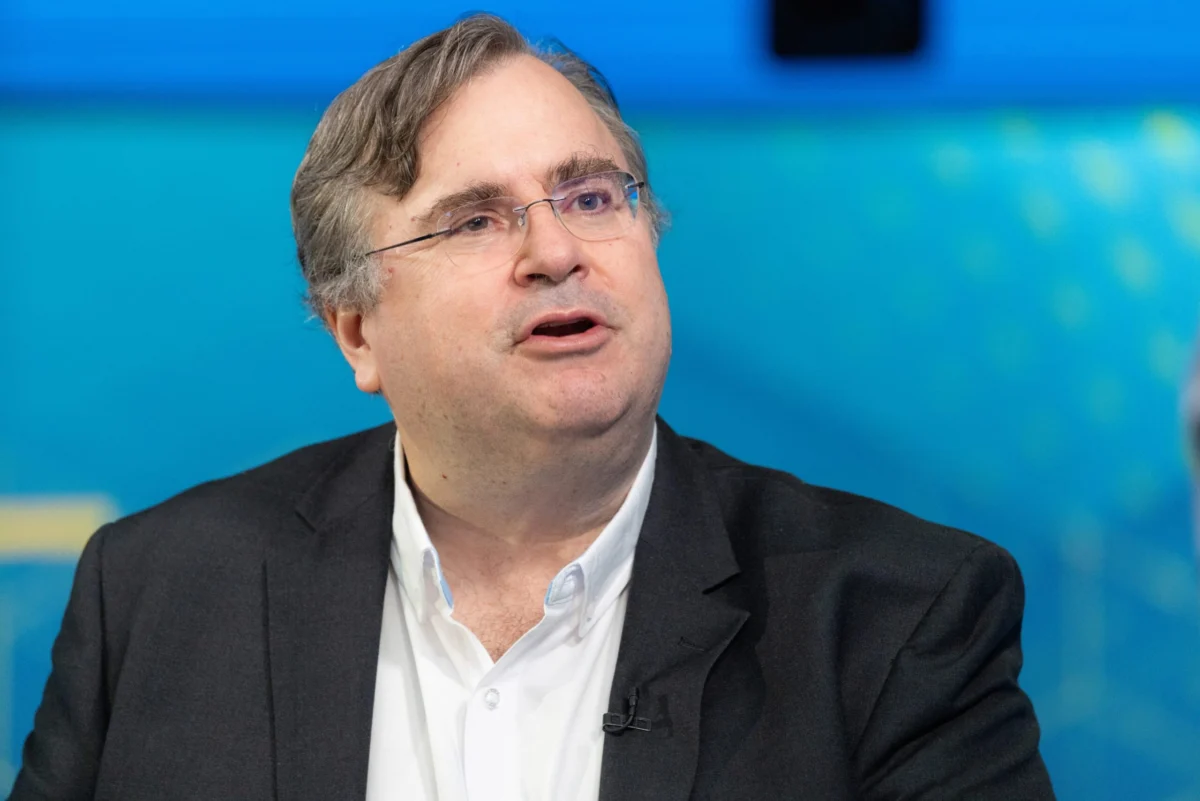
In the high-stakes arena of artificial intelligence, where billions of dollars in capital collide with existential regulatory questions, few voices carry the weight of Reid Hoffman. As a LinkedIn co-founder, a prolific investor in the sector’s titans—Anthropic and OpenAI—and a departing board member of Microsoft, Hoffman has spent the last decade at the epicenter of the tech industry’s most transformative shift.
In a candid, wide-ranging discussion on the Pioneers of AI podcast, Hoffman delivered his most blistering critique of Elon Musk’s AI ambitions to date, while simultaneously sounding the alarm over the U.S. government’s unpredictable regulatory posture. For Hoffman, the industry is not merely facing a technical challenge; it is navigating a period of profound uncertainty where "AI-washing" and government overreach threaten to obscure the true potential of the technology.
The Critique: Why Hoffman Labels xAI a "Train Wreck"
Hoffman’s assessment of Elon Musk’s artificial intelligence strategy is unequivocal. While SpaceX has successfully pivoted its public narrative to center on AI, Hoffman argues that this transition is superficial.
"SpaceX isn’t an AI company," Hoffman stated during his conversation with host Rana el Kaliouby. He reserved his sharpest rhetoric for xAI, the venture Musk launched to rival the likes of OpenAI. Dismissing the company as a "complete train wreck" regarding its foundation model development, Hoffman pointed to the structural instability of the organization. With the departure of its original co-founders—a process that reached a definitive conclusion in May 2026—Hoffman noted that the project is now on its "third restart."
The "Buy-Your-Way-to-Relevance" Strategy
Hoffman likens SpaceX’s recent maneuvers, including the acquisition of AI coding tool Cursor, to the "IAC of AI"—a reference to Barry Diller’s conglomerate known for its aggressive roll-up acquisition strategy. By leveraging its massive market cap to purchase existing AI companies, SpaceX is attempting to simulate technological capability rather than building it from the ground up, according to Hoffman.
Regarding the company’s infrastructure business, which has been marketed as a validation of its AI prowess, Hoffman was equally dismissive. "You’re a premium-priced CoreWeave," he remarked. "I get it. Which is not an AI company."
Chronology: A Cascading Exit and Regulatory Friction
The trajectory of xAI has been defined by a revolving door of talent and strategic pivots. The following timeline highlights the turbulence:
- February 2026: The internal instability at xAI became public when Tony Wu, a key operational leader, resigned. This sparked a wave of departures that signaled a fundamental rift in the company’s vision.
- May 2026: The exodus of xAI’s original 11 co-founders was finalized, forcing Musk into a major restructuring of the company’s engineering and research teams.
- June 11, 2026: The U.S. government issued an export control order, mandating that Anthropic pull its Fable and Mythos models from the market due to concerns over foreign national access and a discovered jailbreak in the Fable 5 model.
- June 12, 2026: SpaceX went public, with AI infrastructure as a core pillar of its IPO narrative.
- Mid-June 2026: SpaceX announced the acquisition of Cursor, further signaling its intent to dominate through acquisition rather than organic development.
Regulatory Alarms: The Anthropic Intervention
If Hoffman’s view of xAI is one of skepticism, his reaction to the federal government’s treatment of Anthropic is one of genuine concern. The forced removal of the Fable and Mythos models was triggered by a report from Amazon CEO Andy Jassy regarding a vulnerability in Fable 5. While acknowledging that cybersecurity is a legitimate concern, Hoffman blasted the government’s response as "autocratic willy-nilly."
He argued that the lack of a principled, predictable regulatory framework creates a dangerous precedent. The asymmetry—where Anthropic faced immediate, punitive measures while other industry players remained untouched—is particularly troubling to Hoffman, especially given that Anthropic had proactively identified and flagged the security concerns themselves.
For an industry currently preparing for the largest wave of IPOs in history, this regulatory unpredictability adds a new layer of systemic risk. Investors are now forced to factor in not just market competition, but the whims of federal regulators who may intervene in the product lifecycle without clear, consistent legal justification.
Supporting Data: The Employment Landscape
The narrative of AI as a job-killer has been pervasive, particularly among Gen Z. However, Hoffman suggests that the current entry-level employment crisis is being misdiagnosed.
According to Goldman Sachs’ AI tracker, the technology was responsible for an estimated 16,000 net U.S. job losses in April 2026, dropping to 11,000 by mid-June. Furthermore, data indicates that graduate unemployment has spiked from 3.6% in 2019 to 5.6% in 2026.
Hoffman, however, points to structural factors beyond AI:
- Over-hiring: The massive staffing bloat that occurred during the pandemic.
- Remote Work Adjustments: The ongoing struggle for companies to integrate distributed teams effectively.
- Global Turbulence: Economic uncertainty that has paralyzed corporate hiring plans.
"It’s because of global turbulence and businesses being unable to figure out how to invest," Hoffman noted. He urges graduates to stop "booing AI" and instead view it as a professional force multiplier, positioning themselves as the generation that brings AI-native expertise to legacy organizations.
Implications: The Future of AI Utilities
Despite the volatility, Hoffman remains bullish on the long-term viability of the industry’s leaders. He rejects the "cage match" narrative that suggests either Anthropic or OpenAI must perish. Instead, he views them as evolving into essential utilities, comparable to electricity.
Competitive Lanes
- Anthropic: Dominating in technical coding, design, and legal application layers.
- OpenAI: Focusing on the consumer-facing front end (ChatGPT) and powerful coding infrastructure (Codex).
Hoffman acknowledges that the "bubble" talk has merit—not all current valuations are sustainable—but he draws a comparison to the early internet. Just as the primary business models for Google were not immediately apparent during its infancy, the monetization strategies for AI utility providers will likely pivot and mature over the next decade.
Closing the Chapter: From Governance to Drug Discovery
As Hoffman prepares to step down from the Microsoft board at the end of the year, he is moving away from the role of a "governance person" to return to his roots as a founder. His new venture, Manas AI, aims to revolutionize drug discovery.
The goal is to build an "AI drug discovery factory" capable of generating small molecule proposals at scale. By leveraging the pharmaceutical industry’s patent-based monopoly structure, Hoffman believes he can turn high-speed AI computation into tangible, protected, and highly valuable medical breakthroughs.
For a man who helped shepherd LinkedIn into the era of professional connectivity and guided Microsoft through its pivot to the cloud and AI, the Manas project represents a pivot toward long-horizon, high-impact science. Hoffman remains convinced that while the current market is noisy and riddled with "AI-washing," the core utility of the technology is inevitable.
"The AI is my tool, companion, and car," Hoffman concluded. "Humans add the importance; the AI adds the speed."
Disclaimer: For this report, journalistic research tools including generative AI were utilized to synthesize industry data and track market developments. All statements and assessments have been verified for accuracy.
 Asro
Asro  Iffa Jayyana