
 By Lina Irawan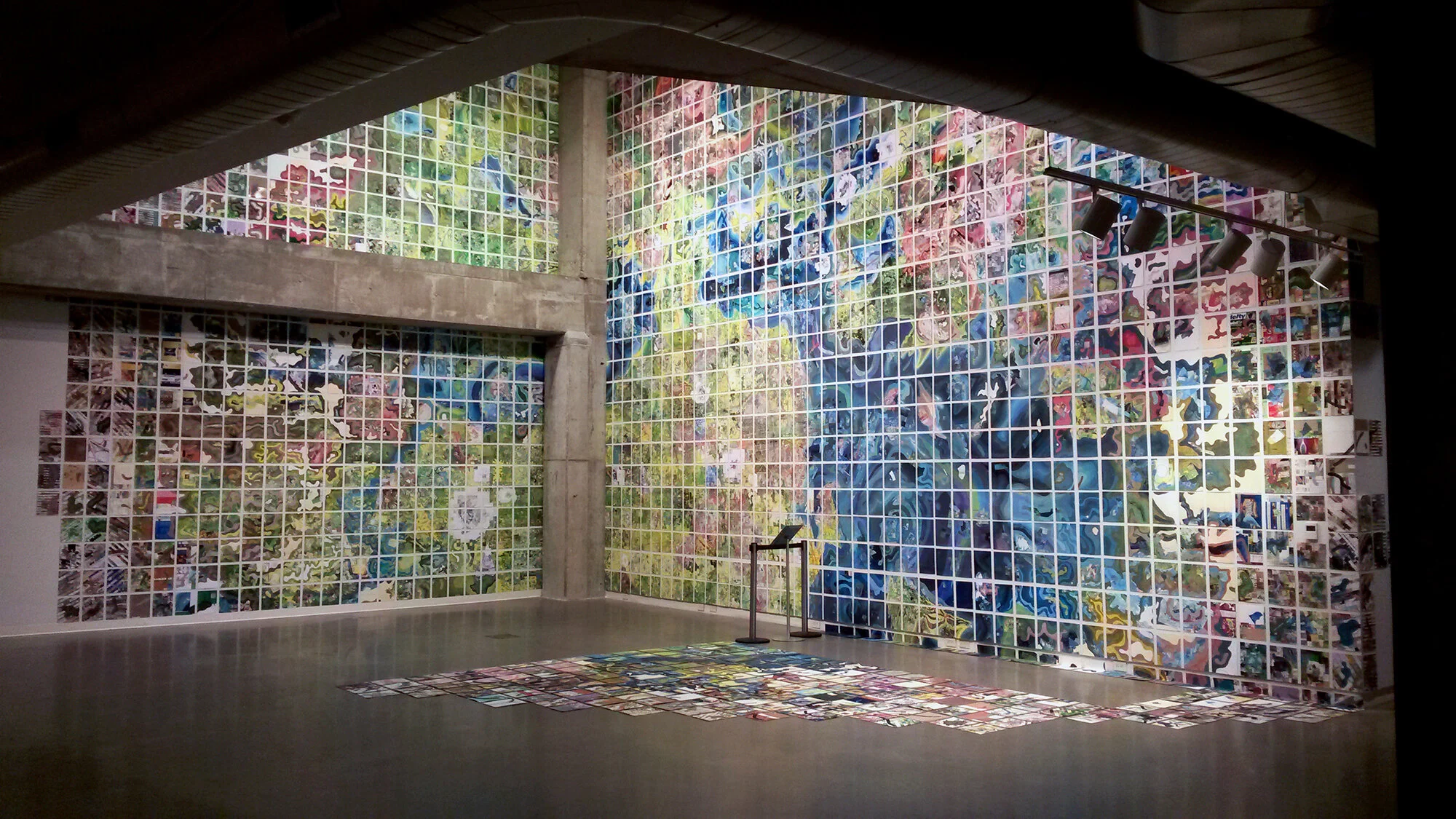
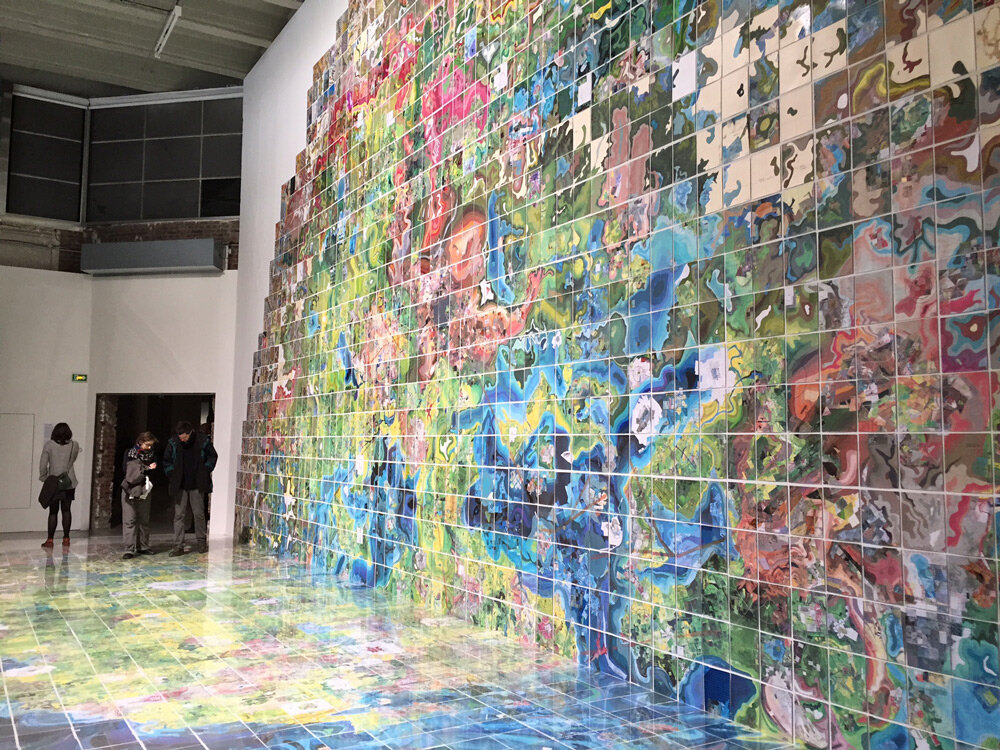
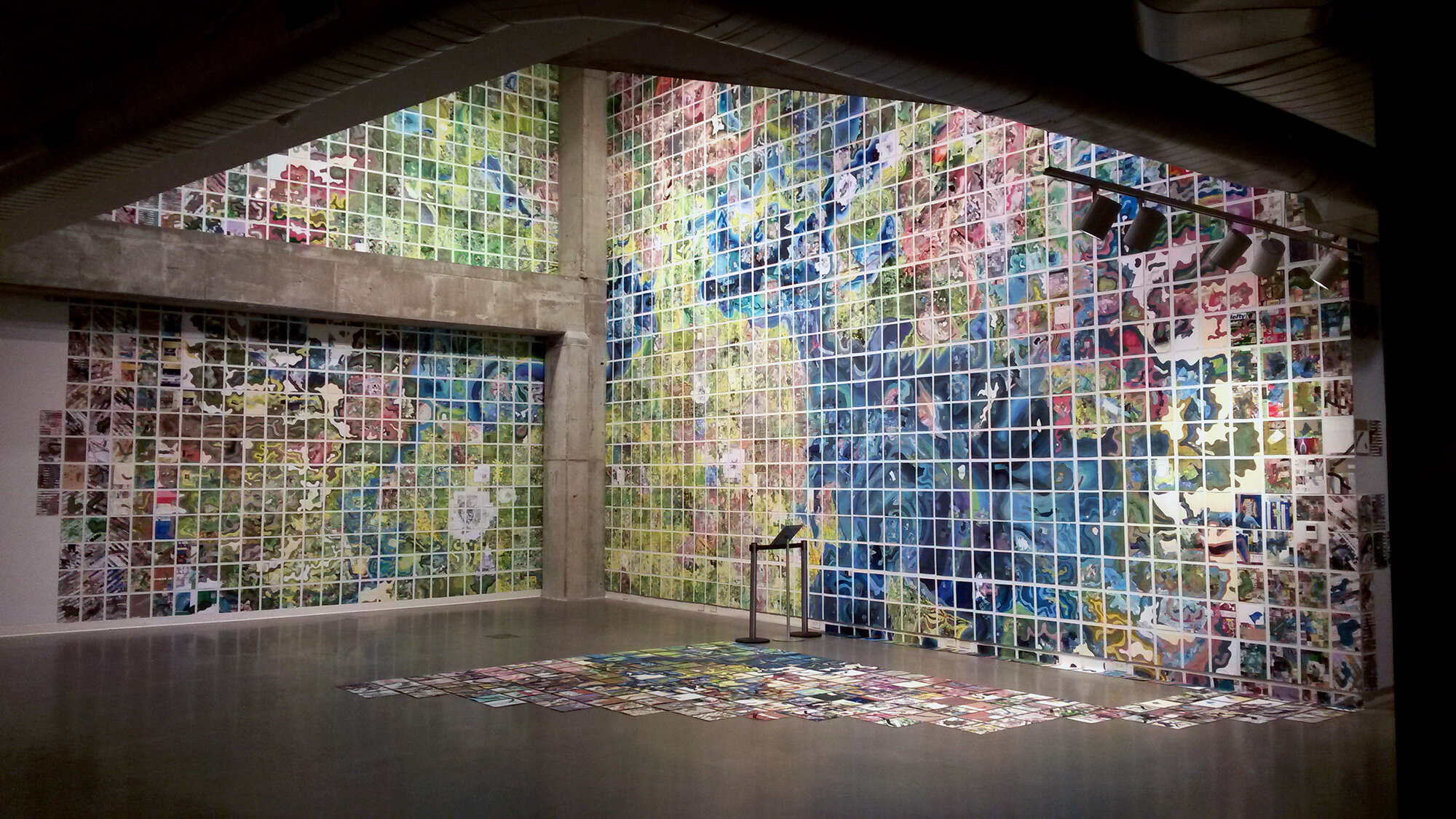
In the quiet town of Cold Spring, New York, resides a project that defies the traditional boundaries of both geography and art. For over six decades, Jerry Gretzinger has been engaged in a singular, obsessive endeavor: the construction of an ever-expanding, imaginary world known simply as "The Map." What began as a mundane distraction during a tedious job in 1963 has transformed into a sprawling, two-dimensional universe, a living art project comprising more than 4,000 individual eight-by-ten-inch panels that, when assembled, form an approximate circle of infinite possibility.
The Map is not merely a drawing; it is a system. Governed by an elaborate set of rules, random chance, and a custom-built deck of instruction cards, the project has evolved into a "virtual world" that operates with its own internal logic, history, and physical laws. It is a work of art that refuses to be static, reflecting a career-spanning experiment in relinquishing authorial control to the whims of a deck of cards.
A Chronology of Obsession: From Doodle to Opus
The genesis of The Map traces back to the summer of 1963. At the time, Jerry Gretzinger was working a job that left him with significant stretches of idle time. To stave off boredom, he began to sketch an imaginary city. These initial doodles were modest, executed on light typing paper with the simple tools of the era—ballpoint pens, pencils, and basic ink.
For twenty years, the project grew organically. Gretzinger meticulously logged populations, tracked football scores, and established a complex "map language" to codify the terrain. He worked chronologically, stacking his panels and diligently updating them. However, by 1983, the demands of life intervened, and the project was relegated to the attic. It sat in the darkness of the Cold Spring home for two decades, a dormant archive of a forgotten city.

The revival of the project is a testament to the serendipity of discovery. Years later, Gretzinger’s son, Henry, stumbled upon the stacks of dusty paper. His curiosity—asking his father exactly what these strange, marked sheets were—triggered a profound creative spark. Jerry dusted off the panels, and in 2003, the second era of The Map began. This new phase was marked by a shift from the representational, topographically-bound logic of the 1960s to a more abstract, systemic approach. The Map was no longer just being drawn; it was being generated.
The Engine of Creation: The Deck of Cards
At the heart of the modern iteration of The Map lies the "Deck." As the project expanded into hundreds of panels, the manual labor of updating every sector became unsustainable. Seeking a way to automate his workflow while maintaining the element of surprise, Gretzinger developed a deck of cards.
"I wanted to move through the stack faster, and the easiest random number system I could come up with was a deck of cards," Gretzinger has noted. Over time, this evolved from a simple randomizer into a sophisticated set of instructions. Today, the deck contains approximately 100 cards, each dictating specific, granular tasks.
A single work session begins when the artist draws a card. This card might require him to add new infrastructure, alter the color palette of a specific zone, or initiate a "layer" transition. The time required to complete a single card’s instructions varies wildly; a task might take fifteen minutes, or it might demand days of intense, focused labor.
Gretzinger describes his relationship with the cards as that of an observer rather than a dictator. "There’s a message in those cards," he reflects. "There’s no big man with a beard who has ordered the cards, but I’m very interested in seeing what comes out of it. There’s a reality in there waiting to get out." By allowing the deck to dictate the future of the city, Gretzinger positions himself as the conduit for the map’s own self-determined evolution.
The Architecture of Layers: A World in Flux
One of the most fascinating aspects of The Map is its temporal nature. The work is expressed in successive layers, with each new iteration effectively replacing its predecessor. This process creates a palimpsest—a historical record of the city’s development buried beneath layers of acrylic, ink, collage, and inkjet prints.
The "Base Layer" is the foundation, beginning with a blank page—often paperboard or heavy paper—that is gradually obscured by bands of color. This is followed by a transition into paper collage, where "1-inch city squares" are applied in specific hues, each representing a different population density. Green indicates 400 inhabitants, red 800, grey 1,200, and black 2,400.
Beyond the urban sprawl lies the conceptual geography of the map. "The Void" follows, utilizing stark white and black-and-white collage, eventually transitioning into "The Red Dimension," characterized by flame-shaped red pieces. The progression continues into "Black Ness," "The Ziggurat Phase"—where collage is stacked in diminishing sizes—and finally, "The Flood" and "Re-Birth." Once the final cycle is complete, the entire process resets, beginning anew with fresh bands of paint.

The Administrative Reality: Data and Governance
While the art is abstract and surreal, the administration of The Map is grounded in rigorous, almost bureaucratic, data tracking. In the project’s first era, Gretzinger used logbooks to track mundane details like local football scores and station districts. In the current era, these have been replaced by sophisticated spreadsheets that monitor inventory, administrative exhibition logistics, and the status of various panels.
The transition from a single, master set of panels to a system that incorporates reproductions is one of the most significant changes in the project’s history. The introduction of high-quality color printing has allowed Gretzinger to create "generations" of the map, enabling the use of reusable elements and the expansion of the work into museum exhibitions. The map is no longer a singular object that sits in a room; it is a portable, modular entity that can be reconfigured to fill the white walls of a gallery, offering a bird’s-eye view of a world that is always in the process of becoming something else.
Implications: The Artist as Observer
The implications of Gretzinger’s project extend far beyond the paper on which it is drawn. By removing his own ego from the creative process—stepping back to act as an "observer" rather than a "perpetrator"—Gretzinger has created a model for sustainable, long-term creative practice. The Map does not suffer from "creator’s block" because the decisions are not his to make; they are the result of the interaction between the rules and the cards.
This systemic approach has attracted a dedicated community. The subreddit r/jerrymapping serves as a digital gathering place for enthusiasts who appreciate the aesthetic and the methodology of the project, often creating their own "maps" using similar principles of chance and rule-based generation. It is a testament to the project’s resonance that it has moved from a solitary activity in a private attic to a shared cultural curiosity.
Official Stance and Legacy
While Jerry Gretzinger has largely ceased updating his original blog on Blogger, the archive remains a vital resource for those looking to understand the mechanics of his world. The project has been featured in various exhibitions, including presentations at the Palais de Tokyo, where the scale and complexity of the work were laid bare for the public.
Critics and art historians have noted that The Map represents a bridge between the obsessive, self-taught traditions of Outsider Art and the conceptual rigor of systems-based modernism. It is a work that acknowledges the impossibility of completion. As long as there are cards to draw and panels to paint, the city will continue to expand, erode, and regenerate.
For those who wish to delve deeper, the visual record of the project remains its most compelling argument. Time-lapse videos of the panels show a world that breathes—colors shifting, patterns emerging and receding, and a physical geography that seems to possess a heartbeat. It is a reminder that, in the right hands, a simple deck of cards and a stack of paper can contain an entire universe.
As the project enters its seventh decade, it stands as a monument to patience. In a world that demands instant results and finite conclusions, Jerry Gretzinger’s Map offers a radical alternative: a life’s work that is intentionally, beautifully, and perpetually unfinished. The city is alive, and so long as the cards are shuffled, its story is far from over.
 Asro
Asro  Iffa Jayyana