
 By Laily UPN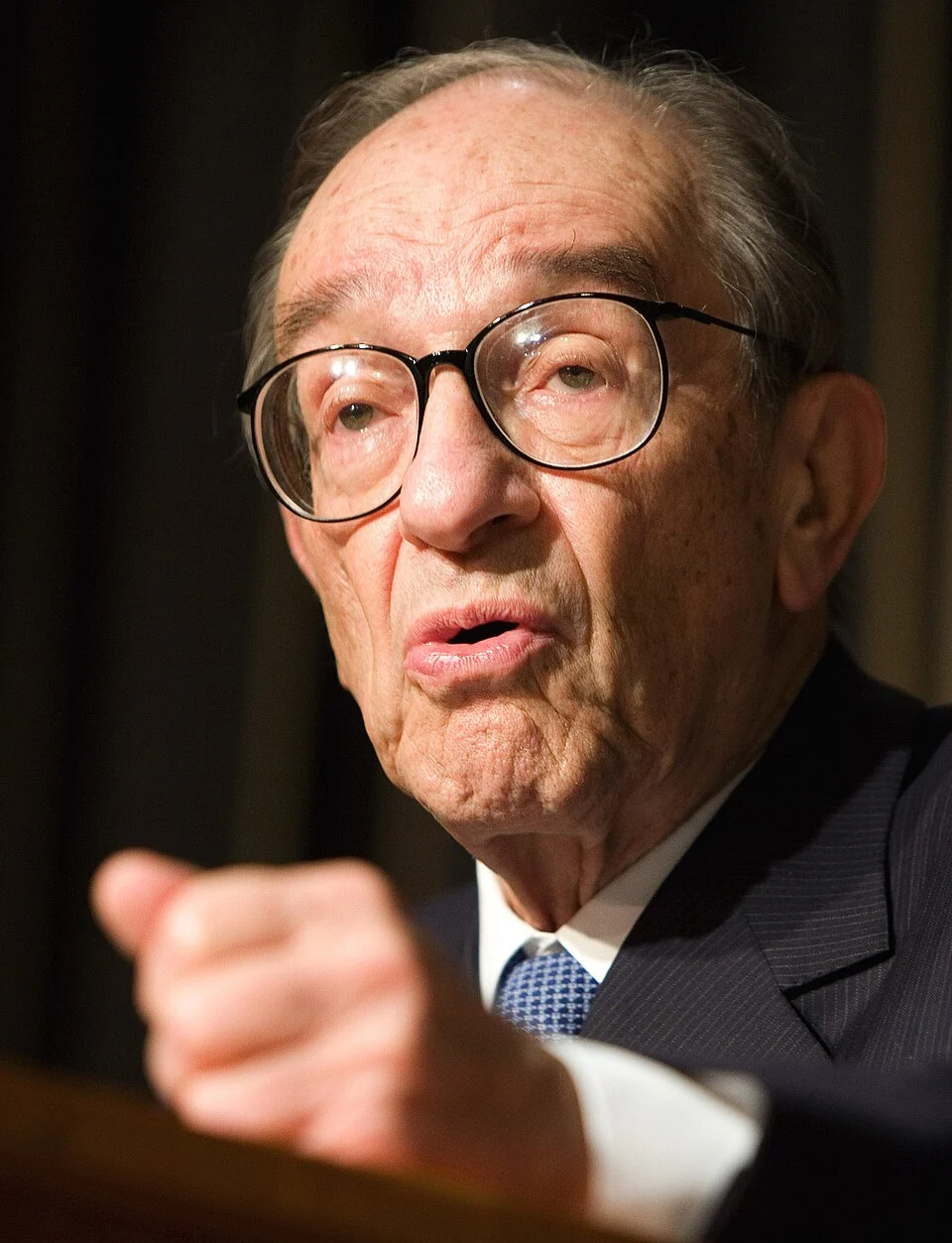
The passing of Alan Greenspan, the titan of American monetary policy who steered the Federal Reserve from 1987 to 2006, marks the end of an era. For nearly two decades, Greenspan was the ultimate arbiter of the global economy, a man whose subtle shifts in tone—and even the length of his briefcase—could move markets by billions of dollars. As we look back on a life that spanned a century, his influence on modern finance remains inescapable, particularly as today’s investors grapple with the same questions of valuation and innovation that defined his tenure.
The Architect of the Modern Economy
Alan Greenspan’s appointment to the Federal Reserve Board in 1987 came at a precarious moment for the U.S. economy. His tenure, which lasted until 2006, saw the United States transition from a traditional manufacturing-based powerhouse to a service and software-driven juggernaut.
Greenspan was renowned for his unique, often impenetrable rhetorical style. Market analysts spent years deciphering his "Greenspan-speak"—a language of deliberate ambiguity designed to provide the Fed with maximum flexibility. His wife, the veteran NBC correspondent Andrea Mitchell, once famously remarked that their courtship was a test of patience, noting, "He claims he proposed three times before I was able to understand. He was so oblique. It was like his testimony." This professional opacity, while frustrating to journalists, was a calculated tool used to manage market expectations without triggering panic or premature reactions.
Chronology: From Stability to Speculation
To understand the weight of Greenspan’s legacy, one must look at the arc of his time at the helm:
- 1987: Greenspan succeeds Paul Volcker as Chairman of the Federal Reserve. Shortly after, the "Black Monday" market crash tests his leadership early on.
- 1996: In a landmark speech to the American Enterprise Institute, titled "The Challenge of Central Banking in a Democratic Society," Greenspan introduces the world to the phrase "irrational exuberance."
- 1999: During Congressional testimony, Greenspan addresses the burgeoning internet bubble, comparing the fervor of retail investors to those chasing a long-shot lottery ticket.
- 2000: The dot-com bubble reaches its zenith before bursting, leading to the collapse of high-flying firms like Pets.com and the near-total destruction of telecom giants like Nortel Networks.
- 2006: Greenspan concludes his tenure, leaving behind a complex legacy of economic growth tempered by the burgeoning seeds of the 2008 financial crisis.
The Genesis of "Irrational Exuberance"
The phrase "irrational exuberance" has become a permanent fixture in the lexicon of financial journalism, yet its origin was nuanced. In his 1996 address, Greenspan was grappling with a fundamental shift in the American economy. He questioned how traditional metrics—like price-to-earnings ratios—could be applied to intangible assets.
"What is the price of a unit of software or a legal opinion?" he asked. "How does one evaluate the price change of a cataract operation over a 10-year period when the nature of the procedure and its impact on the patient changes so radically?"
This observation was prescient. Greenspan recognized that as software and services replaced durable goods as the engine of growth, the old rulebooks were being rewritten. He worried that investors were ignoring the reality of risk in favor of a speculative dream, creating asset values that could not be sustained in the long term. His conjecture—that irrational behavior could cause asset values to inflate far beyond their intrinsic worth—remains the central concern for central bankers and investors three decades later.
Data and the Dot-Com Reality
The history of the late 1990s serves as a cautionary tale of how quickly market sentiment can pivot. During the dot-com boom, the public markets saw the entry of companies with no viable path to profitability.
Consider the disparity:
- The Losers: Webvan, a grocery delivery startup, raised hundreds of millions of dollars at massive valuations before shuttering operations in 2001. Nortel Networks saw its stock price plummet from over $120 to mere cents, wiping out trillions in shareholder wealth.
- The Winners: Despite the carnage, the era produced foundational companies like Amazon and Google. Today, these two firms alone boast a combined market capitalization nearing $8 trillion.
Greenspan’s 1999 lottery analogy was his attempt to warn the public: "The vast majority are almost sure to fail. That’s the way the markets work in this regard." He correctly identified that the market acts as a filter; while the "lottery" of the internet age produced a few generational winners, the collateral damage was immense.
The AI Mania: A New Lottery?
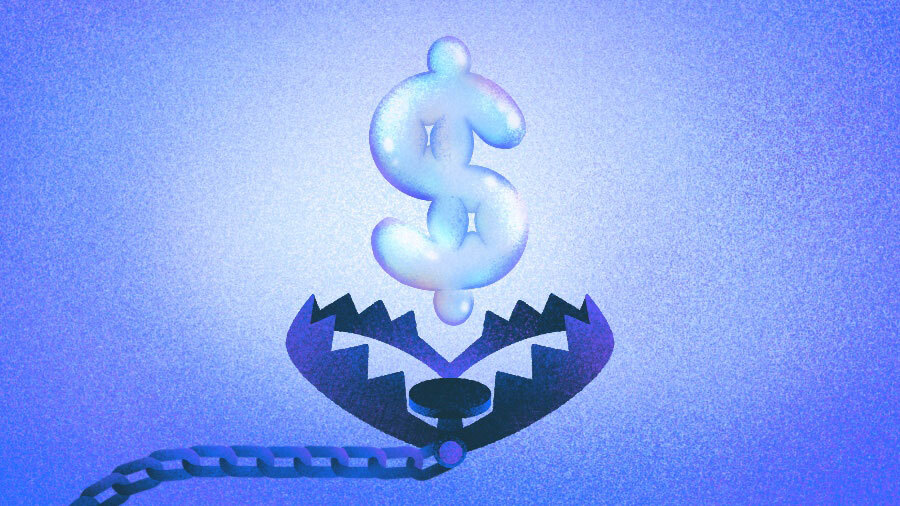
As we observe the current landscape of Artificial Intelligence, the echoes of the late 90s are deafening. We are seeing unprecedented capital flowing into companies with little to no revenue, many of which are in the earliest stages of development.
However, the "AI lottery" presents a different dynamic than the dot-com era. Unlike the small, speculative players of 1999, many of today’s leading AI firms are already operating at massive scale. Companies like OpenAI and Anthropic are commanding valuations that reach into the hundreds of billions—not because they are "wanna-bes," but because they are being priced as inevitable winners of a fundamental technological shift.
If the dot-com era was about betting on a new delivery medium, the current era is about betting on the next stage of human intelligence. Yet, the core question Greenspan posed remains: At what point does enthusiasm outpace economic reality?
Implications for Today’s Investors
The implications of Greenspan’s philosophy for modern investors are twofold. First, the transition to a software-and-AI-dominated economy makes valuing companies harder, not easier. When the product is an intangible, the traditional safety nets of balance-sheet analysis are often insufficient.
Second, the "lottery" dynamic is still in play, but the stakes have grown significantly. In the 90s, an investor might have lost a few thousand dollars on a speculative tech stock. Today, with the rise of massive private equity funding and secondary markets, the "irrational exuberance" is being institutionalized.
If Greenspan were sitting in the Fed chair today, looking at the current stratospheric valuations of AI startups, he would likely avoid a direct answer. He might offer a cryptic comment on the "evolution of productivity" or "the risks of speculative fervor in nascent markets."
Conclusion: The Oracle’s Final Lesson
Alan Greenspan’s life and work remind us that economics is not merely a science of numbers; it is a study of human psychology. His skepticism was not a rejection of progress—he was a deep admirer of technological innovation—but a warning about the human tendency to mistake optimism for certainty.
As we move forward into a world redefined by AI and shifting global economic structures, his legacy serves as a vital reminder. We are, as he once suggested, always playing a game of chance where the odds are obscured by our own excitement. Whether we are in a bubble or at the dawn of a new, productive age, the lesson of the Oracle remains: proceed with caution, remain wary of "irrational" surges, and always look past the headlines to the underlying, often invisible, mechanics of value.
Greenspan may be gone, but the economic landscape he helped shape continues to demand the very thing he excelled at: the ability to see clearly through the fog of uncertainty.
 Neng Nana
  Sagoh
Sagoh  Azzam Bilal Chamdy