
 By Reynand Wu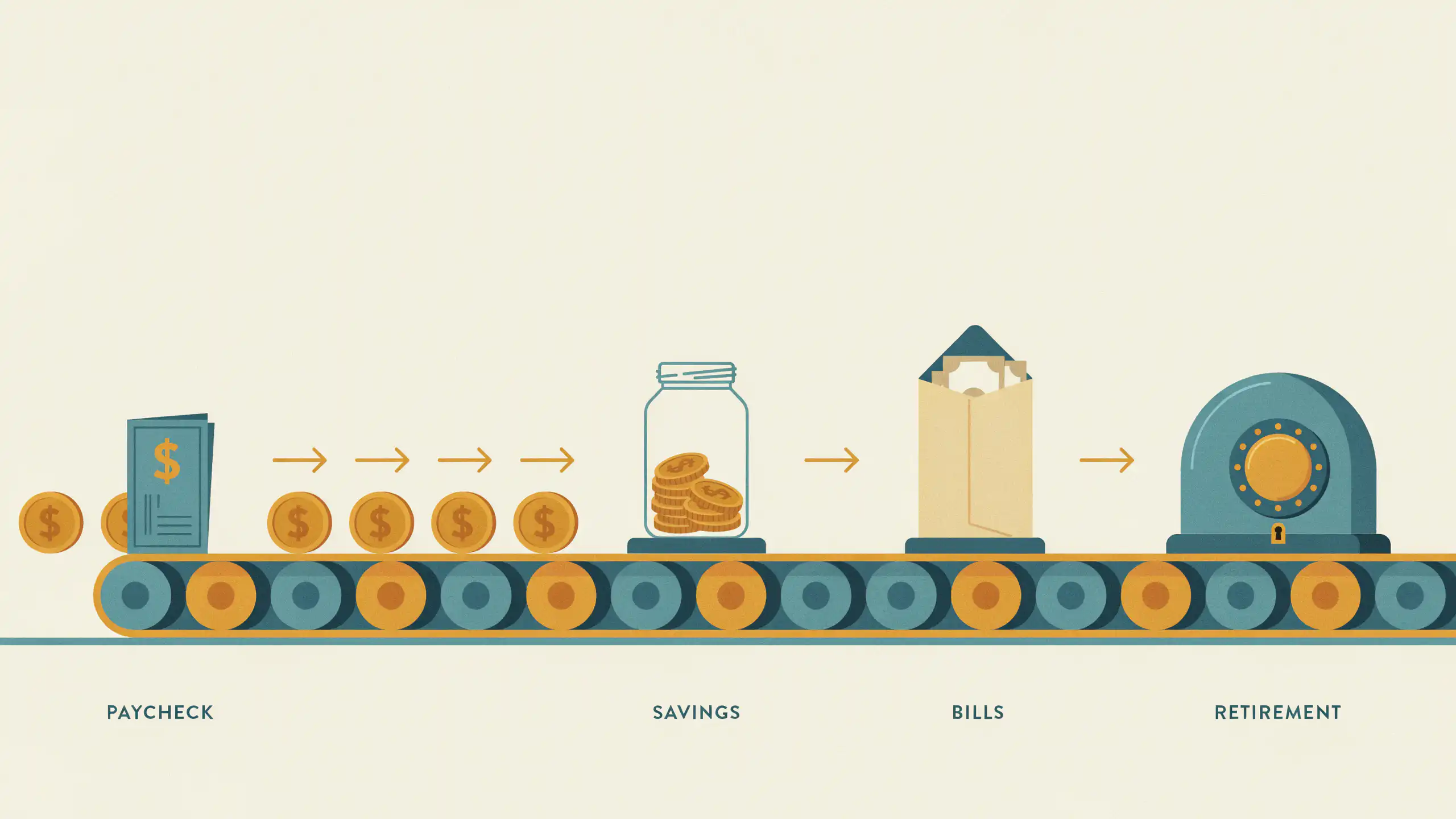
In the modern financial landscape, the difference between those who successfully accumulate wealth and those who live paycheck to paycheck is rarely a matter of mathematical genius or high-level investment savvy. Instead, it is a matter of behavioral design. As the complexity of modern life increases, the "human element"—our tendency to procrastinate, prioritize short-term gratification, and succumb to decision fatigue—has become the primary obstacle to long-term financial security.
Financial experts are increasingly pivoting toward a strategy that removes the human variable entirely: total financial automation. By shifting the responsibility of wealth management from the individual’s willpower to a programmed system, individuals can transform good intentions into guaranteed financial outcomes.
The Fallacy of Manual Financial Management
Most personal finance plans do not fail because of poor arithmetic; they fail because of the "random Tuesday" effect. On any given Tuesday, when an individual is overwhelmed by professional responsibilities or personal stress, the manual transfer of funds into a savings account or the payment of a utility bill is often the first task to be deprioritized. Once a transfer is skipped, a psychological precedent is set.
Every manual financial transaction represents a choice. If you choose to save, you are consciously sacrificing immediate spending power for a future benefit. When we make this choice repeatedly, we fall victim to "decision fatigue." Eventually, our resolve weakens. Automation removes this conflict by ensuring that the "right" decision is made by default, without the need for internal negotiation.
The Psychology of "Invisible" Savings
The power of automation is rooted in the same behavioral psychology that makes payroll-deducted retirement contributions so effective. When money is diverted into savings, investments, or debt repayment before it ever hits your primary spending account, it effectively becomes "invisible."
Because the funds never enter your discretionary budget, you never mentally categorize them as available for consumption. This creates a psychological barrier that prevents the "lifestyle creep" that often follows a raise or a bonus. If you never see the money, you don’t have to talk yourself out of spending it.
Chronology of Financial Automation: A Framework for Implementation
Implementing a robust automated system is not a one-time event; it is a structural project that requires a phased approach. For those looking to move from manual management to a "set-it-and-forget-it" model, the following sequence provides a clear roadmap.
Phase 1: The Audit (Days 1–3)
Before automating, one must understand the flow of capital. During this phase, map out all recurring obligations—rent or mortgage, utilities, subscriptions, and insurance premiums. Simultaneously, determine your target savings rate.
Phase 2: The Infrastructure Setup (Days 4–7)
Identify the banking platforms that offer the most reliable automated tools. Modern fintech and traditional banking apps now allow for "recurring transfers" that can be scheduled to coincide precisely with your payday.
Phase 3: The Synchronization (Day 8 and Beyond)
Align your automated transfers with your income schedule. If you are paid bi-weekly, your savings and bill-pay automations should trigger within 24 to 48 hours of your deposit. This timing ensures that your checking account is at its peak balance when your obligations are met.
Supporting Data: The Case for Systemization
Research in behavioral economics consistently demonstrates that humans are "procrastination-prone" when it comes to long-term goals. According to data from the Employee Benefit Research Institute, participation rates in 401(k) plans jump significantly when companies utilize "auto-enrollment" rather than "opt-in" models.
When the default is to save, the vast majority of employees stay the course. When the default is to spend, the majority fail to accumulate meaningful assets. By applying this "default bias" to personal banking, individuals can achieve similar results.
Furthermore, data from consumer credit reports suggests that individuals who automate their bill payments maintain higher credit scores on average. By eliminating the risk of a forgotten payment, users avoid late fees, interest penalties, and the negative impact of missed payments on their credit history.
Implications of a Fully Automated Financial Life
Transitioning to a fully automated system has profound implications for both mental health and long-term asset accumulation.
The Reduction of Cognitive Load
Managing personal finances manually is a persistent, low-level stressor. Even if you are diligent, the constant need to track balances and transfer funds occupies "mental bandwidth." Automation liberates this bandwidth, allowing individuals to focus on career growth, family, or personal enrichment rather than the minutiae of debt management.
Scaling Wealth
One of the most significant advantages of an automated system is its scalability. When an individual receives a salary increase, the system can be updated with a single edit. By increasing the automated transfer amount by a percentage that matches the raise, the individual can "save their raise" without feeling the sting of a reduced standard of living. The system scales with the income, effectively automating wealth accumulation.
Expert Commentary and Best Practices
Financial analysts emphasize that "automation is not abandonment." While the system is designed to run without your intervention, it requires periodic oversight to ensure its integrity.
- The Buffer Principle: Always maintain a small, stagnant buffer in your checking account. This acts as a circuit breaker, preventing an automated transfer from triggering an overdraft fee if a utility bill is slightly higher than expected in a given month.
- Quarterly Reviews: Every three months, perform a "system check." Log into your accounts to verify that all transfers are firing correctly and to ensure that no dormant subscriptions have been inadvertently renewed.
- Adjusting for Life Changes: Significant life events—such as marriage, the birth of a child, or a change in employment—require a manual intervention to recalibrate the system. Automation should be a living, breathing structure that evolves alongside your life circumstances.
Conclusion: The Choice to Stop Choosing
Discipline is a test that most people are forced to retake every single payday. It is a grueling, repetitive process that is destined to fail eventually because human willpower is a finite resource. By moving the site of your financial management from your brain to a programmed system, you effectively "pass" the test of discipline every time, without effort.
The goal is to stop counting on the version of yourself who has the energy and memory to manage money perfectly. Instead, create a version of yourself that succeeds by design. Spend ten minutes in your banking app tonight. Set the transfers, schedule the payments, and contribute to your retirement accounts automatically. Your future self will thank you for the foresight to remove the decision-making process from the equation.
Editorial & Advertiser Disclosure
The editorial content on this website is not provided, commissioned, reviewed, approved, or otherwise endorsed by any advertiser. Opinions expressed are ours alone, not those of any advertiser. The offers that appear are from companies from which we may receive compensation. However, this compensation does not impact where and how these companies are mentioned on the site. We do not include all companies or all available offers in the marketplace.
 rifanmuazin
  Ali Ikhwan
  Basiran