
 By Iffa Jayyana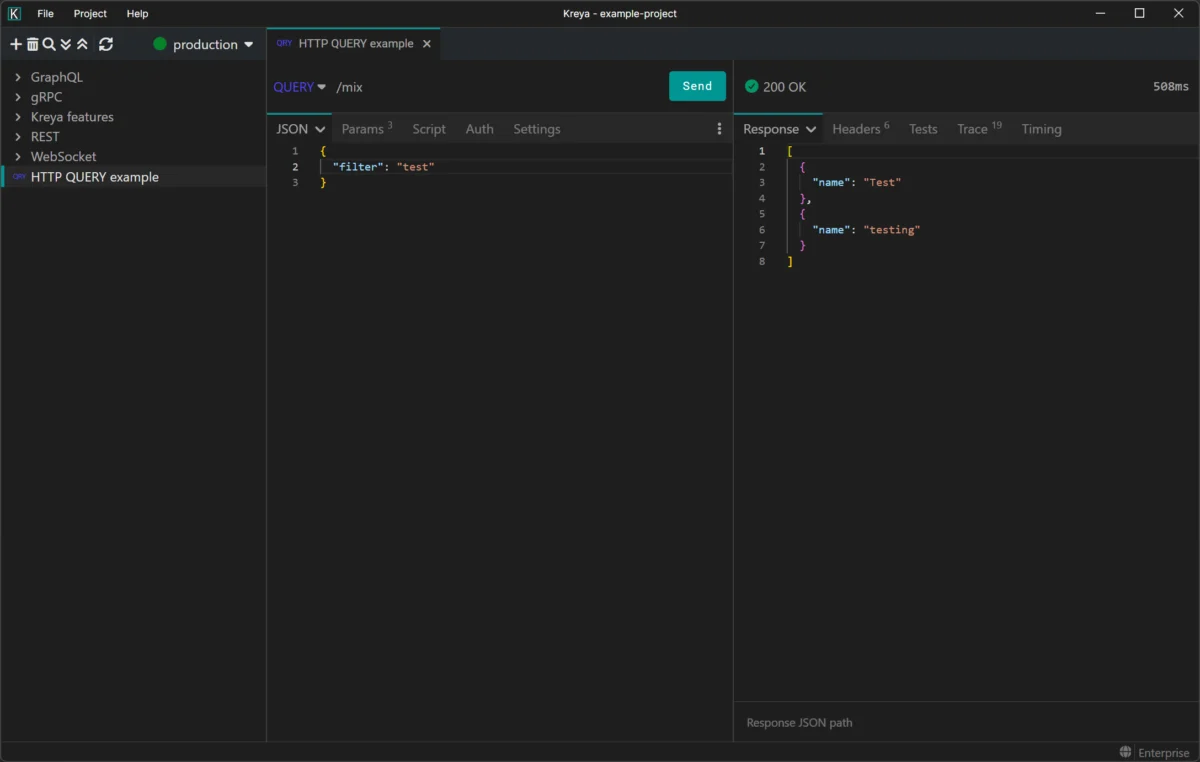
In the meticulously ordered world of RESTful APIs, developers have long operated under a "canonical" set of self-imposed constraints. For decades, the HTTP method has served as the semantic bedrock of web communication: GET fetches data, POST creates entities, PUT updates resources, and DELETE removes them. This contract between client and server has defined the architecture of the modern internet. However, as web applications have grown in complexity—transitioning from simple resource retrieval to massive, data-driven relational engines—the limitations of this traditional framework have become increasingly apparent.
The recent publication of RFC 10008 marks a significant milestone in this evolution, officially introducing the QUERY method for HTTP. This addition is not merely a technical novelty; it is a response to years of architectural friction. It seeks to resolve the semantic tension between the need for complex, body-based requests and the strict, often conflicting, expectations of the HTTP protocol.
Main Facts: Why Change a Proven System?
At a superficial level, an HTTP method is nothing more than a string—a label used to categorize the intent of a request. Theoretically, a developer could use a POST method to retrieve user data or a GET method to trigger a server-side state change. However, the ecosystem of the internet is built on more than just theory; it is built on decades of "implicit, undocumented behavior."
Browsers, proxies, firewalls, and load balancers are hard-coded to treat specific HTTP methods with distinct levels of trust. When a user clicks a bookmark, the browser issues a GET request. When a firewall sees a GET request, it may automatically cache the response. When a client submits a standard HTML form, it is historically limited to GET and POST.
The core problem that RFC 10008 addresses is the "Query Problem." Traditionally, filtering and searching have been relegated to the URL via query parameters (e.g., /api/v1/users?role=admin&status=active). While efficient for basic operations, this approach crumbles under the weight of modern application requirements:
- URL Length Limits: Complex relational queries with deep nesting can easily exceed the character limits imposed by browsers and intermediate proxies.
- Security Risks: Sensitive search criteria embedded in a URL can inadvertently leak into server logs, browser history, or proxy cache headers.
- Semantic Rigidity: Serializing complex objects into a flat URL structure is often inefficient, forcing developers to invent custom, non-standard encoding schemes.
A Chronology of the Search Dilemma
The journey to the QUERY method was not an overnight decision; it was the culmination of a decade-long struggle with HTTP’s inherent constraints.
The Era of "GET with a Body"
Early in the development of sophisticated APIs, engineers realized that standard URL parameters were insufficient for complex search operations. A natural, albeit technically controversial, solution was to include a request body within a GET call. While no RFC explicitly forbids this, the documentation strongly suggests it should be avoided. The result was a fragmented ecosystem: some servers would drop the body entirely, others would parse it, and many security-focused firewalls would block such requests as malformed. This lack of standardization rendered GET with a body a "dangerous" pattern, unusable for public-facing or enterprise-grade APIs.
The "POST" Workaround
When the industry collectively shied away from the "GET with a body" pattern, it turned to POST. By redefining search as a "creation" or "processing" event, developers were able to pass complex JSON payloads to the server. This solved the technical limitation of URL length, but it introduced a significant semantic crisis.
POST is defined as non-idempotent, meaning it is intended to trigger state changes. By using it for read-only queries, developers inadvertently broke the standard caching mechanisms of the web. Proxies and CDNs, which are designed to cache GET responses, largely ignore POST requests, forcing the server to do unnecessary work and slowing down the user experience.
The Standardization of RFC 10008
Recognizing that both the "GET with a body" and "POST for searching" patterns were suboptimal, the IETF (Internet Engineering Task Force) engaged in years of debate. The result was the formalization of the QUERY method. Published as RFC 10008, it provides a safe, idempotent way to perform read-only operations that require complex request bodies.

Supporting Data and Semantic Implications
The introduction of QUERY is fundamentally about restoring the integrity of HTTP semantics. According to the RFC, the QUERY method is treated as a peer to GET—it is designed to be safe and idempotent.
Idempotency and Caching
One of the most critical aspects of the QUERY method is its cacheability. Unlike POST, which is inherently unsafe to cache because it might change the state of the server, QUERY is defined as a side-effect-free operation. However, the RFC introduces a new requirement for cache implementers: the cache key must now include both the URI and the request body. This is a technical hurdle that is forcing vendors to update their infrastructure, but the payoff is a standardized way to cache complex, data-intensive search queries.
Middleware and Visibility
In the current "POST-for-everything" paradigm, network middleware—such as Web Application Firewalls (WAFs)—often struggle to distinguish between a malicious data-altering request and a harmless search request. By moving to the QUERY method, developers provide clear intent to the infrastructure. A WAF can now be configured to treat QUERY with the same scrutiny as GET, allowing for more intelligent traffic shaping and security filtering.
Official Responses and Industry Outlook
The industry reaction to RFC 10008 has been one of cautious optimism. While the standard is now official, the consensus among architects is that widespread adoption will be a slow, iterative process.
- Browser Vendors: The most significant bottleneck remains browser support. Standard HTML forms still do not support
QUERY. Until the W3C updates the HTML specification to allow<form method="QUERY">, the method will remain primarily for use in JavaScript-based environments (Fetch API, Axios, etc.). - Infrastructure Providers: Major cloud providers and CDN operators are currently evaluating the implementation of
QUERYin their edge-caching layers. The challenge lies in the computational cost of hashing large JSON bodies to generate a unique cache key, which is significantly more resource-intensive than simply hashing a URL string. - API Framework Developers: Popular frameworks like Express.js, Spring Boot, and FastAPI are beginning to add support for the
QUERYverb. However, developers are being advised to implement a "fallback" strategy—ensuring that their services can still handle standardGETorPOSTrequests for older clients that do not yet recognize the new method.
Implications for Future API Design
What does this mean for the average developer? The primary takeaway is that the "rules" of REST are evolving to accommodate the complexity of modern data requirements.
When to use QUERY
Developers should consider migrating to QUERY if their current system relies on POST for search-heavy endpoints. If your API currently struggles with massive query strings, or if you are using POST for search and losing out on caching performance, QUERY is the solution.
The "Gotchas" of Early Adoption
Despite its benefits, the transition is not without risks:
- Observability Gaps: Many logging and monitoring tools may not yet recognize
QUERY. If you switch your endpoints today, you may find your analytics dashboards showing a spike in "Unknown Method" errors. - Proxy Interference: While the standard is clear, older corporate proxies and load balancers may drop
QUERYrequests, treating them as unrecognized or invalid HTTP traffic. - Client-Side Compatibility: If you are building a public API, forcing a new method on your clients may break integrations. A phased approach, where the
QUERYmethod is supported alongside existingPOSTendpoints, is the recommended path forward.
Conclusion: The Path Toward Standardization
The introduction of the QUERY method is a testament to the fact that even the most foundational protocols of the internet must adapt to the shifting sands of technology. By bridging the gap between the need for complex, body-based requests and the necessity for safe, cacheable, and idempotent operations, RFC 10008 provides a long-overdue solution to a persistent architectural headache.
We are currently in a transition period. The QUERY method will not replace GET or POST overnight, nor should it. GET remains the gold standard for simple, URI-based resource retrieval, and POST continues to be the correct tool for state-changing operations. However, for the vast middle ground of complex, data-heavy search operations, QUERY finally offers a standardized, semantic home.
As the web continues to mature, the adoption of QUERY will likely be viewed as a necessary step in the maturation of RESTful architecture—a move away from "clever workarounds" and toward a more explicit, robust, and performant web. Developers who begin testing and implementing this method now will be well-positioned to build the next generation of highly scalable, clean, and semantically correct APIs.
 Asro
Asro  Lina Irawan