
 By Sagoh
In the corridors of Silicon Valley, the prevailing wisdom for the better part of a decade was simple: software eats the world, and physical assets are merely capital-intensive liabilities. But for Mike Schroepfer, who served as Meta’s Chief Technology Officer through the company’s most transformative years, that perspective is not only outdated—it is a massive blind spot.
Since departing Meta in 2022, Schroepfer has emerged as a leading voice for the "hard-tech" movement. Alongside partners Victoria Beasley (formerly of Prelude Ventures) and Evaline Tsai (formerly of Fine Structure Ventures), Schroepfer has launched Gigascale Capital, a $250 million investment firm dedicated to the premise that the next great generation of wealth will be built on the back of the physical economy.
Gigascale is not merely an investment fund; it is a declaration that the competitive advantage in the AI era has shifted from the algorithm to the infrastructure—the energy, materials, and robotics that make modern computation possible.
The Core Thesis: Atoms Over Bits
The investment philosophy at Gigascale is rooted in a fundamental observation: the digital world is hitting a physical ceiling. As AI adoption accelerates, the demand for compute has entered an exponential growth phase, yet the global energy infrastructure remains largely stagnant.
"I could see the trends coming," Schroepfer says, reflecting on his final years at Meta. "We’re going to need all the compute. I don’t know where we’re going to get the power, so it’s going to create this massive supply-demand crunch."
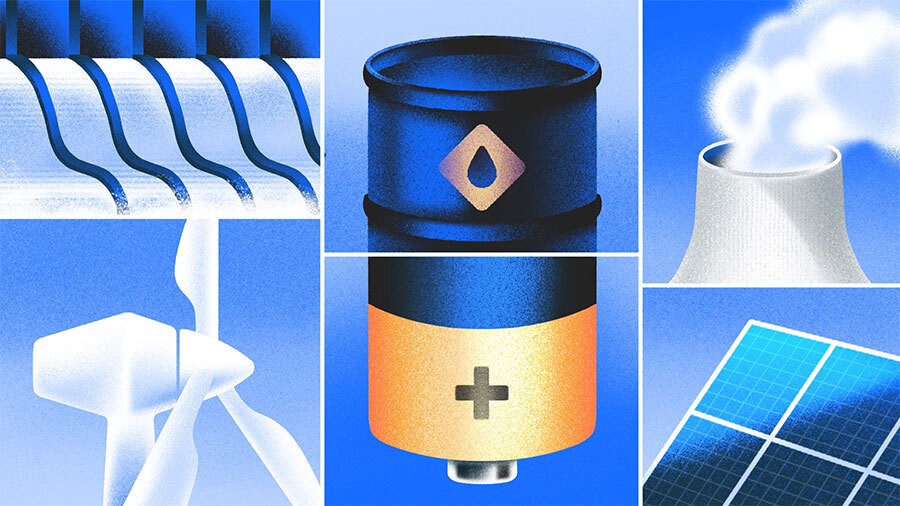
Gigascale’s thesis posits that we are currently at the start of a "once-in-a-generation" opportunity to rebuild the foundational layers of the global economy. From energy generation and storage to advanced manufacturing and material science, the firm seeks companies that can provide better, faster, and cheaper alternatives to legacy industrial systems.
For Schroepfer, the "moat" of the future is no longer a proprietary software codebase—which AI is rapidly commoditizing—but the physical infrastructure that powers the digital ecosystem.
A Chronology of the Physical Shift
To understand the urgency behind Gigascale’s mission, one must look at the convergence of three distinct technological curves that Schroepfer observed during his time at Mozilla, Facebook, and the Facebook AI Research Lab (FAIR):

- 2008–2013: The mobile and web infrastructure transition. During this period, the focus was on scaling software and cloud-based architecture.
- 2013–2020: The rise of AI research and the shift toward specialized consumer hardware (VR headsets, smart glasses). This forced Schroepfer to contend with the realities of supply chains, manufacturing, and hardware failure modes.
- 2020–Present: The "Energy Inflection." Schroepfer noted that while software costs were plummeting due to AI, the cost and availability of energy were becoming the bottleneck. He realized that the same exponential cost-down curves he witnessed in early cloud computing were beginning to emerge in battery technology, solar cells, and electrolyzers.
By 2023, the necessity of a dedicated investment vehicle became clear. After testing the model with 22 initial investments funded by his own family office—effectively proving that "hard tech" could indeed be profitable—Schroepfer formalized Gigascale Capital to institutionalize this bet.
Supporting Data: The Infrastructure Crunch
The data supports the urgency of the firm’s mission. For the past two decades, U.S. power demand remained largely flat, hovering near 0% growth. Today, that growth has shifted into a high-single-digit trajectory, driven by the massive power requirements of AI data centers, the electrification of the automotive sector, and the domestic reshoring of manufacturing.
Gigascale’s portfolio reflects a direct engagement with these pain points:
- Energy Storage: The firm has backed Form Energy, which is developing iron-air batteries capable of 100-hour discharge durations, providing a potential solution for long-term grid stability that gas-powered "peaker" plants cannot match in terms of cost or emissions.
- Power Electronics: Heron Power is replacing aging, 1930s-era transformer technology with modern solid-state electronics, similar to those found in high-performance electric vehicles. This transition promises to reduce the size and increase the efficiency of grid equipment.
- Next-Gen Power: Panthalassa is utilizing autonomous buoys to capture kinetic energy from ocean waves, providing a unique method for decentralized power generation in remote areas. Meanwhile, Radiant is developing mobile, compact nuclear reactors that offer a zero-emission alternative to shipping diesel fuel to remote locations.
Lessons from the "Meta" Years
Schroepfer’s tenure at Meta was not without its "humbling lessons." He recalls the construction of the company’s first data centers, where even minor oversights—such as misgraded loading docks—could derail massive projects.

"People learn the wrong lesson," Schroepfer observes. "They think hardware means spending a lot of time designing on paper. You have to get out there and learn as fast as you can and as cheaply as you can, so that when you’re in mass production, you’re not learning things, you’re just repeating."
This operational philosophy is the cornerstone of Gigascale’s advice to its portfolio companies. Whether it is subjecting consumer hardware to rigorous "drop tests" or ensuring that manufacturing processes can scale without polluting, the firm emphasizes that physical businesses must be treated as industrial systems, not as "software with higher capex."
Implications: The New Industrial Base
The implications of Gigascale’s strategy extend beyond mere venture returns. They touch upon national security, environmental sustainability, and the future of the American workforce.
1. Reshoring with a Twist
Schroepfer is optimistic about the United States’ ability to reclaim its position as a global manufacturing powerhouse. However, he warns that the U.S. should not aim to replicate the labor-intensive factories of the 20th century. Instead, the focus must be on next-generation, fully automated, robotic facilities. "We’re going to go straight to fully automated robotic factories with 3D printing, laser milling, and the latest technology set," he notes.

2. The AI-Physical Integration
The firm is also deeply invested in the "verticalization" of AI. Companies like Nyquis (which uses AI to detect power line faults) and Rhoda (industrial automation robotics) demonstrate that the most valuable AI applications of the next decade will likely be found in the physical, messy world of industrial operations rather than in digital content creation.
3. A Competitive Moat
Perhaps the most significant implication of the Gigascale thesis is the shift in the "moat." As AI makes the writing of code nearly free, software-only companies may find it increasingly difficult to defend their market share. In contrast, companies that own the infrastructure—those that control the electrons, the magnets, or the physical manufacturing process—possess a defensibility that is fundamentally harder to replicate.
Conclusion: A Turning Point for Investors
When Schroepfer first began shopping his investment thesis three years ago, he was frequently told, "don’t do this—all the money is in software." Today, the sentiment has shifted dramatically. With household names like SpaceX, Nvidia, and Fervo Energy leading the charge, the broader market has begun to recognize the value inherent in the physical economy.
As the industry moves forward, Gigascale Capital remains at the forefront of this transition. By bridging the gap between high-level technological research and the gritty reality of industrial deployment, Schroepfer and his team are banking on a future where the most important bits are those that power the atoms. For investors and entrepreneurs alike, the message is clear: the era of purely digital disruption is fading, and the era of the physical, hard-tech builder has arrived.
 Neng Nana
  Azzam Bilal Chamdy
  Pevita Pearce