
 By Nana Muazin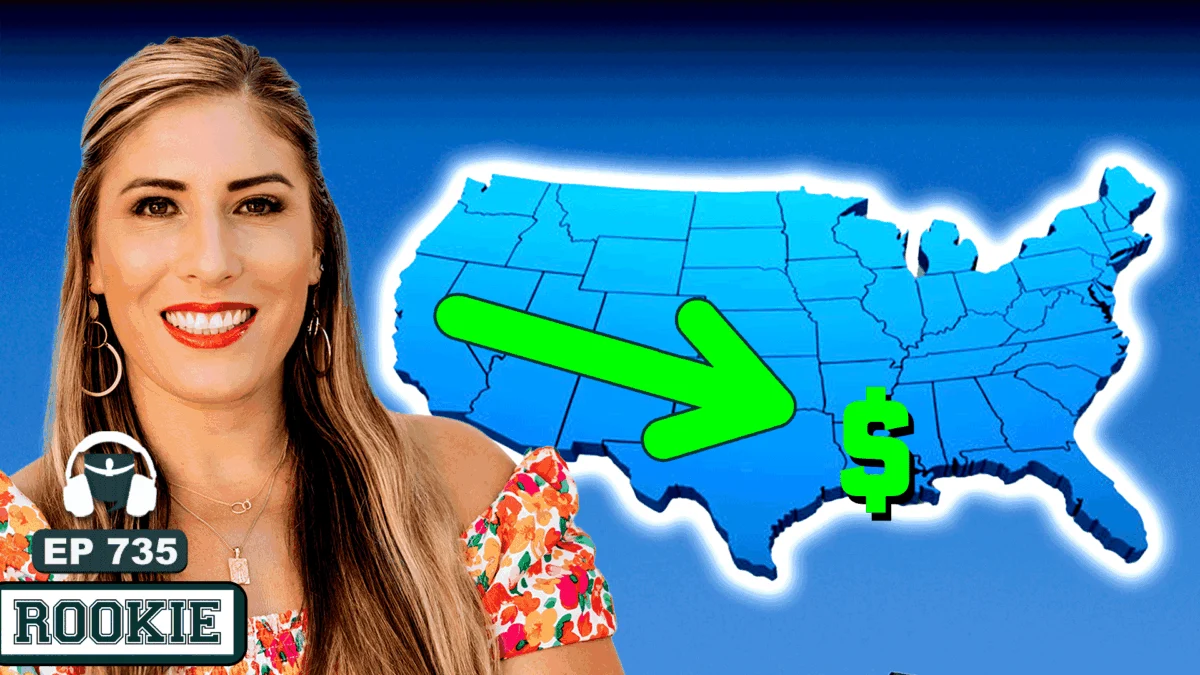
In the high-stakes world of real estate, the most lucrative opportunities are often the ones that don’t include a kitchen, a bathroom, or a tenant who calls at 2:00 a.m. to report a broken faucet. For many investors, "commercial real estate" conjures images of massive skyscrapers or complex retail strips, but for Bree Hartman, a personal trainer and former Fish and Wildlife employee, the key to financial independence was found in the humble, unglamorous world of mom-and-pop self-storage facilities.
Hartman’s journey—which saw her transition from a single "accidental" rental property to a $6 million, 100,000-square-foot self-storage portfolio—is a masterclass in aggressive asset acquisition. Accomplished while working a full-time W-2 job and navigating the challenges of a first pregnancy, her story challenges the narrative that real estate success requires deep industry roots or millions in upfront capital.
The Genesis: From Tenant Trouble to Storage Strategy
The turning point for Hartman came during the height of the COVID-19 pandemic. Like many, she had ventured into residential real estate by renting out her former primary residence. The experience was a sobering introduction to the "tenant-toilet-trash" cycle of residential management. When a service dog caused $7,000 worth of damage to the baseboards of her property—leading to a midnight emergency call—Hartman realized that residential real estate was functioning more as a second job than a passive investment.
While painting the baseboards of that very property, she tuned into a real estate podcast that introduced her to the concept of self-storage. The pitch was simple: no toilets, no tenants, no employees, and significantly fewer headaches. Hartman, then 10 weeks pregnant, decided that if she was going to build a future for her child, she needed an asset class that could scale without scaling her stress.
Chronology of a Rapid Expansion
Hartman’s path to a $6 million portfolio was not one of slow, incremental growth. Instead, it was defined by high-intensity, time-blocked execution.
- The Preparation Phase: While maintaining her career as a gym owner and trainer, Hartman spent her lunch hours underwriting potential storage deals. She treated the search for her first facility with the same rigor she applied to her physical training programs.
- The Conference Leap: Despite being 10 weeks pregnant, Hartman traveled to Las Vegas for a self-storage conference. This was the moment she committed to the industry, viewing her nine-month pregnancy as a deadline to secure her first facility.
- The First Acquisition (2022): Partnering with two other investors she met at the conference, Hartman acquired a $3.1 million facility in Louisiana. The deal was financed using an SBA (Small Business Administration) 504 loan, which allowed for a 15% down payment—a critical factor for a new investor without institutional backing.
- Birth and Integration: Hartman gave birth to her daughter just 10 weeks after closing on her first major commercial asset.
- Scaling Up: Following the success of the first facility, she began a systematic campaign of cold-calling owners of "unsophisticated" facilities, leading to the acquisition of a second property in Louisiana via seller financing.
The Anatomy of the Deal: Supporting Data and Methodology
Hartman’s success is not built on luck; it is built on a specific, replicable methodology she calls her "Five-Point Market Blueprint."
The Five-Point Market Blueprint
- Population Size: Focus on third and fourth-tier markets with populations ranging from 5,000 to 150,000.
- Growth Indicators: Even minor population growth (as little as 0.01%) serves as a proxy for job stability and economic viability.
- Income Levels: A median household income of at least $50,000 ensures that the local demographic can afford storage services, preventing collection issues.
- Operational Sophistication: She targets owners who lack a digital footprint—specifically those without websites or those using outdated, "Godaddy-branded" landing pages.
- Supply and Demand: Hartman avoids markets where facilities are running deep-discount promotions (e.g., "three months for $1"), as this signals oversupply.
The Power of the "Mom-and-Pop" Cold Call
Hartman’s most effective tool is her ability to connect with Baby Boomer owners. By using Google Maps to identify facilities with poor or non-existent websites, she creates a list of targets. Her script is deliberately low-pressure:
- The Hook: "Hi, is this [Owner Name] at [Facility Name]? My name is Bree Hartman. I own a facility down the way, and I’m curious if you’d ever consider an offer on your storage facility."
- The Relationship: If they say no, she asks for their story—how they got started. This builds rapport and often leads to an invitation to follow up.
- The Offer: She uses "Kelley Blue Book-style" ranges to gauge interest before diving into the granular financials.
Financial Engineering: Seller Financing
In her second major deal, Hartman leveraged seller financing to close a $500,000 purchase. The seller, a retiree, was motivated by a desire to avoid a large capital gains tax hit and a need for steady, "fishing trip" money. Hartman negotiated a $75,000 down payment with 5.5% interest over a seven-year balloon. This structure provided the seller with a reliable $2,200 monthly income while allowing Hartman to acquire the asset with minimal cash outlay.
Official Perspectives: The "Boring Business" Advantage
Industry experts have long pointed to self-storage as a recession-resistant asset class, but Hartman highlights a specific operational advantage: the "low-tech" nature of the business. By implementing a modern tech stack (automated gate codes, remote lock-out systems, and online reservation platforms), she has effectively removed the need for a full-time, on-site manager.
"I’m in the business of renting space," Hartman explains. "It’s a concrete floor, a roll-up door, and cinder blocks. It doesn’t need a concierge; it needs to be secure and accessible."
By keeping her expense ratio between 35% and 42%—far lower than the 50–60% typical of multifamily or hospitality assets—Hartman has maintained strong cash flow even in a high-interest-rate environment.
Implications for the Rookie Investor
The implications of Hartman’s success are profound for those who feel shut out of the current real estate market. Her strategy suggests that the "home run" deal isn’t always a pristine, institutional-grade building. Instead, it is often an overlooked, poorly managed, or technologically neglected property in a secondary market.
Key Takeaways for New Investors:
- Don’t Fear Complexity: Hartman entered the commercial space with no prior experience, proving that a willingness to learn the "language" of SBA loans and underwriting is more valuable than legacy experience.
- The Value of Time: For those without massive capital, time is the currency. Spending two hours a day on "smile and dial" cold-calling is a low-cost, high-reward strategy that yields results when institutional buyers are looking elsewhere.
- Partnerships are Essential: By bringing in partners, Hartman was able to pool resources and expertise, allowing her to tackle a $3.1 million deal that would have been impossible to fund alone.
- The "Remote" Future: As artificial intelligence and automation continue to disrupt traditional retail, the self-storage model is becoming increasingly "hands-off." Hartman’s goal—to manage 15 facilities remotely from her home—is a blueprint for the modern, digital-first real estate investor.
Looking Ahead
As Hartman prepares for her next phase of growth, she continues to emphasize that the goal is not merely acquisition, but the creation of a "snowball effect." By forcing appreciation through rate increases, adding amenities like RV/boat storage, and eventually utilizing 1031 exchanges to move into larger assets, she is building a legacy for her family.
For the aspiring investor, Bree Hartman’s story serves as a reminder that the best investment isn’t always the one that looks good on a glossy brochure. It’s the one with the broken website, the tired owner, and the untapped potential—waiting for someone with a phone, a bit of persistence, and the courage to make the first call.
 Reynand Wu
  Raul Delapena Setiawan
  Nila Kartika Wati