
 By Reynand Wu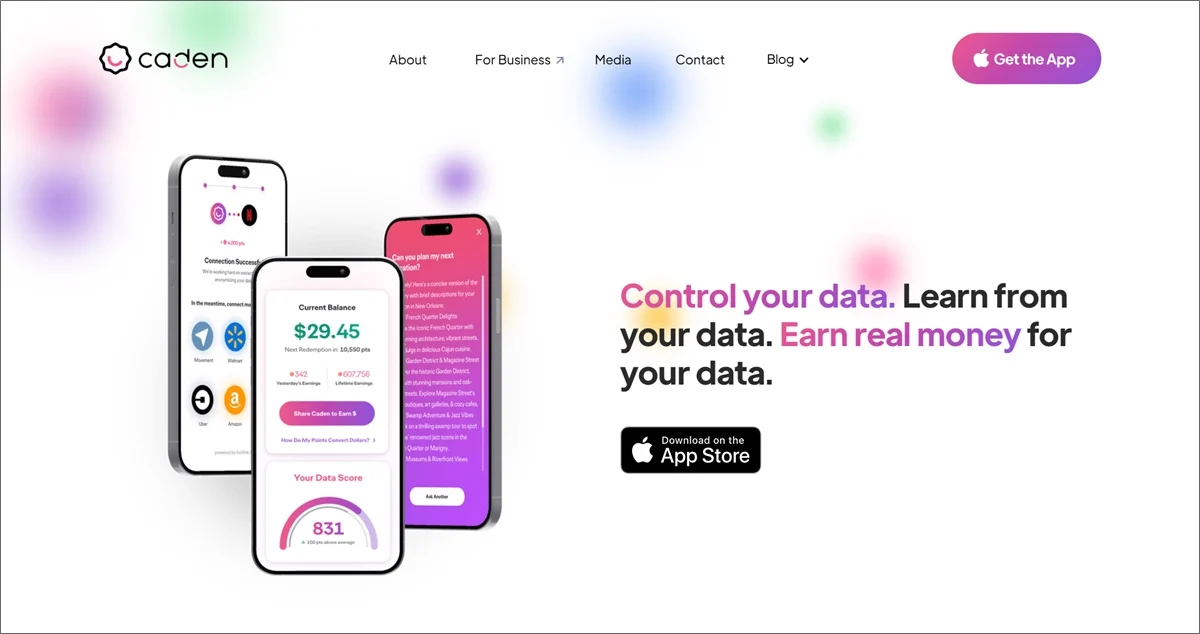
In an era where data is frequently described as the "new oil," the average individual is often the unwitting source of a multi-billion dollar extraction industry. Every digital interaction—a search query, a GPS coordinate, a scroll through social media, or a simple tap on a screen—feeds an ecosystem projected to reach a staggering $516 billion by 2031. For decades, consumers have surrendered this information for free to tech giants like Google and Meta. However, a growing movement of "data sovereignty" is changing the narrative, allowing individuals to reclaim the value of their digital footprints.

The Mechanics of Data Monetization
The premise is simple: your behavior is valuable to market researchers, advertisers, and data analysts. Companies want to know what you buy, where you go, and how you consume media to optimize their products and marketing strategies. While large tech conglomerates have historically kept the proceeds from this data for themselves, a new wave of legitimate, transparent companies has emerged, offering to pay users directly for access to their anonymized habits.

This isn’t about becoming wealthy overnight; rather, it is a form of "digital dividends." By installing specific apps or participating in research panels, users can turn their passive data generation into a consistent stream of supplemental income, gift cards, or cash-back rewards.

Chronology of the Data Economy
The evolution of the personal data market has moved through three distinct phases:

- The Era of Extraction (2000–2015): The rise of Web 2.0 saw platforms offer "free" services in exchange for total access to user data. Privacy concerns were secondary to convenience, and the concept of a "data dividend" was virtually non-existent.
- The Regulatory Awakening (2016–2020): With the implementation of the GDPR in Europe and increased scrutiny under the CCPA in California, public awareness regarding data rights reached a tipping point. Users began demanding more control over their information.
- The Monetization Shift (2021–Present): Companies now operate on a "value-exchange" model. They openly disclose their data-gathering practices, and in return for explicit consent, they provide financial compensation to the end user.
Top Platforms for Monetizing Your Data
1. Nielsen Pulse
Nielsen is a household name in the media measurement industry. Their "Pulse" program leverages anonymized usage data to help companies understand media consumption trends. By connecting your mobile devices and your television, you can earn roughly $20 per month—totaling $250 annually—for essentially doing nothing. It is a classic "set it and forget it" model.

2. Nielsen Computer & Mobile Panel
For those looking to expand their reach, the standard Nielsen Computer & Mobile Panel allows you to install background applications on your desktop, tablet, and smartphone. As the software monitors your internet usage, you accumulate points that can be redeemed for Amazon gift cards or PayPal transfers. While some users report minor impacts on device speed, the ability to earn up to $60 per year for passive background activity makes it a high-utility entry point.
3. Fetch
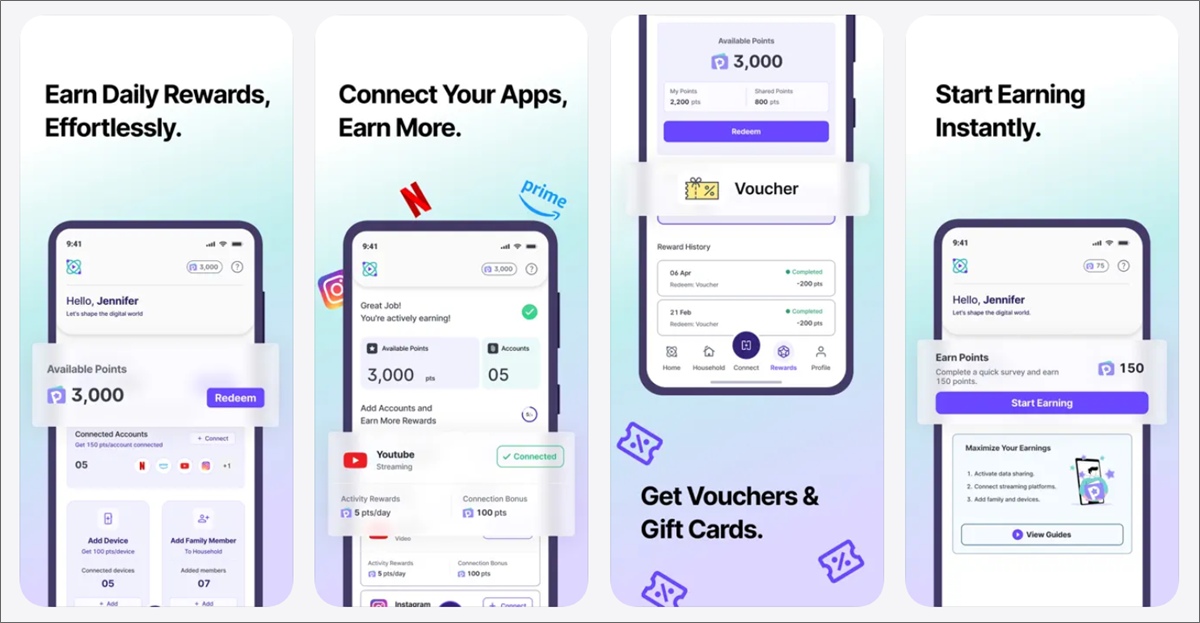
Fetch has revolutionized the "receipt economy." Unlike traditional survey sites, Fetch simply asks users to snap photos of their grocery receipts. By tracking consumer spending habits, Fetch provides value to brands, and in return, you receive points for every receipt scanned. It is widely considered one of the easiest, most frictionless apps to use. Users can expect to earn $10–$20 annually, though savvy shoppers who maximize bonus offers often exceed this significantly.

4. Pogo
Pogo represents the next generation of financial data apps. By securely linking your bank account and enabling location services, Pogo tracks your real-world spending and movement. The app provides points for every transaction, which can be cashed out via PayPal or Venmo. Based on average usage, users can expect to earn between $5 and $20 per year in purely passive income.

5. MobileXpression
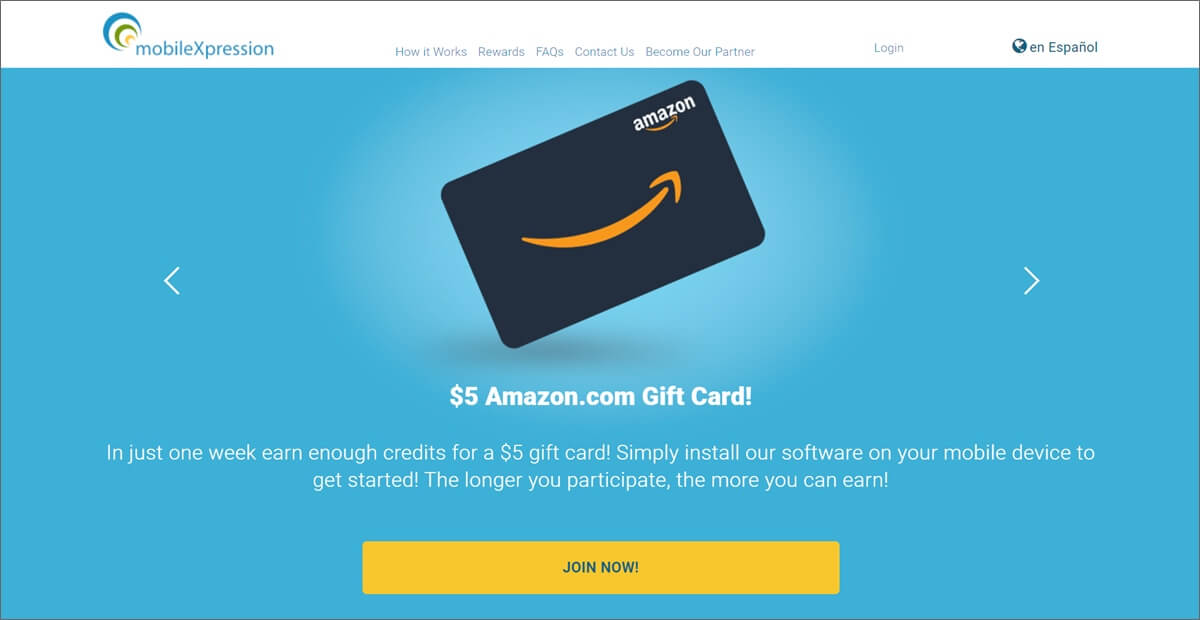
Backed by the publicly traded firm Comscore (in business since 1999), MobileXpression is a research app that tracks mobile usage habits. Because it is a long-standing, reputable organization, it is often favored by those concerned with security. New users often receive a $5 Amazon gift card after their first week of activity, with ongoing weekly credits for long-term participation.

6. SavvyConnect
SavvyConnect offers a more robust payout structure by focusing on your web-browsing behavior. By installing their secure software on your various devices, you can earn up to $5 per month per device. If you link your smartphone, tablet, and computer, you are looking at a potential $180 annual return.
7. Honeygain
Honeygain takes a unique technical approach: it allows you to share your unused internet bandwidth with data scientists for web scraping and content delivery. It is available on Windows, macOS, iOS, Android, and Linux. The company estimates it takes about 48 days to earn $20, but the passive nature makes it an attractive option for those with unlimited data plans.

Supporting Data and Real-World Returns
The common thread among these applications is their low barrier to entry. While no single app will replace a full-time salary, the cumulative effect of a "stacking strategy" can be significant.

- Average Annual Return: A disciplined user running a combination of the above services can reasonably generate $300 to $500 per year.
- Time Commitment: Most of these services require less than 10 minutes of setup and zero ongoing maintenance.
- Security: These companies prioritize anonymization, stripping personal identifiers from your data before selling it to third parties.
Official Responses and Industry Implications
Critics often point to privacy concerns regarding the installation of third-party tracking software. However, industry leaders like Comscore and Nielsen emphasize that their business models rely on "aggregate" data. They are not interested in the identity of the specific user, but rather in the macro-trends of an entire population.

From an economic perspective, these companies are effectively creating a secondary market for data. By paying users, they ensure a higher quality of data—users who are incentivized to keep the app installed provide more consistent, long-term data sets than those who might uninstall a free app at the first sign of inconvenience.

Alternatives with Higher Earning Potential
If the passive income model is not sufficiently lucrative, consider high-engagement alternatives:

Online Focus Groups and Market Research
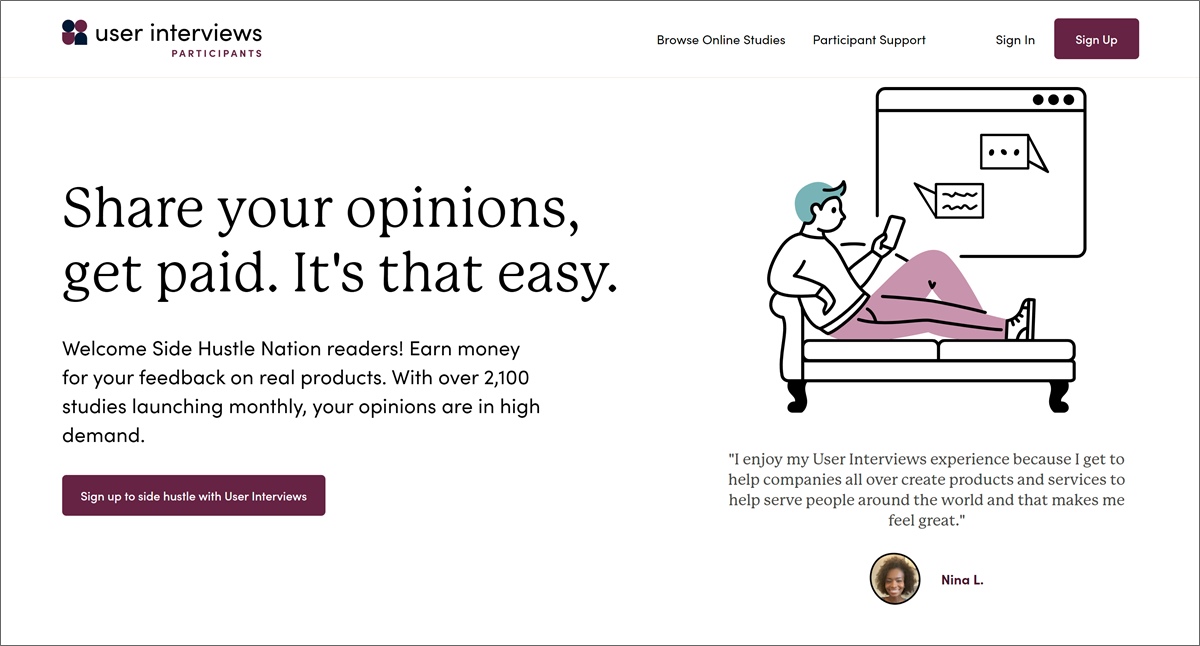
Platforms like UserInterviews connect participants with high-paying research studies. While these require an hour or two of your time, the compensation is often $50 to $200 per session. Unlike data-sharing apps, this is an active, task-based side hustle.

Strategic Credit Card Rewards
While not "data monetization" in the traditional sense, using a rewards credit card for necessary expenses is a form of leveraging your purchasing data. A card like the Capital One Quicksilver can provide $200 in sign-up bonuses and 1.5% cash back on all spending, which, when combined with your data-sharing income, can result in thousands of dollars of extra value per year.

The "Sharetown" Model
For those with a physical workspace, becoming a Sharetown representative involves picking up and reselling furniture returns from direct-to-consumer brands. This is a higher-effort, higher-reward model where representatives often earn $150–$250 per item.
Conclusion: Is Your Data Worth Selling?
The decision to monetize your personal data is a personal one. If you are comfortable with the idea of companies analyzing your shopping, browsing, and location habits in exchange for transparency and compensation, the options listed above are the industry standard for safe, reputable participation.

Ultimately, we are already providing this data for free to the world’s largest tech conglomerates. By shifting your digital habits to platforms that view you as a partner rather than a product, you can ensure that at least a portion of the half-trillion-dollar data economy finds its way back into your pocket. Start with one, evaluate your comfort level, and then decide how much of your digital footprint you are willing to lease out to the highest bidder.
 Lina Hope
  Suro Senen
  Asep Darmawan