
 By Jia Lissa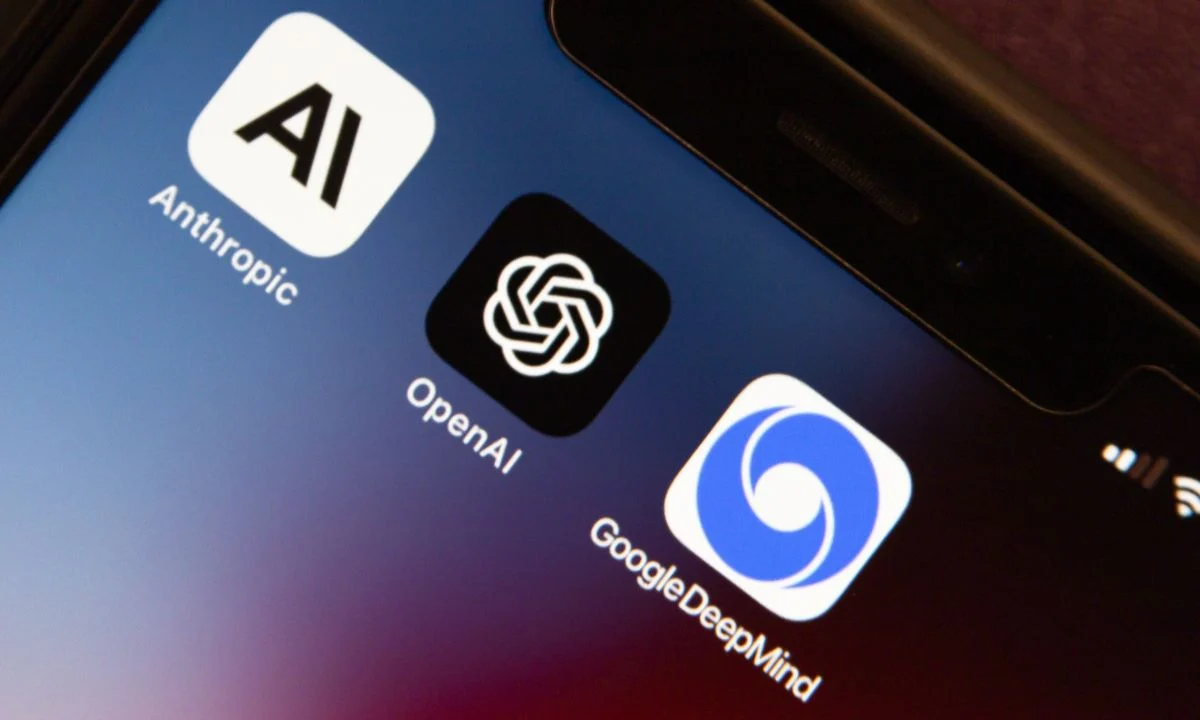
By PYMNTS | June 21, 2026
In a move that has sent shockwaves through the global technology sector, John Jumper, a Nobel Prize-winning scientist and a cornerstone of Google DeepMind’s research division, has announced his resignation. After a distinguished nine-year tenure, Jumper is moving to Anthropic, one of Google’s most formidable rivals in the race to dominate the artificial intelligence landscape.
This transition marks more than just a change in employment for a high-profile researcher; it serves as a bellwether for the shifting power dynamics in the AI industry. As the competition between Google, Anthropic, and OpenAI intensifies, the battle for top-tier talent has become as critical as the race to build the most efficient large language models (LLMs).
The Core Facts: A Departure of Significant Magnitude
The announcement was made official on Friday, June 19, via a post on X (formerly Twitter). Jumper, whose work on protein structure prediction—specifically the AlphaFold project—earned him the Nobel Prize for Chemistry in 2024, signaled his departure with a blend of nostalgia and forward-looking ambition.
“After nearly 9 years, I have decided to leave Google DeepMind and join Anthropic,” Jumper wrote. In a nod to his long-standing mentor, he added, “Demis Hassabis took a real chance letting me lead the AlphaFold team just six months after finishing my PhD.”
Google has confirmed the departure, acknowledging the loss of a pivotal figure in its AI strategy. The implications of this move are immediate: Jumper is not merely an engineer; he is a visionary whose contributions to science and technology are considered among the most consequential of the decade. By securing Jumper, Anthropic has signaled its intent to aggressively bridge the gap between pure scientific research and commercially viable, enterprise-grade AI solutions.
A Chronology of Collaboration and Innovation
To understand the weight of this departure, one must look at the trajectory of the AlphaFold team under Jumper’s leadership.
The AlphaFold Revolution
- Early Days (2017): Joining DeepMind shortly after completing his PhD, Jumper was tasked with solving the "protein folding problem"—a grand challenge in biology that had baffled scientists for half a century.
- The Breakthrough (2020-2021): The AlphaFold system achieved unprecedented accuracy in predicting the 3D structures of proteins. This was not just a win for Google; it was a monumental leap for drug discovery, material science, and personalized medicine.
- Global Recognition (2024): John Jumper and Demis Hassabis were jointly awarded the Nobel Prize in Chemistry. The recognition cemented their status as the premier duo in AI-driven scientific discovery.
- The Transition (2026): After nearly a decade of institutional stability, Jumper sought a new challenge, finding a home at Anthropic, a company currently prioritizing safety-focused, highly capable AI models.
The Competitive Landscape: Google vs. The World
The move comes at a precarious time for Google. Despite being the primary pioneer of the modern AI revolution—having invented the Transformer architecture—the tech giant has struggled to translate its research superiority into a dominant, cohesive enterprise product suite.
The Struggles of the "Enterprise" Pivot
According to reports from former Google employees and industry insiders, DeepMind has faced significant internal friction regarding its commercialization strategy. Specifically, the company has reportedly struggled to gain traction in the market for AI coding tools. As businesses look to integrate AI into their software development lifecycles, they are increasingly turning to Anthropic and OpenAI, both of which have been aggressively deploying "agentic" coding assistants.
The market sentiment is clear: while Google maintains a lead in foundational research, the "AI war" is no longer being fought solely on the quality of raw output, but on utility, integration, and enterprise-grade reliability. Anthropic’s momentum, bolstered by a recent $200 million investment in its enterprise arm, is precisely what has made it such a magnet for talent like Jumper.
Supporting Data: The Economics of the AI Arms Race
The industry is currently undergoing a structural shift. Companies are moving away from a "growth-at-all-costs" model toward a more sustainable economic outlook.
The Price War
Earlier this month, Google slashed the cost of its entry-level AI subscription from $7.99 to $4.99 per month. This move is emblematic of the "race to the bottom" that characterizes the consumer AI market. However, the enterprise market tells a different story.
| Market Segment | Primary Competitive Metric | Economic Challenge |
|---|---|---|
| Consumer AI | User acquisition/retention | High churn, low willingness to pay |
| Enterprise AI | Workflow integration/ROI | High inference costs, "utility-bill" pricing |
As noted in recent market analysis, usage is currently outstripping economic efficiency. Companies that treated AI as a flat-rate software expense are now realizing that these tools function more like electricity or water—the more you use them, the higher the cost. This realization is forcing a pivot toward specialized, high-value tools (like coding assistants) where the return on investment is immediate and measurable.
Official Responses and Industry Reaction
The response from the DeepMind leadership has been one of professional grace. Demis Hassabis, CEO of Google DeepMind, took to X to express his gratitude:
“Thanks John for an extraordinary partnership and wonderful collaboration over the past 9 years. What we achieved with AlphaFold changed the world, and showed the field what was possible with AI for science and medicine, lighting the way for how AI can benefit humanity.”
While the public messaging is supportive, industry analysts suggest that the internal mood is likely one of concern. Losing a Nobel-level talent to a direct competitor is a "leaky bucket" scenario that Google will need to address urgently. The question remains: is this a one-off move, or the start of a broader exodus of top research talent seeking more agile, focused, or equity-rich environments at companies like Anthropic?
Implications: What This Means for the Future of AI
The implications of John Jumper’s move are threefold:
1. The "Commercialization Gap"
Google’s research prowess is undisputed, but Anthropic is effectively positioning itself as the "Enterprise AI Company." By poaching top talent from DeepMind, Anthropic is signaling that it wants to dominate the software development and scientific research applications that Google has so far failed to monetize effectively.
2. The Shift in AI Talent Incentives
For years, talent gravitated toward Google for the sheer scale of compute and the intellectual freedom afforded by the DeepMind division. However, as these companies become more bureaucratic and focused on stock-price-driven commercialization, the allure of the "agile, mission-driven" startup is returning. Scientists are increasingly choosing environments where they believe their work will have a more direct impact on the product roadmap.
3. The Future of AI Coding Tools
With Jumper’s expertise in protein folding—a task that requires immense spatial reasoning and logical structure—it is highly likely that Anthropic will leverage his skills to push the boundaries of "reasoning" models. If Anthropic can develop an AI coding tool that is as revolutionary to software engineering as AlphaFold was to biology, it could fundamentally disrupt the enterprise market, leaving Google in a position of playing catch-up.
Conclusion: A New Chapter
As of June 2026, the AI industry is in a state of flux. The departure of John Jumper is a reminder that in the world of artificial intelligence, the most valuable asset is not the hardware or the dataset, but the human capital capable of orchestrating them.
Google remains a titan, and its resources are effectively bottomless. However, the migration of key figures like Jumper suggests that the next phase of the AI revolution will be defined not by who has the most data, but by who has the best-aligned team to turn that data into functional, high-value enterprise tools.
For Anthropic, this is a massive win. For Google, it is a wake-up call. And for the rest of the world, it is a clear sign that the competitive landscape of AI is entering its most intense, and perhaps most innovative, chapter yet.
For ongoing updates on this developing story, stay tuned to our daily AI Newsletter, where we track the pulse of the industry, from executive shifts to the evolving economics of large-scale model deployment.
 Basiran
  Sagoh
Sagoh  Reynand Wu