
 By Neng Nana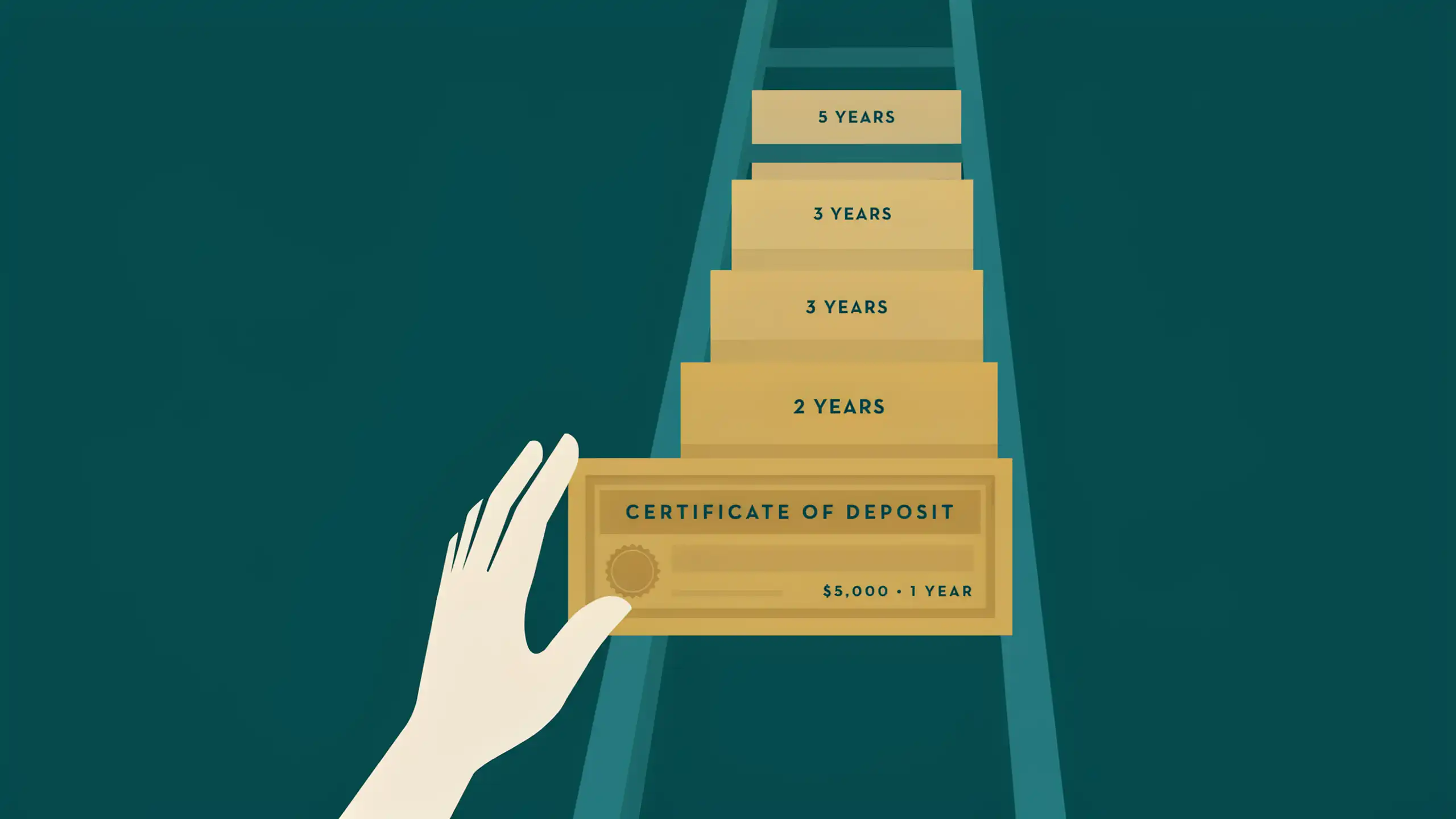
For the cautious saver, the Certificate of Deposit (CD) has long been a foundational tool for capital preservation. By locking funds away for a set period, savers secure a guaranteed return, insulating their principal from the whims of the stock market. However, the traditional CD has always carried a fundamental flaw: the "liquidity trap." Once your money is deposited, it is effectively held hostage by the bank. Attempting to access those funds before the maturity date often results in a steep early withdrawal penalty, effectively cannibalizing the very interest you sought to earn.
In today’s economic climate, where interest rates remain subject to shifts from the Federal Reserve and inflationary pressures, the need for a smarter approach to cash management has never been more acute. Enter the "CD Ladder"—a sophisticated, structured investment strategy that allows savers to bridge the gap between the high yields of long-term investments and the immediate access of a liquid savings account.
The Core Concept: Engineering Financial Flexibility
At its simplest, a CD ladder is the practice of splitting a lump sum of capital across multiple CDs with staggered maturity dates rather than depositing the entire amount into a single term. For example, instead of locking $20,000 into a two-year CD, an investor might divide that sum into four $5,000 increments with maturities of three, six, 12, and 24 months.
Breaking the "All-or-Nothing" Paradigm
The traditional approach to CDs forces investors to choose between yield and utility. Long-term CDs typically offer higher Annual Percentage Yields (APYs), but they tie up cash for extended periods. Short-term vehicles offer liquidity but often provide meager returns. A ladder dissolves this binary choice. By staggering your rungs, you ensure that a portion of your capital is constantly nearing maturity, granting you periodic windows of liquidity without the need to trigger expensive early withdrawal penalties.
Chronology of a Ladder: How the Strategy Unfolds
To understand the efficacy of a ladder, one must view it as a living, breathing cycle. The strategy is not a "set it and forget it" investment, but rather a rolling mechanism designed to optimize your portfolio over time.
Phase 1: The Initial Construction
The investor begins by deploying their capital into the chosen intervals. During this initial phase, the primary goal is to establish the "rungs." By carefully selecting these dates, the investor creates a predictable flow of cash.
Phase 2: The Maturity Interval
As the first rung (e.g., the three-month CD) matures, the investor is presented with a decision. If the funds are required for an emergency or a planned expenditure, they are withdrawn penalty-free. If the funds are not needed, the investor rolls the principal and the accrued interest into a new, long-term CD at the end of the ladder (the 24-month slot).
Phase 3: The Rolling Momentum
After one full cycle of the ladder, the structure becomes self-sustaining. Every time a short-term CD matures, the investor has the option to capture the prevailing market rate or take the cash. Because the longest-term CDs are constantly rotating toward the front of the line, the investor consistently benefits from higher long-term yields while maintaining a recurring "liquidity tap."
Supporting Data and Economic Hedging
The mathematical advantage of the CD ladder is twofold: it provides both psychological security and economic hedging.
Hedging Against Rate Volatility
Interest rates are cyclical. If an investor locks all their money into a long-term CD just before rates rise, they are effectively losing money on an opportunity-cost basis. Conversely, if they stay entirely in short-term vehicles and rates fall, they lose out on the chance to lock in high yields for the long haul.
A ladder acts as an automated hedge. If rates rise, the short-term rungs mature quickly, allowing the investor to reinvest at the new, higher rates. If rates fall, the long-term rungs remain locked at the previous, more favorable yield, protecting the portfolio from declining returns.
The Cost of Liquidity
It is critical to calculate the "breakeven" point of your ladder. Every bank imposes different early withdrawal penalties—some charge 90 days of interest, others may charge up to a year or more. A successful ladder is built on the premise that the investor never has to break a rung. Therefore, financial planners suggest "sizing" the rungs based on known upcoming expenses. If you have a property tax payment or a tuition bill due in six months, ensure one of your rungs matures shortly before that date.
Expert Perspective and Industry Trends
Financial analysts at institutions such as CIT Bank and various credit unions note that the popularity of CD ladders spikes during periods of economic uncertainty. When the stock market exhibits high volatility, the guaranteed return of a ladder becomes an anchor for personal portfolios.
Official Stance on Strategy
Industry experts emphasize that while the CD ladder is an excellent tool for capital preservation, it should not be viewed as a substitute for an emergency fund held in a high-yield savings account (HYSA). An HYSA provides immediate, 24/7 access to cash, whereas even the most aggressive CD ladder requires waiting for a maturity window. The consensus among financial advisors is that the ladder is best used for "intermediate-term" savings—money you don’t need today, but will likely need in the next one to three years.
Implications for the Modern Saver
Implementing a CD ladder requires more than just capital; it requires discipline. The primary risk to this strategy is "interest rate drift," where an investor forgets to reinvest the proceeds of a maturing CD, allowing the cash to sit in a non-interest-bearing checking account.
Strategic Recommendations
- Shop for Yield: Do not settle for the rates offered by your local "big-box" branch bank. Online banks and credit unions frequently operate with lower overhead costs, allowing them to pass on significantly higher APYs to the consumer.
- Monitor Penalty Structures: Before opening any CD, request the Truth in Savings disclosure. Know exactly what the early withdrawal penalty is. If the penalty is punitive enough to wipe out your earnings, that specific bank is not a suitable partner for a ladder.
- Automate Reinvestment: Many modern banking platforms allow for automatic renewal of CDs. Use these tools to ensure that your ladder maintains its structure even when you are busy or traveling.
The Psychological Benefit
Perhaps the most significant, yet understated, benefit of the CD ladder is the reduction of "decision fatigue." Instead of constantly monitoring the stock market or agonizing over whether to move money into bonds, the ladder provides a systematic, predictable path. It transforms the daunting task of financial planning into a series of small, manageable milestones.
Conclusion
The CD ladder is not a get-rich-quick scheme. It is a conservative, robust, and highly efficient method for managing cash. By sacrificing the "all-in" yield of a single long-term CD, you gain the ability to navigate changing interest rate environments and sudden life events with composure.
As you look to optimize your savings, remember that the goal is not merely to earn the highest possible interest rate, but to maintain a balance between the growth of your capital and the accessibility of your funds. By layering your investments, you create a financial safety net that works for you, providing both the interest you deserve and the liquidity you need to stay in control of your financial destiny.
Whether you are saving for a home down payment, a child’s education, or simply building a more secure rainy-day fund, the CD ladder remains one of the most reliable strategies in the personal finance toolkit. Start small, stay consistent, and let the structure of the ladder build your wealth, one rung at a time.
 Pevita Pearce
  rifanmuazin
  Ali Ikhwan