
 By Ali Ikhwan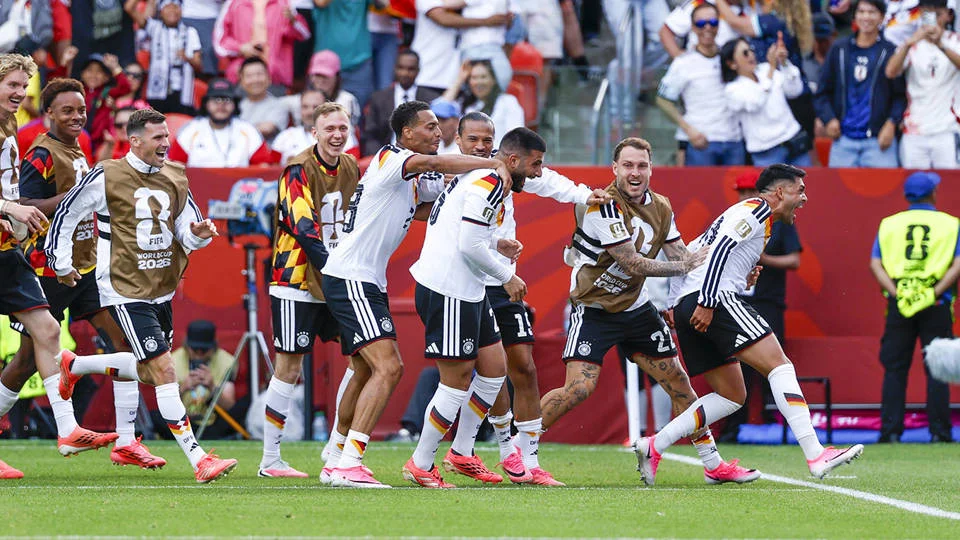
By Daron Acemoglu
June 23, 2026
The 2026 World Cup has proven to be more than just a spectacle of athletic prowess; it has emerged as a profound sociological laboratory. On the pitch, we witness the crystallization of modern identity, where the traditional markers of nationality—ancestry, ethnicity, and heritage—are being supplanted by a shared commitment to a collective goal. Germany’s performance in this tournament serves as a poignant case study, demonstrating that the impulse to love one’s country and the instinct to welcome newcomers are not merely compatible; they are, in the modern era, inextricably linked.
The Defining Moment: A Victory for Modernity
The recent 2-1 victory for Germany over Ivory Coast stands as a microcosm of this transformation. When Deniz Undav, a player whose lineage traces back to Kurdish Yazidi roots and who identifies as a Turkish-Syrian German, scored two late-game goals to secure the win, the stadium erupted in a singular, unified roar.
In that moment, the narrative of "classic" German identity—often historically tied to a rigid, exclusionary pedigree—was rendered irrelevant. To the thousands of fans in the stands and the millions watching from Berlin to Munich, Undav was not a representative of a demographic quota or a newcomer; he was the hero of the nation. His success was Germany’s success. This event highlights a persistent reality that political extremists on both ends of the spectrum fail to acknowledge: the average citizen is far more pragmatic and inclusive than the polarized rhetoric of the political fringe suggests.
Chronology of a Changing Team
The evolution of the German national team (the Nationalmannschaft) has been a decades-long process, mirroring the broader demographic shifts within the Federal Republic.
- 1990–2000: The era of "guest workers" (Gastarbeiter) began to see its children integrated into youth academies. While the national team remained predominantly composed of players with long-standing German ancestry, the seeds of diversity were sown in the club systems.
- 2006: Hosting the World Cup, Germany experienced the "Sommermärchen" (summer fairytale), which marked the beginning of a more relaxed, patriotic sentiment that felt inclusive rather than nationalist.
- 2014: The World Cup victory in Brazil featured players like Mesut Özil and Jérôme Boateng, signaling that the team was a reflection of a multicultural Germany.
- 2026: The current squad represents the culmination of this shift. Players with diverse cultural backgrounds—including those from Turkish, Syrian, and West African migrant families—now form the backbone of the tactical and emotional core of the team.
Supporting Data: The Demographics of Success
To understand why this shift is not just cultural but structural, one must look at the data surrounding European soccer academies and the integration of migrant communities. According to recent demographic reports from the German Football Association (DFB), over 35% of youth academy players currently identify as having a "migration background."
Furthermore, economic data suggests that these players are not just contributors to the sport, but symbols of social mobility. The integration of these families into the German economic fabric has tracked closely with the success of their children in the public sphere. When we analyze the viewership data for the 2026 tournament, we see that the highest levels of engagement in Germany come from the most diverse urban centers, suggesting that the "new" German identity is being forged in cities like Berlin, Frankfurt, and Cologne.
The success of the 2026 team also correlates with higher levels of social cohesion metrics in post-match surveys. When the national team wins, public sentiment toward immigration policies tends to soften temporarily, as the commonality of the national victory bridges the gap between disparate cultural groups.
Official Responses and Political Implications
The political establishment has reacted to this success with a mixture of celebration and defensive posturing. The German Chancellery issued a statement following the victory over Ivory Coast, noting that "Deniz Undav’s contribution is a testament to the strength of our pluralistic society."
However, the political discourse remains fraught. Far-right factions have attempted to criticize the "composition" of the squad, arguing that the team no longer reflects "traditional German values." Conversely, far-left activists have occasionally criticized the team as a "performative mask" that covers up systemic inequalities in the labor market.
Both sides are missing the point. The players themselves have consistently refused to be pawns in these ideological wars. In a post-match interview, Undav stated, "I play for the people who support me, regardless of where their grandfather was born. We are here to win for Germany." This pragmatic, goal-oriented approach is precisely what the political class struggles to emulate.
Implications for National Identity
The 2026 World Cup is a mirror held up to the face of Europe. As the continent grapples with the complexities of migration, integration, and the rise of populist movements, the soccer pitch offers a rare space where meritocracy and national pride coincide.
1. The Death of Essentialism
The primary implication of the 2026 squad is the erosion of "essentialist" definitions of nationality. For decades, many European nations defined their citizenry by blood and soil. The success of players like Undav proves that nationality is increasingly defined by participation and shared destiny. When a player wears the jersey, they assume the burdens and the honors of the nation.
2. The Economic Necessity of Inclusion
Germany’s demographic crisis—an aging workforce and a shrinking population—necessitates the successful integration of newcomers. The soccer team serves as a high-profile proof-of-concept for this integration. If a team can integrate individuals from vastly different backgrounds to achieve a common, high-stakes objective, it provides a blueprint for the broader labor market.
3. The Role of Symbols in Polarization
The fact that extremists on both sides are frustrated by the team’s success is a positive indicator. It suggests that the team exists in a "moderate middle"—a space where the average person feels comfortable rooting for their country without needing to subscribe to the exclusionary myths of the far-right or the identity-obsessed grievances of the far-left.
Conclusion: A Lesson for the Future
As the tournament progresses, the German team will undoubtedly face new challenges. There will be losses, and there will be moments of intense scrutiny. Yet, the foundation has been laid. The 2026 squad has moved beyond the "us vs. them" narrative that dominated the early 21st century.
We are witnessing the emergence of a "civic patriotism"—a form of love for one’s country that is rooted in democratic values, shared achievements, and a welcoming spirit toward those who contribute to the nation’s success. For the fans who cheered for Deniz Undav, the question of whether he is "classically" German is entirely moot. He is German because he embodies the best of what the nation hopes to be: successful, resilient, and inclusive.
If politics in the 21st century is to survive the pressures of global migration and cultural change, it must learn from the locker room. It must learn that people are capable of identifying with a national project, provided that project is seen as open, fair, and focused on the common good. The 2026 World Cup is not just a sporting event; it is a signal that the rigid boundaries of the past are dissolving, replaced by a more fluid, dynamic, and ultimately stronger understanding of what it means to be a citizen of a nation. As the cheers continue to ring out in stadiums across North America, Germany reminds us that the most potent form of patriotism is the one that invites everyone to the table.
 Asro
Asro  Pevita Pearce
  Raul Delapena Setiawan