
 By Pevita Pearce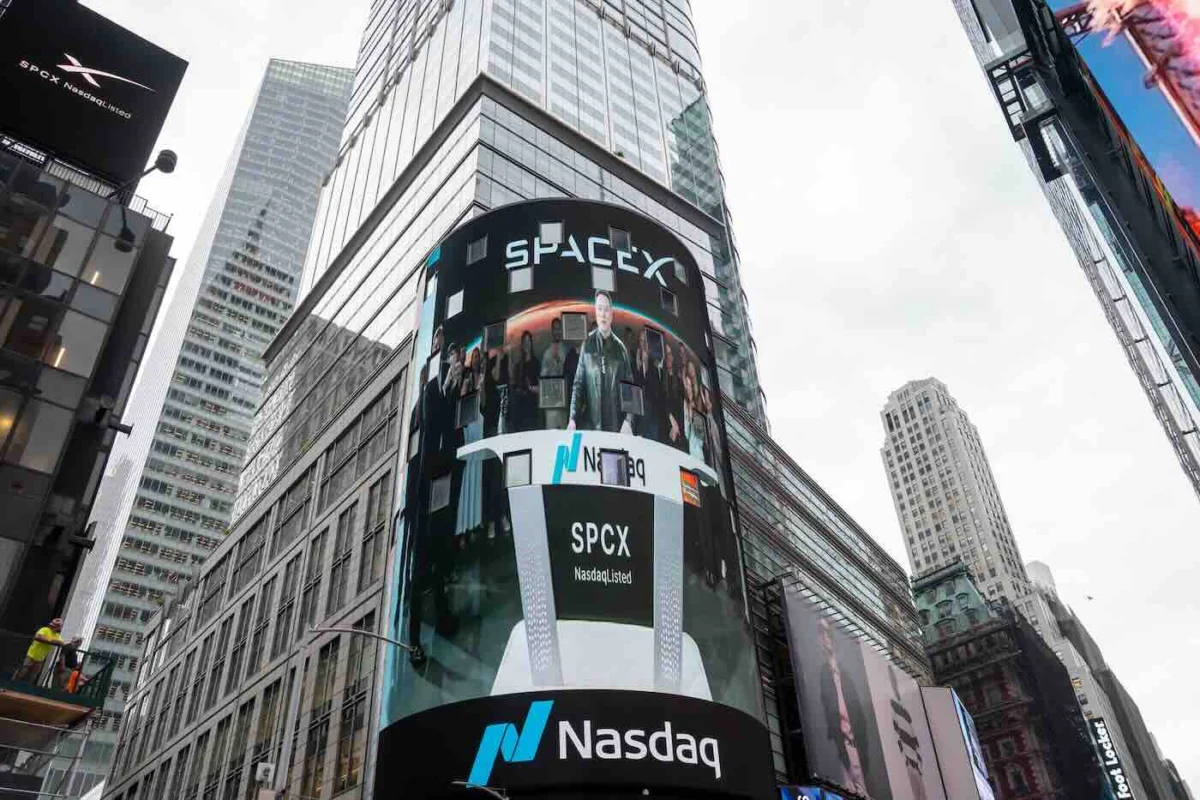
As a volatile tech sector keeps market observers on edge, a singular, high-stakes development is providing a much-needed lifeline to some of the world’s most influential philanthropic foundations. Elon Musk’s SpaceX, having officially moved from the private realm to the public markets, is now delivering a historic payload of liquidity to the institutional investors who backed the aerospace giant during its early, uncertain years.
For foundations like Surdna, California Wellness, and the Skoll Foundation, this event represents more than just a successful exit; it marks a watershed moment in the viability of "impact investing"—the strategy of placing capital into ventures that aim for social or environmental good alongside financial return. After years of a stagnant "exit environment" where private equity distributions had slowed to a crawl, the SpaceX IPO is turning years of patient, mission-driven waiting into a massive influx of capital.
The Genesis of an Impact Bet
The current windfall is the result of long-term strategic partnerships with pioneering venture firms: DBL Partners and Capricorn Investment Group. Long before SpaceX was a household name, these managers were evangelizing a philosophy that has since become a cornerstone of modern institutional philanthropy: that market-rate financial returns and social impact are not mutually exclusive.
Both firms were early believers in Musk’s vision, having backed Tesla when it was still a nascent electric vehicle company fighting for legitimacy. That early foresight paid off spectacularly, as Tesla grew into a trillion-dollar titan. However, the SpaceX investment was rooted in a different, arguably more ambitious impact thesis. At the time of initial funding, SpaceX was aggressively building out its Starlink satellite constellation. The goal was to provide universal, affordable internet access to underserved regions—a project that promised to bridge the global digital divide.
For many foundations, these investments were their first foray into the world of venture capital. By committing capital to DBL and Capricorn, organizations such as the Surdna, Sand Hill, Santa Barbara, California Wellness, Marguerite Casey, and McKnight foundations signaled a departure from traditional, low-risk endowment management. They were betting on the future of humanity, both in terms of technology and access.
Chronology: From Garage Ambition to Trillion-Dollar Giant
The journey from a speculative venture play to a public market behemoth spans nearly a decade of intense growth:
- 2017: DBL Partners and Capricorn Investment Group solidify their positions as major backers of SpaceX. At this time, SpaceX is valued at approximately $21 billion. During this period, foundations like Surdna make multi-million dollar commitments, viewing these funds as the vanguard of their impact-driven portfolios.
- 2020–2023: As SpaceX scales its reusable rocket program and Starlink, the company’s valuation climbs steadily. However, for LPs, the capital remains tied up in private equity, leading to a long period of "illiquidity" where gains exist on paper but not in the bank.
- May 2024: The broader impact sector sees a positive signal with the IPO of Fervo, a geothermal power company backed by Capricorn and others. This creates optimism for a wider "liquidity cycle."
- June 2024: SpaceX files for and executes its IPO. By the time it finishes trading on June 12, the company is valued at over $2 trillion, effectively minting Elon Musk as the world’s first trillionaire.
- Late 2024 (Projected): The market awaits the IPO of Anthropic, the frontier AI company. This event is expected to serve as the next major liquidity event for foundations like the Ford Foundation and Omidyar Network, which acquired stakes in a unique auction involving assets from the bankrupt crypto exchange FTX.
The Mechanics of the Windfall
"This one is really going to matter to these investors," says Adam Connaker of the Surdna Foundation. Surdna’s initial $5 million investment in DBL Partners III, made in 2017, was part of a $100 million impact commitment designed to prove that foundations could act as catalysts for systemic change.
For Connaker, the scale of the SpaceX exit is unprecedented. "When you think about liquidity, we’re not used to it coming in these massive chunks like this," he explains. "Typically it’s a smaller, more consistent drip, but these are big chunks coming after nothing." He notes that for many institutions, the SpaceX exposure is positioned to drive the "bulk of the liquidity needs for the next 18 months," essentially financing the foundation’s grant-making activities during a period where other asset classes remain under pressure.
However, the timing of these returns is not immediate. Fund managers are often bound by legal lockup periods following an IPO, which can range from several weeks to over a year. Ira Ehrenpreis, a managing partner at DBL and a board member at SpaceX, faces specific regulatory hurdles that may further delay the ability of his firm to distribute proceeds to LPs.
Supporting Data: The Stakes and the Swings
The numbers behind these investments reveal the high-stakes nature of modern philanthropy.
- Valuation Growth: SpaceX’s valuation skyrocketed from $21 billion in 2017 to roughly $350 billion by the end of 2024, culminating in the $1.75 trillion valuation at the time of its IPO.
- The AI Connection: The Ford Foundation, Omidyar Network, and Nathan Cummings Foundation invested a combined $7.5 million for nearly 250,000 shares of Anthropic. That stake has already appreciated more than 30-fold. For the Nathan Cummings Foundation, a $1 million stake alone could potentially return three times their annual grant-making budget.
- Market Volatility: The transition to public markets has not been smooth. Following its June 12 IPO, SpaceX stock saw significant volatility, fluctuating after the company announced a $25 billion bond offering to fund its massive AI ambitions. While the stock remains above its opening price of $150, the swings illustrate the risks inherent in holding "impact" assets that are increasingly tied to the unpredictable nature of AI and public market sentiment.
Official Responses and Strategic Silence
Despite the immense interest surrounding these distributions, the firms involved have maintained a low profile. DBL Partners declined to comment on the record regarding specific distribution timelines or the valuation of their stakes. Capricorn Investment Group did not respond to multiple requests for comment.
This silence is standard practice in private equity, where managers are legally restricted from discussing potential returns until they are finalized and distributed. Nevertheless, the underlying sentiment among foundations is one of relief. Javier Hernandez of the California Wellness Foundation noted that while the foundation is not in a "liquidity crunch," the general slowdown in distributions across the private market has hindered the ability to redeploy capital into new, mission-critical commitments. The SpaceX exit provides the oxygen necessary to restart that cycle.
Implications: The Moral Dilemma of Impact
As these foundations prepare to reinvest their SpaceX windfalls, they face a growing philosophical challenge. The impact thesis that originally justified these investments—advancing space travel and universal internet—has become increasingly complicated by Elon Musk’s public trajectory.
Over the past decade, Musk has become a polarizing political figure, aligning himself with the Trump administration and overseeing a platform (X) that critics argue has fomented social division. Furthermore, the 2024 merger of SpaceX with xAI has raised concerns about the environmental impact of AI data centers, which have been criticized for their reliance on unpermitted gas turbines in vulnerable, low-income communities.
For the foundations, this creates a complex balancing act. They are benefiting from the financial success of an entity whose founder’s personal and political actions often stand in direct opposition to the missions of the philanthropies themselves.
"The liquidity is very welcome," one anonymous source close to a foundation board remarked. "But it forces a conversation about whether we can continue to label these investments as ‘impact’ when the company’s evolution moves so far away from the initial, socially-conscious intent."
As these funds flow back into the philanthropic ecosystem, the challenge for the next decade will be determining how to balance the need for massive, market-beating returns with the necessity of maintaining moral and social integrity in an increasingly volatile and ethically charged global market. For now, the foundations will take the liquidity—and continue to navigate the friction between the promise of technology and the reality of its consequences.
 Jia Lissa
  Lina Hope
  Suro Senen