
 By Asro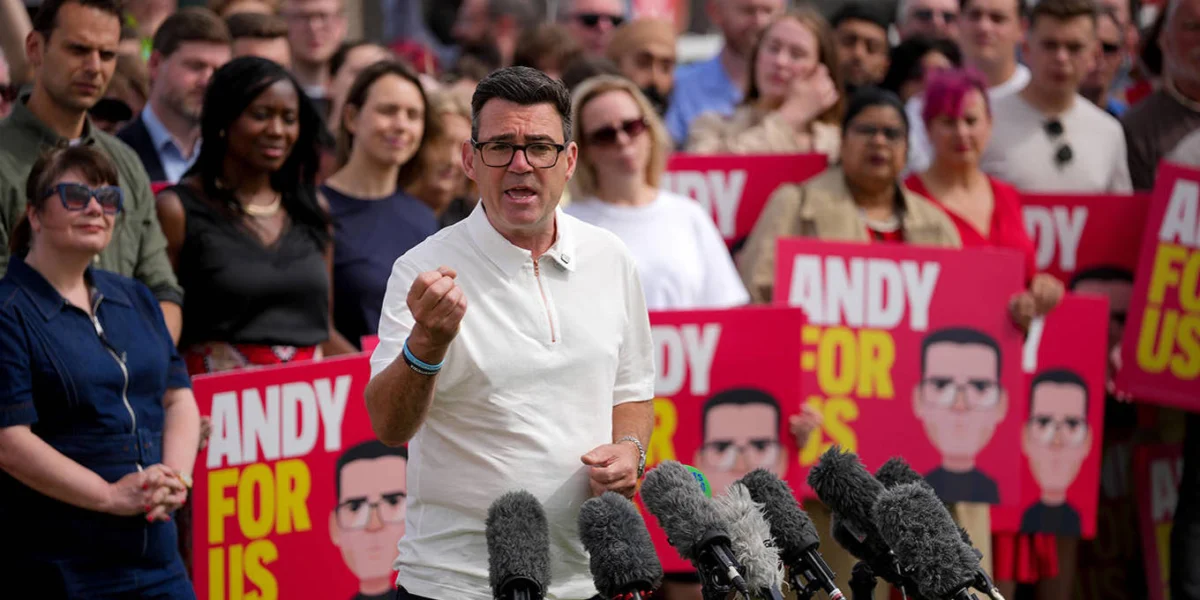
By Diane Coyle | Economics Correspondent
June 24, 2026
As the United Kingdom enters a period of profound political transition following the resignation of Prime Minister Keir Starmer, the eyes of the nation have turned away from the corridors of Westminster and toward the industrial heartland of the North. In the wake of Starmer’s departure, the ascension of Andy Burnham—the charismatic, long-serving Mayor of Greater Manchester—from regional governance to the national stage has become the central narrative of British politics.
Burnham’s recent victory in a parliamentary special election has solidified his position as the frontrunner to lead the Labour Party and, by extension, the country. Yet, for economists and political analysts alike, the fascination with Burnham is not merely personal; it is institutional. Greater Manchester has spent the better part of two decades transforming itself from a post-industrial shadow into the UK’s fastest-growing economic region. As the nation grapples with stagnant productivity and regional inequality, the "Manchester Model" is being scrutinized as the potential blueprint for a national recovery.
The Main Facts: A Tale of Two Cities
The transformation of Greater Manchester is a rare success story in the landscape of 21st-century British economics. For decades, the UK has been defined by its "London-centric" growth model—a reality that exacerbated regional disparities and stifled the potential of Northern cities.
Greater Manchester’s resurgence, however, has been driven by a deliberate, decades-long strategy of decentralization and regional autonomy. By securing significant devolved powers, the city-region was able to bypass the bureaucratic bottlenecks of Whitehall, fostering a business environment characterized by high-tech innovation, robust infrastructure investment, and a rejuvenated cultural identity.
The core of the Manchester model rests on three pillars:
- Devolved Governance: The creation of the Greater Manchester Combined Authority (GMCA) allowed local leaders to set their own priorities in transport, skills training, and housing.
- Public-Private Synergies: A concerted effort to link academic excellence at the University of Manchester with commercial enterprise, particularly in life sciences and advanced materials.
- Infrastructure Integration: The strategic expansion of the Metrolink tram network and the redevelopment of the city center into a high-density, mixed-use hub.
Chronology of a Resurgence: From Decline to Dynamism
The path to Manchester’s current economic standing was not linear. It was the result of a sustained, cross-generational effort.
- 2004–2010 (The Foundations): Following the initial waves of the Northern Powerhouse rhetoric, local leaders began lobbying for the first "City Deal," which provided the region with the autonomy to manage its own economic development budget.
- 2011–2015 (Institutional Consolidation): The establishment of the GMCA formalized the collaboration between the ten local councils that comprise Greater Manchester. This period saw the start of major infrastructure projects that aimed to connect suburban productivity hubs with the urban core.
- 2017–2021 (The Burnham Era): With Andy Burnham’s election as the first Mayor of Greater Manchester, the region gained a national voice. Burnham focused heavily on "The Bee Network," an integrated public transport system, and social policy reform, arguing that economic growth must be inclusive to be sustainable.
- 2023–2025 (The Growth Surge): Official data confirmed that Greater Manchester outpaced the national average in GDP growth for three consecutive years, fueled by a boom in the digital, creative, and green energy sectors.
- June 2026 (The Political Transition): The resignation of Keir Starmer triggers a snap election cycle, positioning Burnham—now a Member of Parliament—as the presumptive successor and the standard-bearer for the "Manchester Model."
Supporting Data: By the Numbers
Economic metrics from the Office for National Statistics (ONS) and regional economic reports provide a clear picture of the region’s performance.
- Productivity Growth: Over the last decade, Greater Manchester’s Gross Value Added (GVA) per worker has increased by 14% relative to the UK average, reversing a long-standing trend of decline.
- Foreign Direct Investment (FDI): The region has seen a 22% rise in FDI since 2020, with significant capital flows into the MediaCityUK hub and the Oxford Road Corridor, the city’s primary innovation district.
- Employment Trends: Unemployment in the region has fallen to 3.8%, matching historical lows, with a notable shift in the labor market toward high-skill roles in fintech and sustainable manufacturing.
- Infrastructure Impact: The expansion of the tram network and the integration of bus services have resulted in a 19% increase in public transport usage, significantly reducing congestion and improving connectivity between lower-income boroughs and high-growth zones.
Official Responses and Political Discourse
The potential application of the Manchester model to national policy has elicited a spectrum of reactions from across the political aisle.
The Labour Perspective: Supporters of Burnham within the party argue that his record proves that "levelling up" is not just a slogan but a tangible reality when local authorities are given the resources to act. A spokesperson for the Labour frontbench stated: "Andy’s success is the evidence that when you give power to those closest to the people, you get better outcomes. The nation is ready for a Prime Minister who understands that the UK’s strength lies in its regions, not just the capital."
The Conservative Critique: Conversely, some economists and Conservative skeptics caution against over-extending the Manchester model. “Manchester benefitted from a unique set of circumstances, including a strong pre-existing academic base and specific EU-funded infrastructure grants that are no longer available,” noted Dr. Helena Vance, a senior economist at the Institute for Economic Affairs. “Replicating this nationwide requires massive fiscal transfers that might destabilize the national budget if not managed with extreme fiscal discipline.”
The Business Community: Leaders in the Manchester business community have expressed both optimism and caution. While the Manchester Chamber of Commerce praised Burnham’s focus on transport and skills, they warned that national policy must focus on reducing the regulatory burden on small and medium-sized enterprises (SMEs) to truly mirror the region’s success.
Implications: Can the Model Scale?
The central question facing the United Kingdom today is whether a regional blueprint can serve as a national strategy. The Manchester model is, by its very nature, a "bottom-up" approach, whereas the British state has historically functioned on a "top-down" basis.
The Challenge of Decentralization
If Burnham were to become Prime Minister, he would face the "Westminster Paradox." To scale the Manchester model, he would effectively need to dismantle parts of the centralized machinery that he would then occupy. This would require a massive transfer of power—not just to regions, but to city-mayors across the UK. For cities like Birmingham, Leeds, and Glasgow, this would be a welcome shift, but it would inevitably face resistance from entrenched interests in Whitehall who fear the fragmentation of national policy.
The Fiscal Reality
National economic policy requires managing inflation, interest rates, and the national deficit—variables that a regional mayor does not have to balance in the same way. Scaling Manchester’s success would require significant public investment at a time when the UK’s debt-to-GDP ratio is at an all-time high. The "Burnham Doctrine" would likely involve a pivot toward "investment-led growth," where public infrastructure spending is used to "crowd in" private investment.
Cultural and Political Integration
Beyond the economics, the Manchester model is deeply cultural. It is built on a strong, unified regional identity. A national application would need to account for the diverse and often conflicting identities of the UK’s constituent nations. The model works in Manchester because of a shared consensus on goals; achieving that same consensus across England, Scotland, Wales, and Northern Ireland is a task of an entirely different magnitude.
Conclusion: A New Chapter
As the UK stands at this crossroads, the Manchester story serves as both an inspiration and a warning. It is an inspiration because it proves that economic decline is not inevitable; it is a warning because it highlights just how much effort, time, and local consensus is required to turn the tide.
Andy Burnham’s political ascent is fundamentally a referendum on whether the British public is ready to move away from the traditional, centralized model of governance. If he succeeds, the legacy of his time in Manchester may be more than just a successful city-region; it may be the foundation upon which a new, decentralized, and more dynamic United Kingdom is built. However, the transition from local mayor to national leader is fraught with risk. The "Manchester Model" works because it is tailored to the specific needs and strengths of the North; the challenge for the next Prime Minister will be to ensure that in trying to save the whole, they do not inadvertently lose the very local spirit that made the model work in the first place.
The coming months will be a crucible for the UK’s political and economic future. Whether or not the Manchester model becomes the "national model," the experiment has already succeeded in one regard: it has changed the conversation about what is possible when a region is empowered to take control of its own destiny.
 Pevita Pearce
  Raul Delapena Setiawan
  Ali Ikhwan