
 By Siti Muinah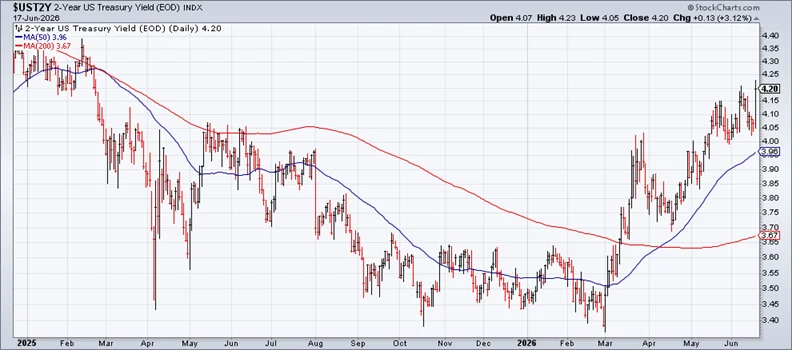
In a high-stakes public debut that has recalibrated market expectations, newly appointed Federal Reserve Chair Kevin Warsh signaled a definitive pivot in the central bank’s monetary philosophy. Speaking on Wednesday following the Federal Open Market Committee (FOMC) decision to maintain current interest rates, Warsh delivered a message that resonated with a clear, hawkish undertone: “This Committee will deliver price stability.”
Whether this rhetoric was a calculated move to insulate the Fed from political pressure—specifically President Trump’s frequent calls for lower borrowing costs—or a pragmatic acknowledgement of an overheating economy, the impact was immediate. For the first time in years, the Fed is explicitly prioritizing the fight against inflation over the comfort of growth-focused stakeholders, setting the stage for a potentially volatile second half of 2026.
Chronology of a Policy Pivot
The FOMC meeting concluded with a unanimous decision to leave the target interest rate unchanged, a move that was largely priced into the markets. However, the post-meeting press conference served as the true catalyst for the current market volatility.
Warsh utilized the platform to emphasize that the Fed’s mandate of price stability has been compromised by five consecutive years of inflation running above the stated 2% goal. He framed this as a moral and economic imperative, noting that “persistently high prices are a burden for the American people.”
Following the initial hawkish statement, Warsh introduced a layer of institutional complexity by announcing the formation of a new task force dedicated to dissecting the fundamental drivers of inflation. By promising to weigh "first principles" and explore a wide range of policy ideas, he hedged his stance, hinting that the Fed may move away from traditional metrics—such as the Core Personal Consumption Expenditures (PCE)—in favor of "trimmed mean" inflation metrics. This subtle shift suggests that while the Fed is becoming more hawkish, it is also preparing to redefine the tools it uses to measure the success of its mandate.
Supporting Data: The Treasury Market’s Mixed Verdict
The reaction in the bond market—the ultimate arbiter of the Fed’s credibility—was far from uniform. Traders and institutional investors are currently parsing conflicting signals, leading to a "mixed verdict" that highlights the uncertainty surrounding the path of future rate hikes.
Yield Curve Dynamics
The policy-sensitive 2-year Treasury yield climbed to 4.20% on Wednesday, reaching its highest level in more than two years. This surge underscores the market’s realization that the era of "easy money" may be coming to a premature end. Simultaneously, the benchmark 10-year Treasury yield rose to 4.50%, though it remains in a middling range compared to the aggressive shifts seen in shorter-term maturities.
Most tellingly, the 5-year Treasury yield—often considered the most inflation-sensitive maturity—fell to 4.93%, the lowest level in over a month. This decline suggests that while the market is bracing for short-term rate hikes, there is a lingering skepticism about the long-term sustainability of such a hawkish policy, perhaps reflecting concerns that over-tightening could trigger an economic slowdown.
FOMC Projections: The Hawkish Tilt
The quarterly Summary of Economic Projections (SEP) provides further evidence of a hawkish shift within the committee. The median projection for the Fed funds rate has been adjusted upward to 3.8%, a significant increase from the 3.4% estimate provided just three months ago. Crucially, half of the FOMC members now expect at least one rate hike before the end of the year, a dramatic reversal of the consensus that dominated the first quarter.

Official Responses and Internal Dynamics
Despite the outward appearance of unity—evidenced by the unanimous vote to hold rates—the internal dynamics of the FOMC are likely more complex than they appear. Warsh’s ability to secure a unanimous decision on his first outing is a testament to his leadership style, but the real test will be maintaining that consensus as the data arrives.
The Fed chair was notably circumspect when asked to project the trajectory of inflation, refusing to commit to specific timelines. This restraint is tactical; by avoiding explicit promises, Warsh preserves his flexibility to react to incoming data without being shackled by previous forward guidance.
However, the committee is not a monolith. The tension between those favoring aggressive intervention to curb prices and those fearing a premature contraction of the economy will remain the defining feature of the upcoming FOMC meetings in July and September.
Implications for the Broader Economy
The shifting policy landscape carries profound implications for both the American consumer and the global financial system.
1. The End of "Easy Money"
The market is currently pricing in a non-trivial chance of a 25-basis-point rate hike at the July 29 meeting. The probability of a rate cut, which was a dominant narrative for much of the previous year, has essentially been priced out of the futures market. Investors must now recalibrate their portfolios to account for a "higher for longer" interest rate environment.
2. Geopolitical Tailwinds and Headwinds
There is a potential cooling effect on inflation coming from the recent U.S.-Iran peace deal. If global energy prices stabilize as a result of improved diplomatic and supply-chain conditions, the headline inflation numbers may begin to moderate. The critical question for the Fed is whether this energy-led cooling will be sufficient to dampen the core inflation indexes, which remain stubbornly elevated.
3. Data-Driven Reality
Ultimately, the Warsh era will be defined by incoming data rather than rhetoric. No amount of committee unity or hawkish signaling can override the reality of the bond market’s reaction to the monthly CPI and employment reports. If inflation continues to surprise to the upside, the Fed will be forced into a hawkish corner. Conversely, if economic activity begins to wane, the market will quickly force the Fed to pivot back toward neutrality.
Conclusion: Rhetoric vs. Reality
As the Federal Reserve moves into this new chapter, it faces a delicate balancing act. Kevin Warsh has succeeded in resetting the tone of the central bank, establishing himself as a leader who prioritizes price stability over market comfort. Yet, he is inheriting a landscape defined by persistent price pressures and a bond market that is becoming increasingly skeptical of the Fed’s ability to steer the economy toward a "soft landing."
The path forward will not be determined by the eloquence of the Fed chair’s press conferences or the unity of his committee. Instead, it will be dictated by the relentless march of economic indicators. As yields adjust and the market continues to stress-test the Fed’s resolve, the difference between the "hawkish tilt" and actual policy action will be measured in basis points and economic output. For now, the message is clear: the Fed has changed its tone, but the numbers will decide the outcome.
 Nana
Nana  Muslim
  Ammar Sabilarrohman