
 By Dwi Wanna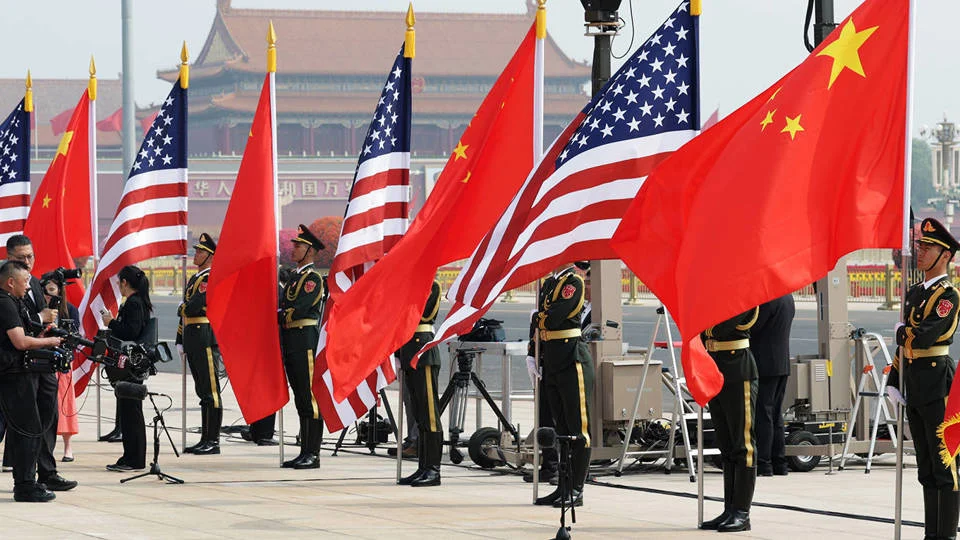
By Qiyuan Xu
June 25, 2026
The geopolitical landscape underwent a profound, albeit cautious, recalibration last month during the high-stakes summit between United States President Donald Trump and Chinese President Xi Jinping. After years of escalating trade tensions, technological barriers, and rhetoric bordering on open hostility, the two leaders emerged from their meeting with a shared, if pragmatic, realization: the "Great Power" competition is not a zero-sum game, and the prospect of total decoupling is as damaging to the architects of such policies as it is to their rivals.
This article examines the underlying dynamics of this shift, the historical trajectory that led to the summit, and the long-term implications of a move toward "strategic stability."
Main Facts: The Pivot Toward Stability
The core takeaway from the recent summit is a fundamental acknowledgement of interdependence. Both Washington and Beijing have moved away from the narrative of total economic separation toward a framework of "managed competition." The central pillar of this new agreement is the commitment to maintain a "constructive relationship of strategic stability."
For President Trump, the pressure to stabilize the relationship stems from the clear signals of distress within US financial markets and the inflationary pressures caused by persistent supply chain disruptions. For President Xi, the focus remains on domestic economic revitalization, which requires a predictable external environment to facilitate long-term technological and industrial growth.
The summit produced a tacit agreement: while ideological and systemic disagreements remain, both nations have agreed to establish formal, consistent communication channels to prevent competition from spiraling into direct conflict. This is not a return to the "engagement" era of the early 2000s, but rather the establishment of guardrails for a rivalry that neither side can afford to lose.
Chronology: From Confrontation to Cautious Engagement
To understand the weight of the recent summit, one must review the volatile timeline that preceded it:
- 2024–2025: The Height of Friction. The two years leading up to the summit were marked by aggressive tariff expansion, stringent export controls on semiconductors, and a deepening "tech war" that disrupted global innovation ecosystems.
- Early 2026: The Economic Inflection Point. By the first quarter of 2026, both economies faced mounting headwinds. US manufacturing sectors struggled with the rising costs of raw materials, while China’s export-oriented industries felt the sting of reduced access to key Western markets.
- April 2026: Back-Channel Diplomacy. Recognizing the mutual risk of an economic downturn, senior envoys from the White House and the State Council of China began quiet negotiations to lay the groundwork for a leader-level summit.
- May 2026: The Summit. President Trump and President Xi met in a neutral venue, setting the tone for the current "stabilization" phase. Both leaders recognized that their respective nations were, in a sense, "in the same boat."
- June 2026: Implementation. The post-summit period has seen the initiation of ministerial-level working groups tasked with translating the leaders’ broad goals into specific regulatory and trade agreements.
Supporting Data: The Cost of Decoupling
The urgency behind this rapprochement is rooted in hard data. Economists have long warned that the "decoupling" narrative ignored the deep-seated integration of the two nations’ supply chains.
The Impact on Innovation
Data from the International Innovation Index indicates that the R&D cycle for critical technologies, such as artificial intelligence and green energy, slowed by approximately 18% during the height of the 2025 trade restrictions. By limiting the exchange of talent and components, both the US and China saw a decline in patent filings for cross-border collaborative technologies.
Financial Market Volatility
Financial analysis of the S&P 500 and the Shanghai Composite Index shows a high correlation between geopolitical rhetoric and market volatility. In the six months leading up to the summit, uncertainty regarding US-China relations accounted for a 12% fluctuation in equity valuations for multinational corporations. The post-summit market environment has shown a modest recovery, attributed largely to the reduction in "tail risk"—the risk of a sudden, catastrophic policy shift.
Consumer Price Index (CPI) Pressures
For the American consumer, the reliance on Chinese manufacturing has proven difficult to replace. Data suggests that the inflationary impact of "de-risking" policies added roughly 1.5 percentage points to the US CPI in 2025, as firms faced higher costs for intermediate goods.
Official Responses and Diplomatic Rhetoric
The official narrative following the summit has been carefully crafted to maintain political credibility at home while signaling flexibility abroad.
From the White House: The Trump administration has framed the move not as a retreat, but as a "re-assertion of American interest." The administration argues that by setting rules for the competition, the US can better protect its national security interests without triggering a self-inflicted recession. Officials have emphasized that "strategic stability" is the prerequisite for a fair playing field.
From the Ministry of Foreign Affairs (Beijing): Chinese officials have utilized the term "win-win cooperation" to describe the shift. Beijing’s response has focused on the necessity of "peaceful development." Xi Jinping’s administration has signaled a willingness to address some of the structural grievances—such as intellectual property protection and market access—provided that the US respects China’s core developmental rights.
Both sides have avoided declaring "victory," opting instead for the language of "mutual necessity."
Implications: The Long-Term Outlook
What does this shift mean for the global economy and the future of the Sino-American relationship?
1. The Era of Managed Competition
We are entering a phase where the competition between the US and China will be conducted within a defined "rules-based" framework. This will likely involve periodic summits, institutionalized dialogue between central banks, and a focus on "co-opetition"—cooperating in areas like climate change and global health, while competing fiercely in high-tech manufacturing and defense.
2. A Boon for Global Markets
The most immediate impact of this stabilization is the reduction of systemic risk. Multinational corporations, which have been paralyzed by the "will they, won’t they" nature of the trade war, are beginning to recalibrate their long-term investment strategies. Stability, even if it is tense, is preferable to the volatility of the past three years.
3. The Domestic Political Challenge
Despite the international shift, both leaders face significant domestic hurdles. In the US, the populist wing of the political spectrum remains skeptical of any deal with China. In China, nationalistic sentiments make any perceived concession a potential political liability for the leadership. Therefore, the durability of this stability will depend heavily on the ability of both presidents to sell the benefits of this "truce" to their respective electorates.
4. Third-Party Perspectives
For the rest of the world—particularly the EU, Southeast Asia, and the Global South—this move is a welcome development. Many nations have spent the last few years caught in the middle of a binary choice between Washington and Beijing. A more stable US-China relationship provides these countries with the breathing room to pursue their own interests without being forced into a rigid, adversarial alignment.
Conclusion
The summit between President Trump and President Xi marks a definitive turning point. It acknowledges that the global economy is too complex and too interconnected to survive a total rupture between its two largest engines. While the ideological chasm remains wide and the rivalry for technological and military supremacy will continue, the acknowledgement that both nations are "in the same boat" provides a necessary, pragmatic foundation for the years ahead.
The coming months will be a test of implementation. As working groups convene and policy directives are enacted, the world will watch closely to see if "strategic stability" can evolve from a diplomatic talking point into a resilient, long-term reality. For now, the global community can breathe a cautious sigh of relief: the danger of an uncontrolled collision has been temporarily, but significantly, averted.
 Asep Darmawan
  Nana
Nana  Ali Ikhwan