
 By Asep Darmawan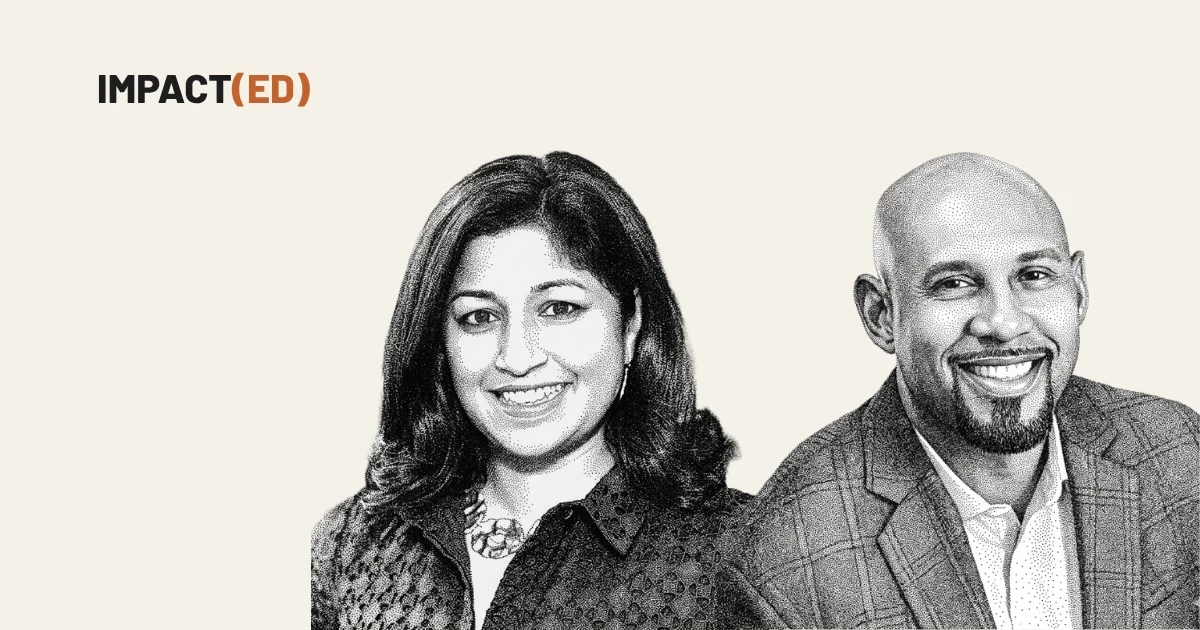
For decades, the philanthropic sector has operated under a rigid, bifurcated mindset. Foundations have historically focused their collective energy, intellectual capital, and public messaging on the "five percent"—the mandatory portion of assets that private foundations in the United States must distribute annually to maintain their tax-exempt status. Yet, this singular focus on grantmaking has left the remaining 95% of endowments largely untouched, often managed by traditional financial benchmarks that ignore, or even contradict, the very missions the foundations were established to advance.
On a recent episode of the Impact(ed) podcast, industry veterans George Suttles and Rini Banerjee joined hosts Rodney Foxworth and Eric Hovath to challenge this status quo. Their argument is both simple and revolutionary: The Investment Committee (IC) is the most powerful, yet historically overlooked, lever for institutional change. By rethinking how endowments are governed, foundations can bridge the gap between their balance sheets and their values.
The Main Facts: Rethinking the 95%
The central thesis presented by Suttles and Banerjee is that foundations are missing a critical opportunity to scale their impact. If a foundation is dedicated to racial equity, climate resilience, or affordable housing, but invests its endowment in industries that actively undermine those causes, the net impact of the organization is inherently diluted.
"Foundations devote enormous attention to the 5% of assets they grant away, but often far less to how the rest of their endowments are invested," the guests noted during the discussion. This disconnect creates a "mission-drift" scenario where the investment arm of the foundation works in total isolation from the program arm.
The panel argues that the Investment Committee—the body tasked with overseeing the foundation’s portfolio—should not be an enclave of traditional Wall Street analysts. Instead, it must be reimagined as a mission-aligned engine. To achieve this, foundations must prioritize diverse voices, community-centered perspectives, and a holistic view of "fiduciary duty" that includes long-term social and environmental health.
A Chronological Evolution of Foundation Governance
To understand the current impasse, one must look at the evolution of institutional investing over the last century.
The Era of "Wall Street Silos" (1950s–1990s)
For much of the 20th century, foundation governance was defined by a strict separation of church and state. Program officers managed the grantmaking, while an Investment Committee—usually comprised of white, male finance professionals—managed the endowment with one goal: maximizing risk-adjusted returns. The prevailing legal interpretation of "fiduciary duty" was narrow, suggesting that any consideration of social impact might violate the duty to maximize profits.
The Rise of Mission-Related Investing (2000s–2010s)
The early 2000s saw the birth of "Mission-Related Investing" (MRI) and "Program-Related Investing" (PRI). Foundations began to experiment with the idea that they could deploy capital directly into projects that advanced their goals. However, these remained peripheral "special projects" rather than a core investment strategy for the broader endowment.
The Current Paradigm Shift: Holistic Stewardship (2020–Present)
Following the global reckoning on racial justice in 2020 and the accelerating climate crisis, the conversation shifted. The question is no longer "How can we do some impact investing?" but rather "How can our entire portfolio reflect our values?" Suttles and Banerjee represent a new generation of leadership that insists that technical finance knowledge is necessary, but insufficient. Today, the conversation is about integrating community voices directly into the decision-making process of the IC.
Supporting Data: The Case for Integrated Impact
The argument for shifting endowment strategy is bolstered by an increasing body of data suggesting that impact-aligned investing does not necessitate a sacrifice in performance.
- The Alpha of Alignment: Research from firms like Morgan Stanley and MSCI has repeatedly shown that ESG (Environmental, Social, and Governance) factors often act as indicators of operational efficiency and long-term risk management.
- The Cost of Inaction: Foundations that ignore climate risks in their portfolios are increasingly exposed to "stranded assets"—investments in fossil fuels or carbon-heavy industries that may lose significant value as the global economy transitions to net-zero.
- Diverse Decision-Making: Multiple studies in corporate governance demonstrate that investment committees with diverse backgrounds—including age, race, gender, and socioeconomic experience—outperform homogeneous groups by mitigating "groupthink" and identifying blind spots in market trends.
Suttles and Banerjee emphasize that the "technical finance knowledge" often prioritized by ICs often leads to a monoculture. By bringing in community leaders or those with deep subject-matter expertise in the foundation’s issue areas, ICs can better anticipate the social consequences of their investments, thereby creating a more robust and resilient portfolio.
Official Responses and Industry Sentiment
The push to diversify Investment Committees has met with both enthusiasm and institutional resistance.
The Proponents
Advocates within the philanthropic sector argue that the "fiduciary duty" argument is a red herring. They point to updated guidance from organizations like the Council on Foundations, which clarifies that foundations are legally permitted to consider mission-alignment in their investment policies. Supporters argue that the real barrier is not legal, but cultural—a lingering adherence to outdated notions of what an "investment professional" looks like.
The Skeptics
Traditionalists within the investment community remain cautious. The primary concern among conservative IC members is the potential for "mission creep," where the complexity of vetting for impact might lead to higher management fees or suboptimal diversification. Some institutional consultants argue that by limiting the universe of investable assets based on social criteria, foundations risk underperforming, which could ultimately lead to less capital available for grants.
However, as Banerjee points out, this perspective ignores the long-term systemic risk. "If you are investing in a way that degrades the very society you are trying to improve, you are effectively paying to undo your own grantmaking," she argues.
Implications for the Future of Philanthropy
The transformation of the Investment Committee holds profound implications for the future of the social sector.
1. The Democratization of Capital
If foundations successfully integrate community perspectives into their ICs, it represents a radical democratization of capital. It allows those who are most impacted by foundation grants to have a seat at the table where the largest portion of the foundation’s wealth is controlled. This moves the power dynamic from "philanthropist to beneficiary" to a more collaborative, partnership-based model.
2. A New Standard for Fiduciary Duty
We are likely to see a shift in how fiduciary duty is defined in the courts and by regulators. As more foundations adopt "Total Portfolio Activation"—the practice of aligning all assets with mission—it will become the new "prudent person" standard. Foundations that fail to account for the social and environmental impacts of their investments may eventually find themselves on the wrong side of evolving legal expectations.
3. The Need for New Skill Sets
For those working in the nonprofit and foundation sectors, this shift creates a demand for a new type of professional: the "impact-literate" investment officer. This individual must be as comfortable reading a balance sheet as they are understanding the complexities of community organizing and social systems change.
Conclusion: The Path Forward
As Suttles and Banerjee concluded on Impact(ed), the work of the Investment Committee is not merely a technical exercise—it is a moral one. The endowment is not just a pile of money to be guarded; it is the lifeblood of the foundation’s mission.
For foundations looking to stay relevant in the 21st century, the message is clear: stop treating the endowment as a silo. Break down the walls between the program staff and the investment managers. Bring community voices into the boardroom. By aligning the 95% of assets with the 5% of grants, foundations can move beyond being mere donors and become true agents of systemic change. The power to shape the future lies not just in the checks that are signed, but in the markets that are moved. It is time for Investment Committees to take their place at the forefront of the philanthropic revolution.
 Raul Delapena Setiawan
  Suro Senen
  Lina Hope