
 By Azzam Bilal Chamdy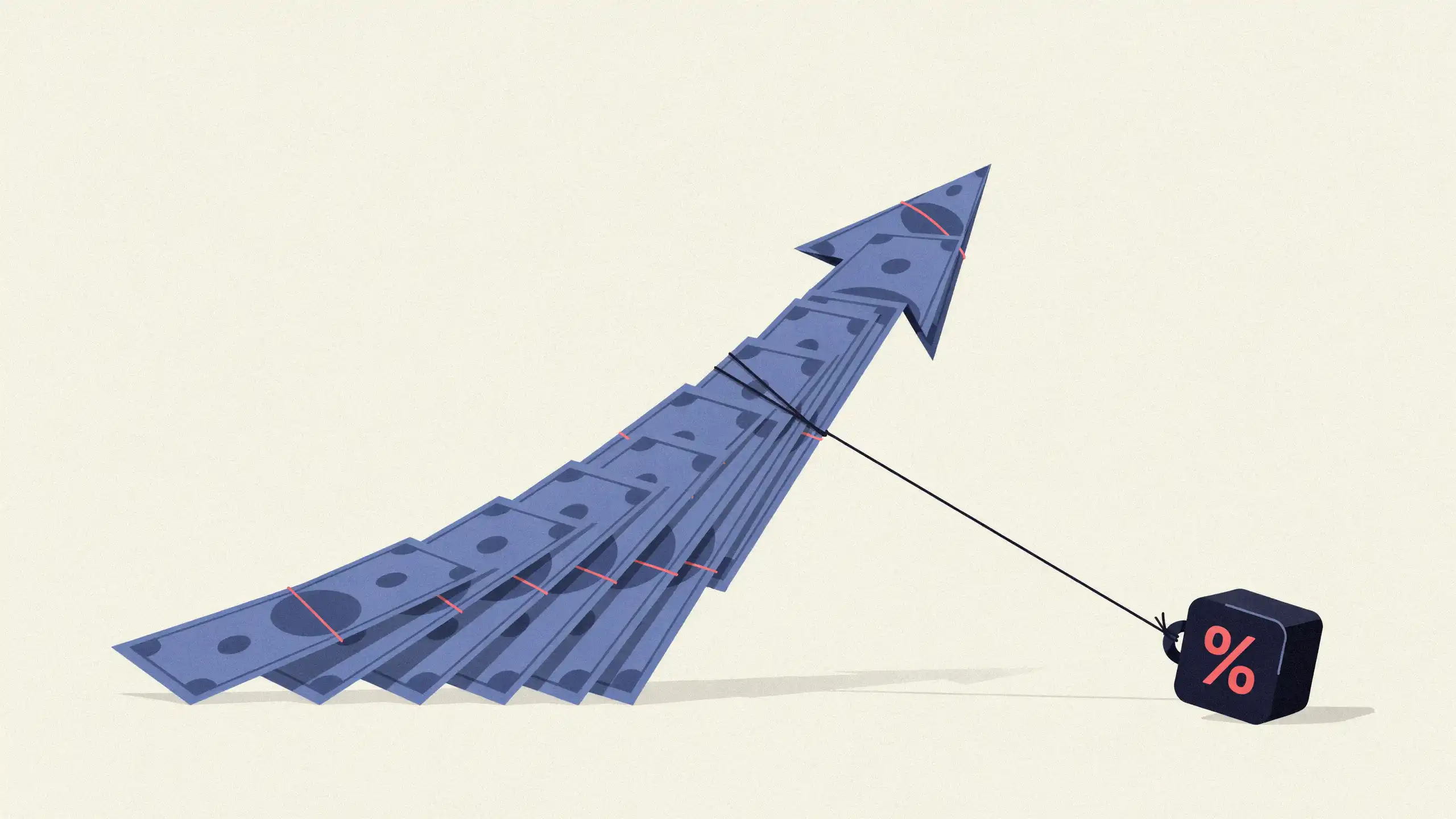
In the complex ecosystem of modern finance, few variables are as deceptively simple—or as devastatingly powerful—as the expense ratio. While investors obsess over market volatility, interest rate hikes, and the latest quarterly earnings reports, a silent, automated force is working in the background, quietly eroding the foundations of their retirement nest eggs.
The expense ratio, defined as the annual fee charged by an investment fund to cover its administrative, management, and operational costs, is a "hidden" tax on your portfolio. Unlike a transaction fee or a bank service charge, this cost never appears as a line item on your monthly statement. It is stripped directly from the fund’s assets, subtly diminishing your returns before they are ever reported. To the uninitiated, a 1% fee sounds negligible—a rounding error in the grand scheme of market fluctuations. However, when viewed through the lens of compound interest, that 1% is the difference between a comfortable retirement and a struggle to make ends meet.
The Mechanics of the "Invisible" Fee
To understand the weight of the expense ratio, one must first understand how it is levied. When you invest in a mutual fund or an Exchange Traded Fund (ETF), the fund manager incurs costs: research, office space, legal compliance, and marketing. These costs are bundled into the expense ratio.
If you have a $100,000 portfolio invested in a fund with a 1% expense ratio, you are effectively paying $1,000 annually to the fund provider. Crucially, this fee is extracted regardless of market performance. If the market surges by 10%, your fund might report a 9% gain. If the market tanks by 10%, your fund will report an 11% loss. The manager gets paid even when you lose money.
This fee structure is specifically designed to be invisible. Because the fund value is adjusted downward on a daily basis to account for the accrual of these fees, the average investor never sees the cash leave their account. This lack of transparency has allowed the financial industry to maintain higher-than-necessary fees for decades, profiting off the apathy of the individual investor.
Chronology: The Evolution of Cost Awareness
The history of fund fees is a tale of two eras: the "Active Management" age and the "Low-Cost Revolution."
The Era of Active Management (1970s–1990s)
For much of the 20th century, the investment industry was dominated by active management. The prevailing wisdom was that professional fund managers could "beat the market" through superior research and timing. Investors were willing to pay high expense ratios—often ranging from 1.5% to 2.5%—under the promise of outsized returns. During this period, the expense ratio was viewed as a "premium" for expertise.
The Rise of the Index Fund (1975–2010)
In 1975, John Bogle founded The Vanguard Group and introduced the first index fund for individual investors. Bogle’s thesis was revolutionary: since most active managers failed to outperform the market consistently, investors would be better served by simply owning the market at the lowest possible cost. As the popularity of index funds grew, the industry was forced to compete on price.
The Modern Transparency Era (2010–Present)
The rise of digital brokerage platforms, fee-disclosure regulations, and the proliferation of financial literacy media have shifted the power dynamic. Today, investors have unprecedented access to comparison tools. The "Boglehead" philosophy—prioritizing low-cost, broad-market index funds—has moved from a fringe movement to the mainstream, forcing major brokerages to lower their expense ratios to as low as 0.03% to 0.05%.
Supporting Data: The Compounding Cost of Apathy
The most compelling argument for scrutinizing expense ratios is the math of compounding. When you lose 1% of your portfolio to fees, you aren’t just losing 1% of your money; you are losing 1% of your future growth.
A Comparative Scenario
Consider two investors, each starting with $100,000 and achieving a 7% annual return over a 20-year horizon.
- Investor A (The Low-Cost Choice): Invests in an index fund with an expense ratio of 0.05%. After 20 years, their balance grows to approximately $383,000.
- Investor B (The High-Cost Choice): Invests in a managed fund with an expense ratio of 1.00%. After 20 years, their balance grows to approximately $321,000.
The "fee" was only 0.95% per year, yet the final result is a $62,000 shortfall. In this scenario, Investor B paid over $60,000 in "lost growth" simply for the privilege of owning a more expensive fund. When expanded to a 30- or 40-year career, the gap often reaches six figures. This is not merely a service charge; it is an erosion of your future quality of life.
Official Responses and Industry Perspectives
The investment management industry remains divided on the issue of fees. Proponents of high-expense funds argue that active management provides "downside protection." They contend that in bear markets, a skilled manager can shift asset allocations to mitigate losses—a service they claim justifies the 1% or higher fee.
Conversely, the academic consensus, supported by decades of data from sources like the S&P Indices Versus Active (SPIVA) scorecard, suggests that the vast majority of active managers fail to beat their benchmark index over a 10- or 15-year period. Regulators, such as the Securities and Exchange Commission (SEC), have responded by mandating clearer disclosures in fund prospectuses. While these documents are now more accessible, the onus remains on the investor to actively seek them out.
Strategic Implications: How to Audit Your Portfolio
If you have never checked your expense ratios, you are likely overpaying. Here is a step-by-step approach to reclaiming your returns:
1. Conduct an Immediate Audit
Log into your brokerage account and view your holdings. Most modern platforms provide an "Expense Ratio" column in your portfolio summary. If the column is missing, search the ticker symbol (e.g., VTI, SPY, FZROX) on sites like Morningstar or Yahoo Finance.
2. Compare Against the Benchmark
If your fund is charging 0.80% or higher, ask yourself: Is this fund consistently beating the market average? If the answer is no, you are paying a premium for underperformance. Compare your current fund against a total market index fund. If the index fund provides similar exposure for 0.04%, the switch is mathematically mandatory.
3. Account for Tax Implications
Before selling a fund in a taxable brokerage account, check for embedded capital gains. Selling could trigger a tax bill that negates the benefits of switching to a cheaper fund. However, for 401(k)s and IRAs, there are no tax penalties for rebalancing. In these accounts, you should be aggressive in swapping high-fee funds for low-cost alternatives.
4. Optimize New Contributions
If you cannot sell your current holdings due to tax concerns, simply change your "automatic investment" settings. Direct all future contributions toward the lower-cost, broad-market index funds available in your plan.
Conclusion: The Only Variable You Control
In the world of investing, there is very little you can truly control. You cannot control the Federal Reserve’s interest rate policy, you cannot control the geopolitical climate, and you cannot control the volatility of the stock market.
However, you have total control over the expense ratio. It is the one number you get to pick in advance. By choosing the lowest-cost options available, you are effectively giving yourself an immediate, guaranteed "raise" on your investment returns. Every dollar saved in fees is a dollar that stays invested, compounds, and works for you. In a lifetime of investing, your greatest advantage isn’t a "hot tip" or a lucky market prediction—it is the discipline to avoid paying for what you don’t need.
 Nana Wu
  Reynand Wu