
 By Layla Zulfa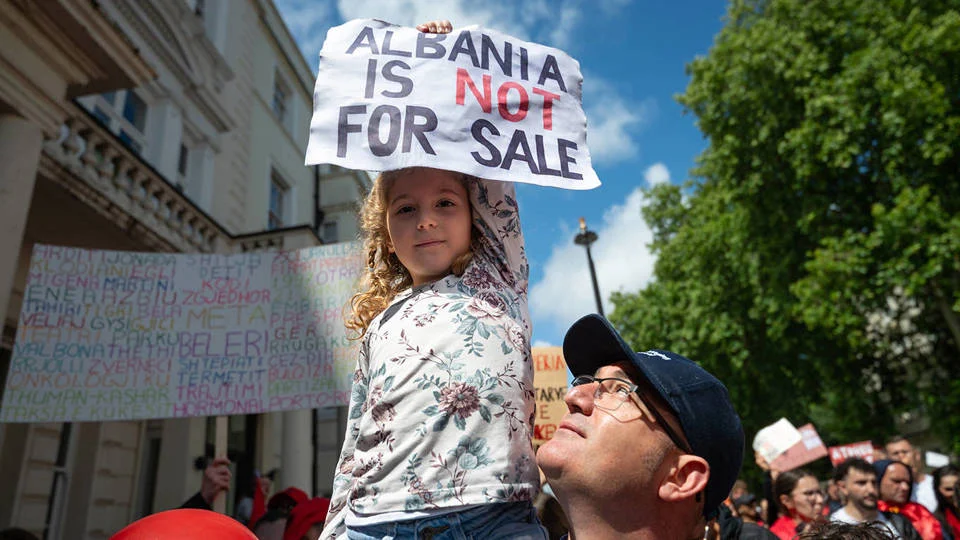
By Harold James
Princeton, New Jersey – June 26, 2026
Conventional wisdom in contemporary political science suggests that we are living through a monolithic global wave of autocratic, ethnonationalist backlash. From the halls of Washington to the parliaments of Budapest and Tirana, the prevailing narrative asserts that a singular, angry reaction against global capitalism and liberal democracy is driving 21st-century governance. However, recent political mobilizations across Central and Eastern Europe suggest a far more nuanced reality.
While Western commentators often conflate these regional movements with the aggressive, identity-obsessed ethnonationalism characteristic of the MAGA movement in the United States, such comparisons fail to account for deep-seated historical and structural differences. As the world navigates a period of unprecedented technological disruption and economic volatility, the political movements emerging from the former Eastern Bloc may not be heralds of an autocratic dark age, but rather pioneers of a complex, defensive form of politics that seeks to protect the sovereignty of the state without necessarily abandoning the architecture of international order.
Main Facts: Deconstructing the Regional Revolt
The core tension in current geopolitical discourse lies in the interpretation of "nostalgia." In an era of rapid change, societies invariably look to the past for anchors of identity. In the American context, this nostalgia has frequently been weaponized through the lens of ethnonationalism, emphasizing an exclusionary vision of the nation-state.
In contrast, recent movements in Hungary, Albania, and the broader Balkan and Visegrád regions demonstrate a different trajectory. While these movements are undeniably populist and protective of national identity, they are not strictly defined by the racial or cultural purity mandates found in American right-wing populism. Instead, these movements are grounded in the trauma of 20th-century geopolitical erasure. Their populism is defensive—a reaction against the perceived failures of post-1989 neoliberal integration rather than a desire to retreat into an isolated, ethnic fortress.
The primary divergence lies in the relationship with global capital. While the American right-wing populist movement often campaigns against international trade agreements and global financial institutions with a rhetoric of isolationism, Central European leaders have shown a remarkable ability to pivot between nationalistic rhetoric and pragmatic economic engagement with the European Union and global markets.
Chronology: The Evolution of Central European Populism
To understand this shift, one must look at the timeline of the post-Cold War transition:
- 1989–1995: The Liberal Consensus. Following the collapse of the Soviet Union, the region embraced "shock therapy" and rapid integration into Western institutions. The hope was for an immediate convergence with Western European standards of living.
- 2004–2008: The Great Disillusionment. The expansion of the European Union brought growth, but also a feeling of secondary citizenship. The 2008 financial crisis served as a critical inflection point, exposing the fragility of the neoliberal economic model.
- 2015–2019: The Migration and Sovereignty Crisis. The refugee crisis forced a re-evaluation of border security, leading to the rise of leaders who framed "sovereignty" as a survival mechanism against external cultural shocks.
- 2023–2026: The New Synthesis. We are currently witnessing a shift where political leaders are moving beyond mere opposition to liberalism. They are developing governance models that emphasize "State-led Capitalism," balancing domestic industrial protectionism with active participation in global supply chains.
Supporting Data: Why the Comparison Fails
Data on political sentiment in Central and Eastern Europe reveals a striking divergence from American patterns. Surveys conducted across the Visegrád Group (V4) indicate that while citizens feel a high degree of skepticism toward the "bureaucratic" nature of Brussels, they consistently support continued membership in the EU and NATO.
Unlike the American MAGA movement, which often polls with high hostility toward multilateral institutions, the Central European "populist" voter is frequently a "pro-system" actor who wants the system to be more responsive to national interests rather than subservient to global corporate or institutional dictates.
Furthermore, economic data suggests that the "autocratic" label applied to these regions is often a misreading of economic protectionism. In Hungary, for example, the government has utilized heavy taxation on foreign-owned retail and banking sectors to subsidize national champions. While critics label this cronyism, supporters view it as a necessary correction to the post-communist period, where the majority of national assets were acquired by foreign multinationals with little regard for the local economy.
Official Responses and Geopolitical Implications
The reaction from Brussels and Washington has been largely characterized by moralistic censure. The European Commission has frequently invoked "Rule of Law" conditionality to withhold funds from nations deemed to be drifting away from liberal democratic norms.
However, this strategy has backfired. Official responses that focus on sanctions have only served to validate the populist narrative that international institutions are inherently anti-democratic. In private, some EU diplomats are beginning to acknowledge the need for a "multispeed Europe," where national sovereignty and common EU policy can coexist in a more flexible, less top-down arrangement.
The implications of this shift are profound:
- A Redefinition of Democracy: We are moving toward a model where the focus is on the "sovereign nation" as the primary unit of democratic legitimacy, rather than the "globalized individual."
- The End of Neoliberal Hegemony: The assumption that globalization would naturally lead to a uniform political system is effectively dead. We are entering an era of "managed globalization," where nations selectively engage with the world on their own terms.
- The Security Dilemma: As these nations assert their own path, they create friction with traditional Western powers. The risk is not that they will join an autocratic bloc like Russia or China, but that they will become "non-aligned" powers within the Western orbit, creating a new, more fragmented geopolitical reality.
Is This a Model for the Future?
Could the political trajectory of Central and Eastern Europe be a model for a new form of politics?
The answer depends on whether one views the nation-state as an impediment to global stability or as the essential container for democratic accountability. If we accept that the globalized liberal order of the 1990s and 2000s failed to provide security for the working and middle classes, then we must admit that the "populist" response is not an aberration—it is a logical consequence of political failure.
The "Central European Model"—characterized by intense national focus, skepticism toward supranational bureaucratic overreach, and a preference for state-supported economic stability—is becoming increasingly attractive to other regions. We see echoes of this in parts of South America and Southeast Asia, where leaders are also seeking to chart a path that avoids the extremes of both total liberal openness and total autocracy.
However, the risk remains. If the "nostalgia" mentioned earlier is allowed to curdle into true, exclusionary ethnonationalism, the experiment will fail. The success of this new political form depends on its ability to define "national identity" in a way that is inclusive of the diverse populations within these states.
The era of assuming that all Western-aligned states would move in lockstep toward a singular liberal destination has ended. The future of politics will be defined by the tension between the globalized economy and the local, national identity. This is not necessarily a descent into chaos; it is a difficult, potentially constructive negotiation of what it means to be a nation in the 21st century.
As we look ahead, the challenge for both the architects of the old order and the pioneers of the new is to find a common language. If the West continues to treat Central European movements as merely "deplorable" or "autocratic," they will only accelerate the very fragmentation they fear. If, instead, they engage with these movements as legitimate, if challenging, expressions of a desire for sovereignty and stability, we may find that the future of democracy is more diverse—and perhaps more resilient—than the current panic suggests.
In the final analysis, nostalgia is not just a tool for the ethnonationalist; it is a vital part of the human experience. Whether that nostalgia leads to a revival of civic duty or a retreat into tribalism will be the defining political question of our time.
 Reynand Wu
  Suro Senen
  Ammar Sabilarrohman